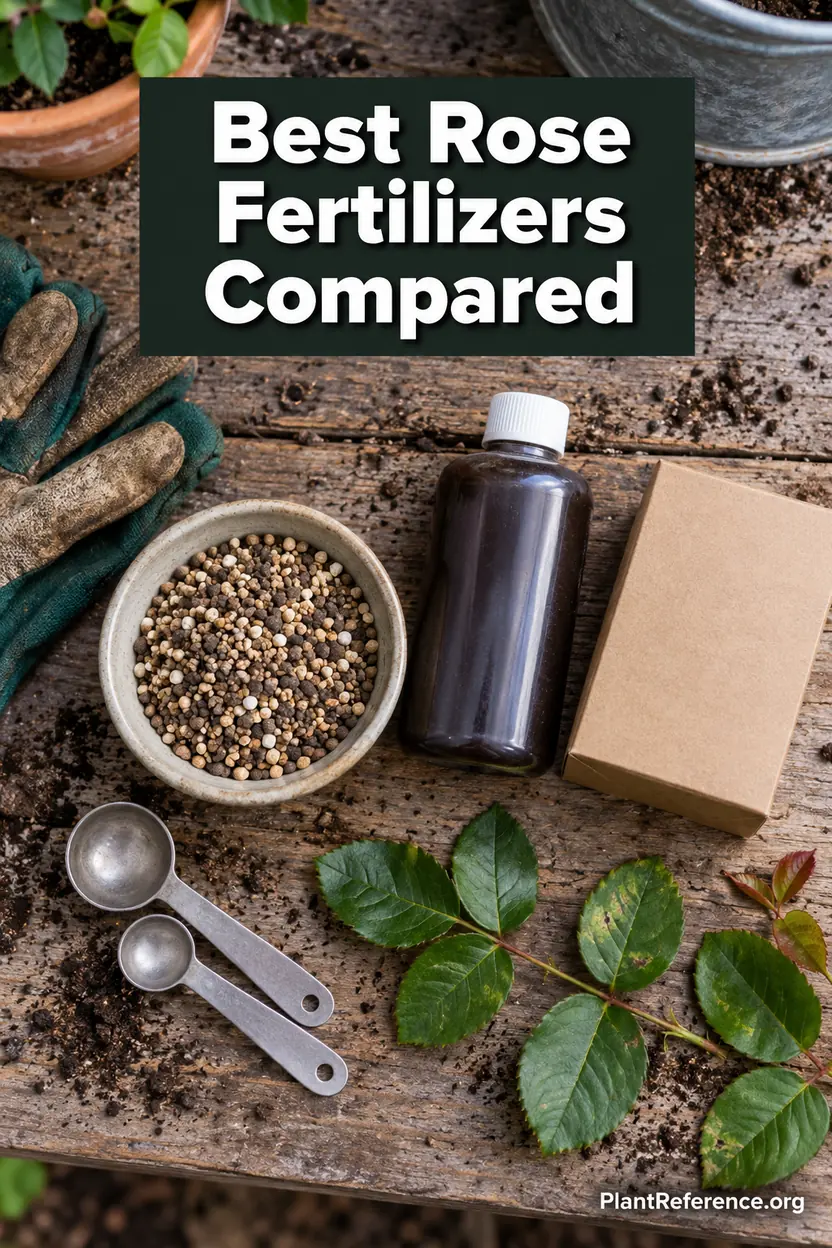
Best Rose Fertilizers: Organic and Synthetic Options
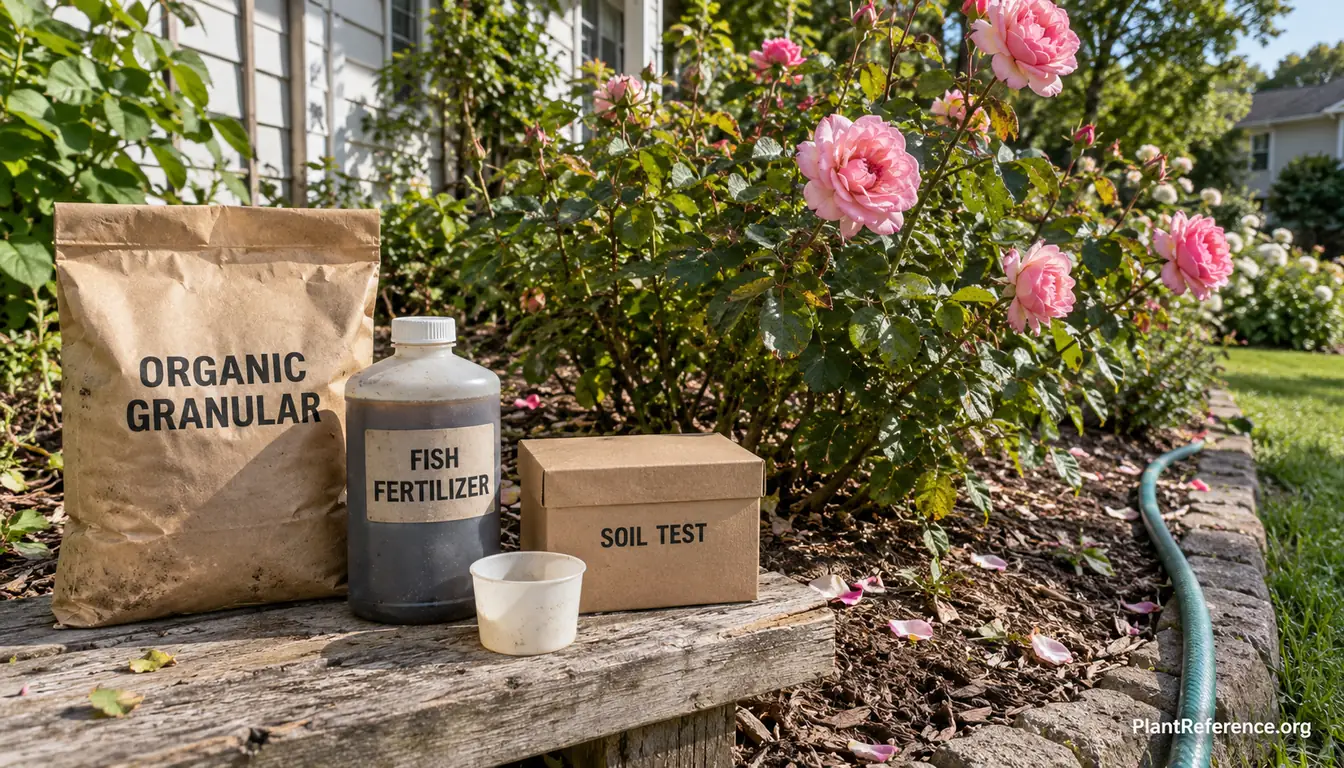
— Image © PlantReference.org 2026
The best rose fertilizer is not automatically the product with the largest numbers on the bag. Garden roses Rosa spp. (ROH-zuh) need nutrients in proportion to actual soil conditions, root health, and growth stage. For most established roses, a modest balanced feed at spring pruning, followed by measured applications every 4-6 weeks during active growth, works better than an aggressive bloom-booster schedule.
How the Best Rose Fertilizers Were Ranked
I ranked these options by nutrient balance, release pattern, fit for a clearly defined problem, ease of measured use, and the risk of unnecessary application. That last factor matters. Excess nitrogen drives soft foliage that can complicate disease management, while surplus phosphorus can accumulate in soil without creating more flowers. A fertilizer cannot repair waterlogged roots, deep shade, or poor pruning.
Start with the plant and soil, not the package. Best Soil Test Kits for Home Gardeners explains testing choices, and How to Grow Roses: The Beginner's Complete Guide covers light, drainage, and establishment. Newly planted bare-root roses need roots before heavy feeding; review Planting Bare Root Roses: Timing and First-Year Care before applying a full seasonal program.
Rank | Product | Best use | Main limitation |
|---|---|---|---|
1 | Espoma Rose-Tone 4-3-2 | Routine organic rose feeding | Requires measured repeat applications |
2 | Dr. Earth Premium Gold 4-4-4 | Balanced all-purpose organic feeding | Not rose-specific |
3 | Neptune's Harvest Fish Fertilizer 2-4-1 | Diluted liquid organic feeding | Strong odor and frequent mixing |
4 | Soil Savvy Complete Soil Analysis | Diagnosing pH and nutrient needs | A test, not plant food |
5 | Jobe's Organics Soil Acidifier | Gradual correction of high pH | Use only when testing supports it |
6 | Southern Ag Chelated Liquid Iron | Confirmed iron chlorosis | Does not replace complete nutrition |
1. Espoma Rose-Tone 4-3-2
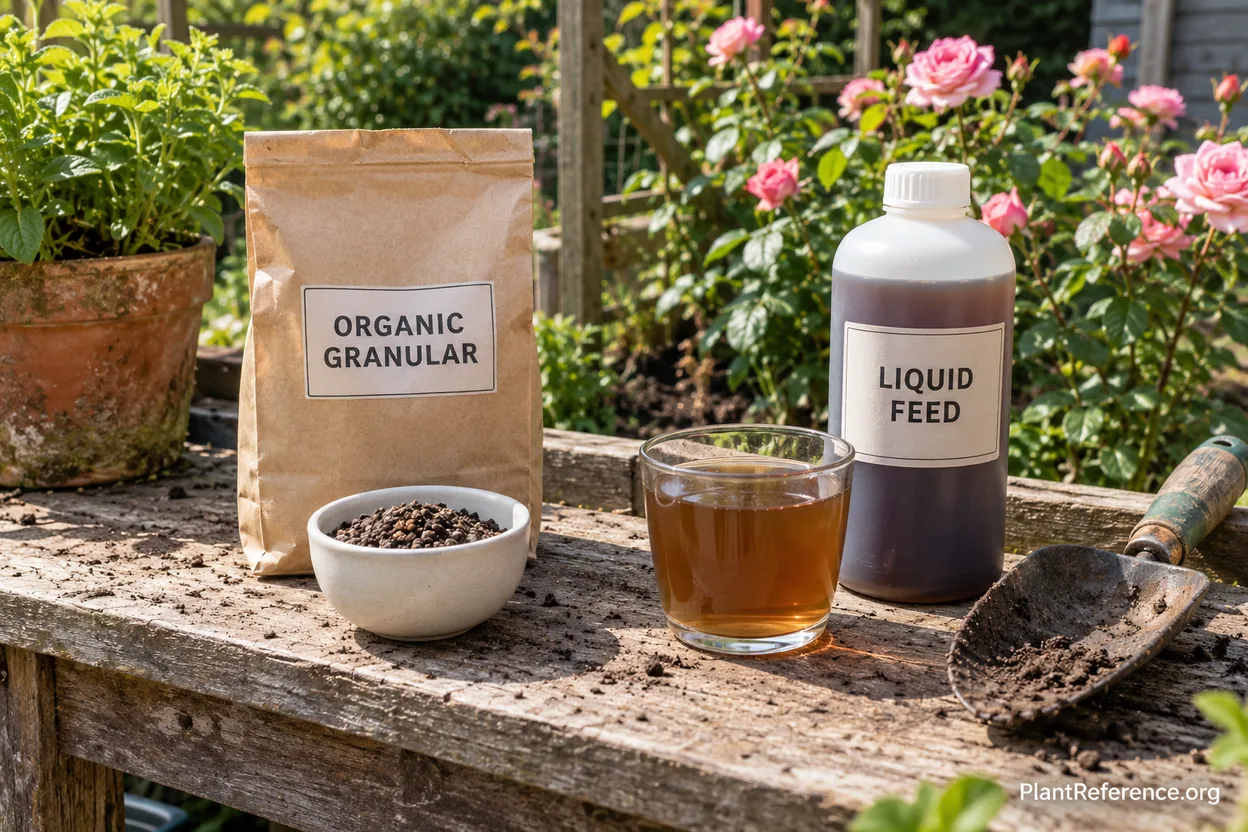
Espoma Rose-Tone 4-3-2 takes first place because its modest analysis suits routine feeding better than a high-salt, high-nitrogen push. The active product record identifies an all-natural rose food with beneficial microbes, intended for use after pruning to support new growth. The 4-3-2 ratio supplies more nitrogen than phosphorus or potassium without turning the bag into a race for the largest NPK numbers.
This is the best fit for gardeners who want a rose-specific organic granular product and are willing to apply it according to the current label. It works as a program, not an emergency correction. If a rose stays pale after feeding, investigate pH, drainage, and root function rather than doubling the dose. Best Fertilizers and Organic Amendments for Roses provides related amendment context.
2. Dr. Earth Premium Gold 4-4-4
Dr. Earth Premium Gold 4-4-4 is the balanced generalist. Its active listing describes an organic blend with beneficial soil microbes and mycorrhizae, delivered in a slow-release granular form. Equal NPK numbers make it useful when a soil test and plant condition support broad maintenance rather than a narrowly targeted correction.
Choose it when one product must serve roses and other ornamental beds. The tradeoff is that the formula is not designed only for roses, so label rates and timing still control. Do not combine it casually with compost, fortified potting mix, and another granular feed; overlapping sources can turn a moderate plan into overfertilization.
3. Neptune's Harvest Fish Fertilizer 2-4-1
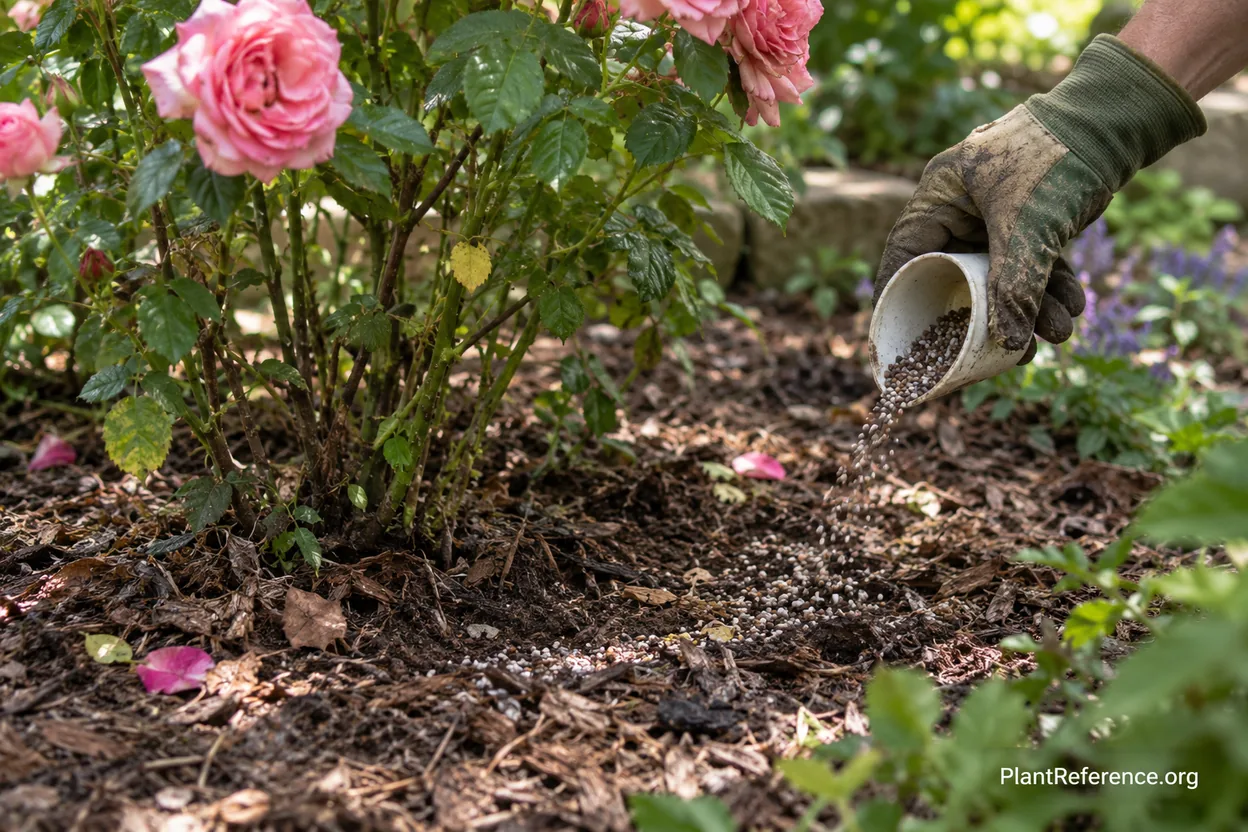
Neptune's Harvest Fish Fertilizer 2-4-1 is the liquid organic choice. The active listing describes concentrated North Atlantic fish fertilizer with naturally occurring micronutrients and amino acids. It mixes into water, which makes even distribution straightforward when a gardener already irrigates by hand.
Its lower nitrogen number does not make it weak or automatically safe at any concentration. Dilution and interval must follow the current label. Fish fertilizer is useful for gardeners who prefer liquid feeding and accept the temporary odor, but it should not be layered onto a recently fertilized bed merely because the nutrients come from an organic source.
4. Soil Savvy Complete Soil Analysis
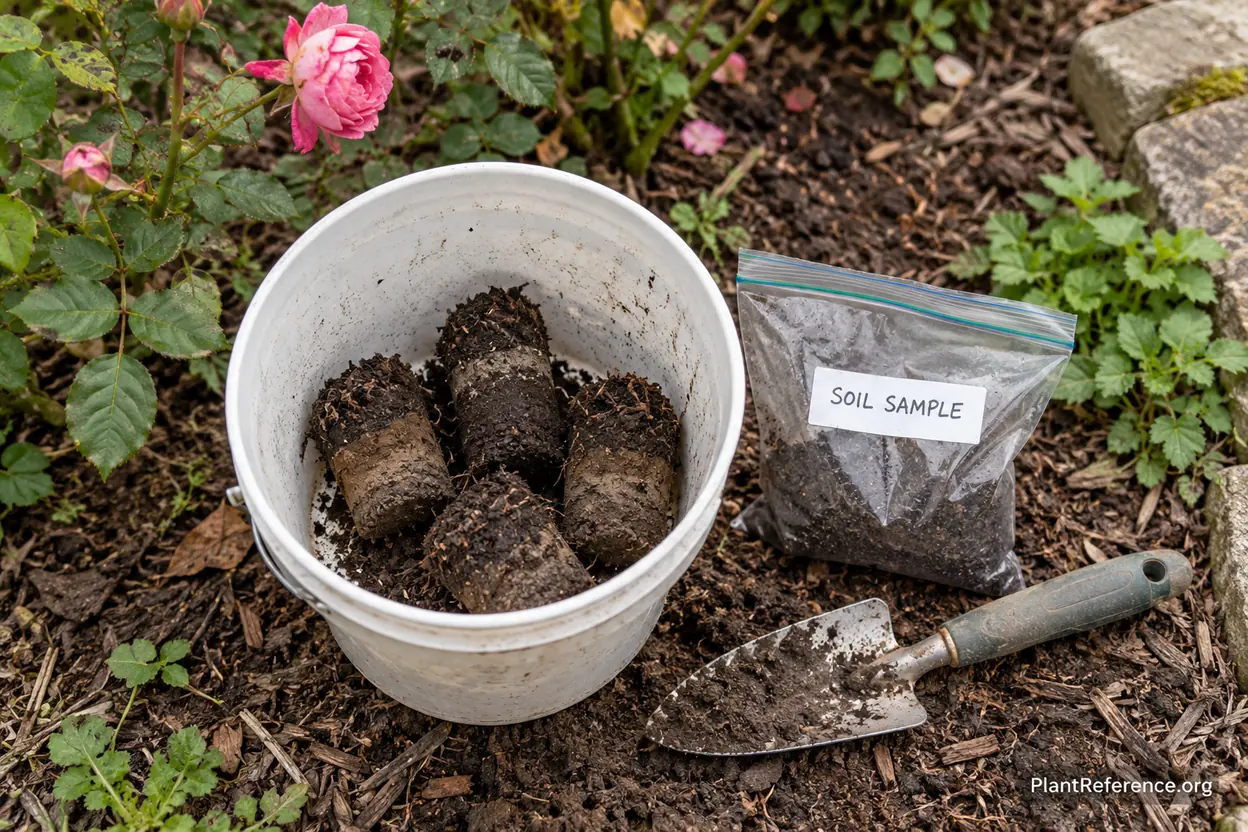
The fourth choice is deliberately not fertilizer. Soil Savvy Complete Soil Analysis evaluates pH, organic matter, and multiple nutrients, then provides amendment recommendations. That information prevents the most expensive feeding mistake: treating an assumed deficiency that the soil does not have.
Use testing before adding phosphorus, trying to acidify soil, or correcting persistent yellowing. A leaf can yellow from excess water, damaged roots, mites, disease, normal senescence, or unavailable iron. Black Spot on Roses: Identification and Treatment helps separate fungal leaf drop from nutrition, while a laboratory-style analysis establishes what the root zone can actually supply.
5. Jobe's Organics Soil Acidifier
Jobe's Organics Soil Acidifier is a conditional tool for alkaline soil, not a routine rose food. Its active listing identifies elemental sulfur and organic matter that lower pH gradually through microbial conversion, with iron included. That gradual process can help where testing confirms pH above the range in which roses access nutrients efficiently.
Do not add acidifier because a rose is yellow or because roses prefer slightly acidic soil. Soil texture, starting pH, irrigation water, and product rate determine the response. Retest after the label's stated waiting period instead of applying repeated doses before the first one has reacted.
6. Southern Ag Chelated Liquid Iron
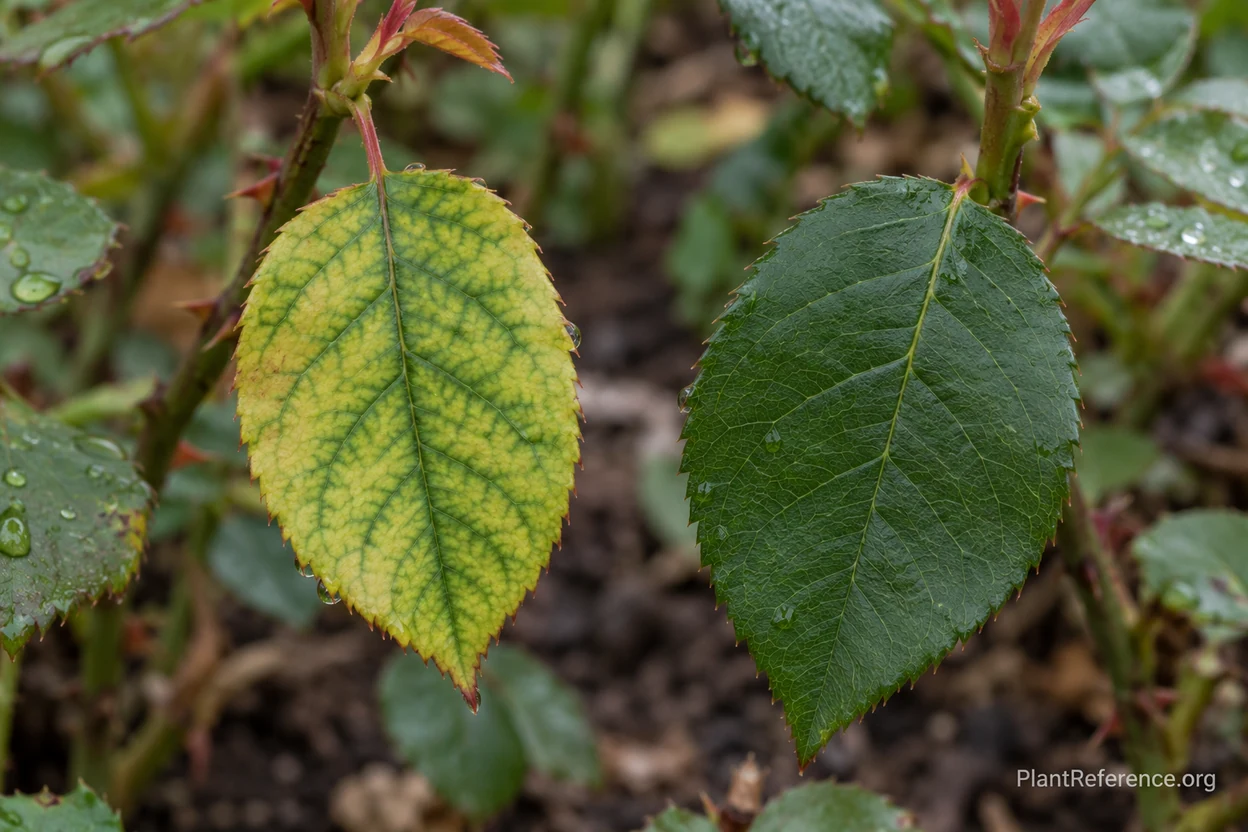
Southern Ag Chelated Liquid Iron is the narrowest selection: use it for a confirmed iron-availability problem, especially where alkaline conditions lock iron away from roots. The active record describes a chelated liquid intended to correct interveinal chlorosis, with improvement often visible after application.
Iron treatment does not supply a complete feeding program, and yellow leaves are not proof of iron deficiency. Check whether newer leaves show yellow tissue between greener veins, then confirm pH and nutrient status. Own-Root vs Grafted Roses: Pacific Northwest Guide can also help identify rootstock and planting factors that complicate a weak plant.
Organic vs. Synthetic Rose Fertilizer
Organic fertilizers usually release nutrients through soil organisms, so temperature, moisture, and soil biology influence their speed. They tend to suit steady feeding and soil-building routines. Synthetic soluble fertilizers provide nutrients in immediately available forms and can produce a faster response, but concentration errors and salt accumulation become more consequential, especially in containers or dry climates.
Neither category is automatically superior. Select a product whose label covers roses or ornamental shrubs, whose nutrient analysis matches the need, and whose application method you can measure consistently. High phosphorus is not a universal shortcut to more flowers. Bloom depends on sunlight, cultivar, pruning, water, and plant maturity as well as nutrition. Compare rose classes in Hybrid Tea vs Floribunda vs Grandiflora Roses before blaming fertilizer for a naturally different bloom pattern.
Alfalfa meal is a useful organic amendment and fish emulsion is a liquid feed, but both still add nutrients. Epsom salt supplies magnesium and sulfur; it is not a complete fertilizer and should not be automatic. Add magnesium only when a soil or tissue test supports the need.
A Rose Feeding Schedule That Avoids Waste
Feed established roses at spring pruning with a balanced organic or rose-specific fertilizer, then reassess every 4-6 weeks during active growth. Stop 6-8 weeks before the expected first frost so late, tender growth can harden. Climate shifts the calendar, so connect feeding to plant activity rather than a national date.
Test soil before correcting pH or adding a single nutrient.
Water the root zone before applying dry fertilizer to stressed soil.
Measure the product at the current label rate; never estimate by handful.
Keep granules away from direct contact with canes and the crown.
Record product, rate, and date to prevent overlapping applications.
Stop feeding 6-8 weeks before the first expected frost.

Pruning and deadheading affect growth demand. Follow How to Prune Roses: When and How to Prune Every Type of Rose for structural cuts and How to Deadhead Roses for More Blooms for spent flowers. Disease-resistant genetics also reduce the temptation to fertilize a stressed rose out of trouble; compare options in Best Disease-Resistant Roses for the Pacific Northwest.
For most gardens, Espoma Rose-Tone is the most focused routine option, Dr. Earth Premium Gold is the most flexible balanced option, and Neptune's Harvest is the most convenient liquid organic choice. Soil testing remains the best first purchase when the problem is unclear.
Frequently Asked Questions
Reading about plants and recognising them are different skills. These three build the second.
- Daily PlantIdentify the day’s mystery plant from a close-up photograph.
- Keyed OutWork a dichotomous key, lead by lead, to name a hidden specimen.
- Name That PlantName a specimen from botanical clues dealt hardest first.
Free to play, no account needed
Tagged with
Priya is a soil scientist at an agricultural extension office who gardens on a quarter-acre suburban lot in Indianapolis. Her professional work focuses on soil health and nutrient management, which gives her a perspective most gardening writers don't have—she thinks about what's happening underground before worrying about what's happening above it. Priya maintains a large pollinator garden, grows herbs and vegetables, and is slowly converting her conventional lawn to a mix of native grasses and low-growing groundcovers. She writes about soil health, composting, fertilizer use, and building the kind of foundation that makes plants thrive without constant intervention.