Picea, Genus, pungens, Species,
- Genus & species
Colorado spruce
Rocky Mountains, Montana to New Mexico; 6,000–11,000 feet (1,800–3,350 m)
Overview
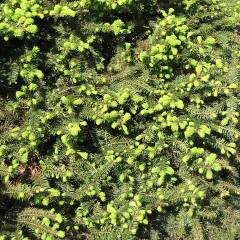
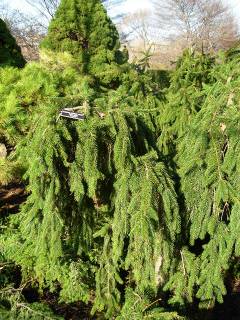
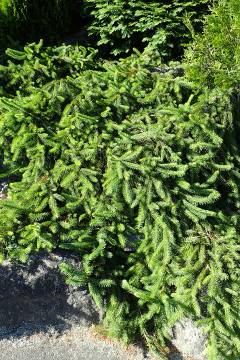
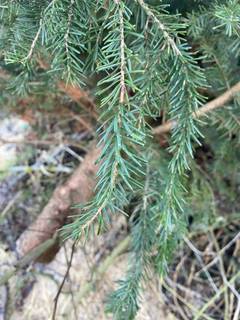
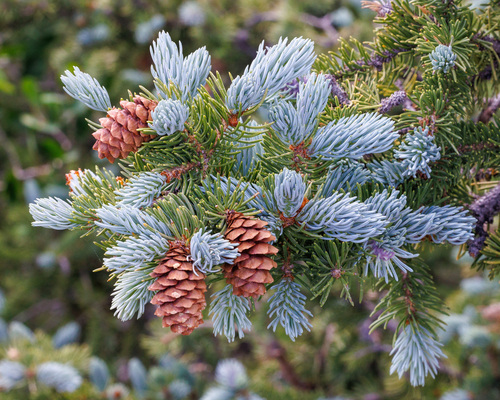
Picea pungens is a pyramidal evergreen conifer native to the Rocky Mountains. Trees reach 30–60 feet (9–18 m) tall and 10–20 feet (3–6 m) wide in cultivation at maturity; growth rate is 8–12 inches (20–30 cm) per year. The crown is densely pyramidal with stiffly horizontal branches. Needles are 0.75–1.25 inches (19–32 mm) long, rigid, sharply pointed, four-sided, and arranged on all sides of the stem on short pegs; foliage color ranges from gray-green to silvery blue-gray depending on the individual. Bark is gray-brown, becoming furrowed and scaly on older trunks. Cones are 2.5–4 inches (6–10 cm) long, cylindrical, light brown at maturity. Rhizosphaera needle cast and Cytospora canker are common in humid climates, causing significant foliage loss and branch dieback; these diseases are more prevalent in the Pacific Northwest than in the species' native arid climate. Lower branches die naturally over time as the crown closes, leaving a bare lower trunk on mature trees.
Native Range
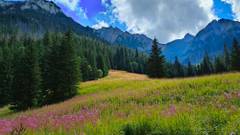
Picea pungens is native to the Rocky Mountains of the western United States, from southern Montana and Idaho south through Utah, Colorado, and New Mexico, at elevations of 6,000–11,000 feet (1,800–3,350 m) in cool, moist mountain canyons along stream courses.Suggested Uses
Planted as a specimen or screen tree in larger residential and commercial landscapes, spaced 15–20 feet (4.6–6 m) from adjacent plants. The eventual height of 30–60 feet (9–18 m) and tendency to lose lower branches limit use near structures or in small gardens. Performs better in drier, sunnier sites than in humid Pacific Northwest coastal conditions where needle cast disease is more prevalent.How to Identify
Appearance
Size & Dimensions
Height30' - 60'
Width/Spread10' - 20'
Bloom Information
Male strobili are reddish-yellow, releasing pollen in April–May. Female cones are cylindrical, 2.5–4 inches (6–10 cm) long, green to purple when young, ripening to light brown in the first season. Cones are often produced in large numbers on mature trees and may be present on the tree for 2 seasons.
Detailed Descriptions
Flower Description
reddish-yellow (male strobili)Foliage Description
gray-green to silvery blue-grayGrowing Conditions
Sun Requirements
Requires 6-12 hours of direct sunlight daily
• Full Sun: 6+ hours of direct sunlight
• Partial Shade: 3-6 hours of direct sunlight
• Full Shade: Less than 3 hours of direct sunlight