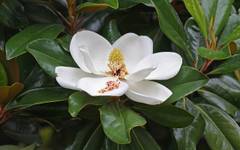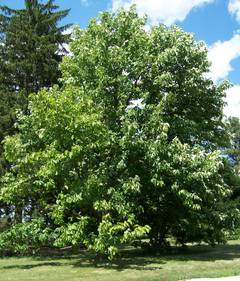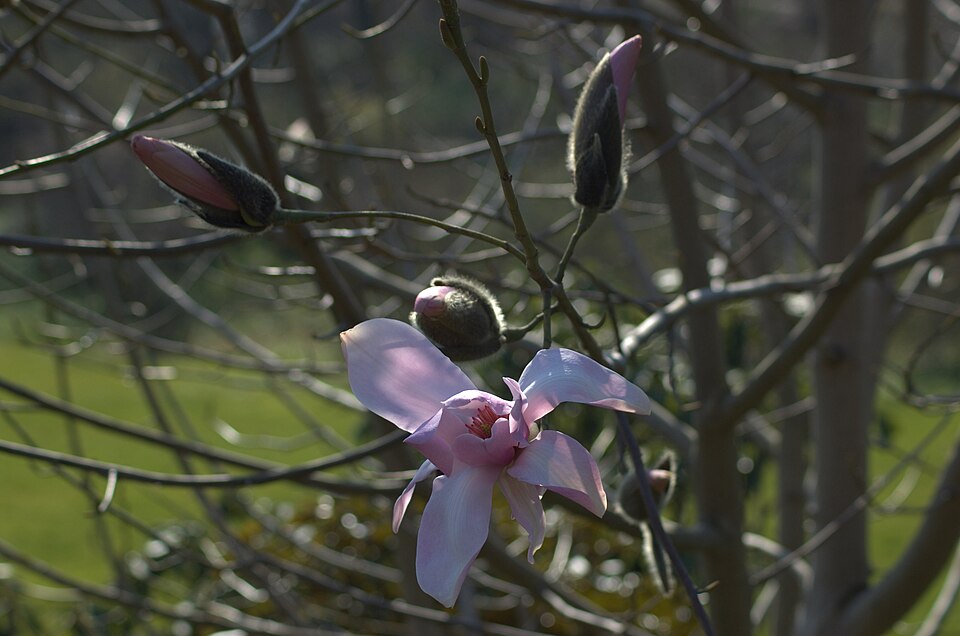
Image 1 of 5
1 / 5
© Martin Olsson (mnemo on en/sv wikipedia and commons, martin@minimum.se)., some rights reserved (CC-BY-SA) · Wikimedia Commons
Magnolia, Genus, ×, Hybrid, loebneri, Species, 'Leonard Messel', Cultivar,
- Genus & species
- Hybrid
- Cultivar
Leonard Messel magnolia
Garden hybrid (M. kobus × M. stellata; raised at Nymans Garden, Sussex, England; named after Colonel Leonard Messel)
Overview
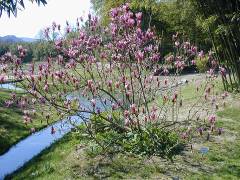
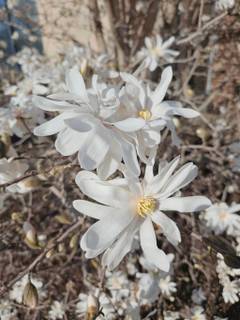
Magnolia × loebneri 'Leonard Messel' is a small to medium, deciduous tree or large multi-stemmed shrub reaching 15–25 feet (4.5–7.5 m) tall with a spread of 15–20 feet (4.5–6 m) and a rounded to broadly spreading crown. This hybrid of M. kobus × M. stellata, raised at Nymans Garden in Sussex, England, produces star-shaped to loosely cup-shaped flowers 3–4 inches (8–10 cm) across with 10–15 narrow, strap-shaped tepals. The tepals are lilac-pink on the exterior (deeper than most × loebneri cultivars) and white to pale pink within. Flowers appear on bare or nearly bare branches in March–April, slightly later than M. stellata. The alternate, obovate leaves are 3–5 inches (8–13 cm) long, medium green. Growth rate is moderate. Hardy to zone 4, inheriting the cold hardiness of M. kobus. The multi-stemmed habit is natural but can be trained to a single trunk.
Native Range
Magnolia × loebneri is a garden hybrid of M. kobus (native to Japan and Korea) × M. stellata (native to Japan). 'Leonard Messel' was raised at Nymans Garden, Sussex, England, named after Colonel Leonard Messel.Suggested Uses
Planted as a specimen in residential gardens and mixed borders at 15–18 foot (4.5–5.5 m) spacing. The lilac-pink flowers are the deepest pink of commonly grown × loebneri cultivars. The compact 15–25 foot size and zone 4 hardiness suit small to medium gardens in cold climates. Can be grown as either a multi-stemmed shrub or single-trunk tree. The star-shaped flowers are smaller (3–4 inches) than cup-shaped magnolias like × soulangeana. Not suitable for alkaline soils, drought-prone sites, or frost pockets where early bloom is damaged.How to Identify
Appearance
Size & Dimensions
Height15' - 25'
Width/Spread15' - 20'
Bloom Information
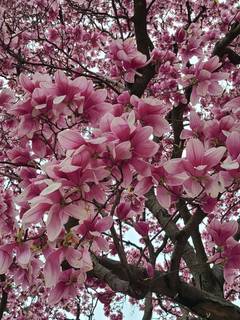
Star-shaped to loosely cup-shaped flowers 3–4 inches (8–10 cm) across with 10–15 narrow, strap-shaped tepals, lilac-pink exterior and white to pale pink interior, on bare or nearly bare branches in March–April. Light fragrance. Bloom duration is 2–3 weeks. Slightly later bloom than M. stellata. Susceptible to late frost damage.
Detailed Descriptions
Flower Description
Lilac-pink exterior (deepest pink of × loebneri cultivars), white to pale pink interior; star-shaped 3-4 inches; 10-15 strap-shaped tepalsFoliage Description
Medium green; alternate obovate 3-5 inchesGrowing Conditions
Sun Requirements
Requires 4-8 hours of direct sunlight daily
• Full Sun: 6+ hours of direct sunlight
• Partial Shade: 3-6 hours of direct sunlight
• Full Shade: Less than 3 hours of direct sunlight
Care & Maintenance
Care Guide
Plant in full sun to partial shade in moist, well-drained, acidic to neutral soil (pH 5.0–7.0). Hardy to zone 4. Tolerates a wider range of soils than most magnolias, including slightly alkaline conditions. Mulch the root zone. Transplant balled-and-burlapped or container-grown in spring. Can be grown as a multi-stemmed shrub or trained to a single trunk. Moderate growth rate. No significant pest or disease problems.Pruning
Prune in late spring after flowering if needed. To maintain as a single-trunk tree, remove competing leaders and basal suckers while young. The multi-stemmed form is natural and requires minimal pruning—remove dead or crossing branches. Avoid heavy pruning.Pruning Schedule
Prune: May–June
late spring