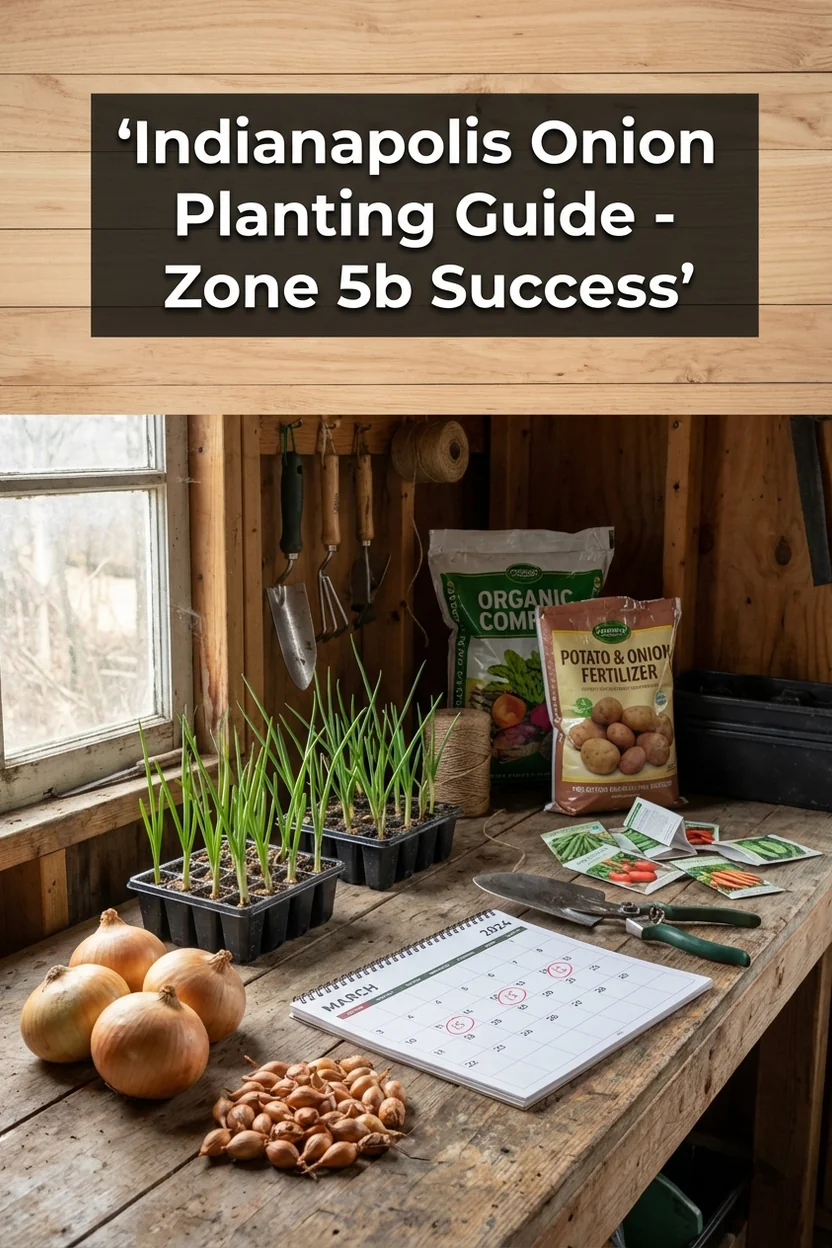
When to Plant Onions in Indianapolis: Complete Guide + Best Varieties for Zone 5b
Pets & Toxicity
Recorded toxicity for plants linked in this guide. An unknown status is not a safety assessment.
Toxic to pets: red wing storage onion, music hardneck garlic, yellow sweet Spanish onion and 2 moreDetailsHide
Allium cepa 'Red Wing' — Toxicity Warning
Toxic to cats and dogs if eaten; cats are especially susceptible, and raw, cooked or concentrated plant material can damage red blood cells and cause anaemia.View Allium cepa 'Red Wing' plant profileAllium sativum 'Music' — Toxicity Warning
Toxic to cats and dogs if eaten; cats are especially susceptible, and raw, cooked or concentrated plant material can damage red blood cells and cause anaemia.View Allium sativum 'Music' plant profileAllium cepa 'Yellow Sweet Spanish' — Toxicity Warning
Toxic to cats and dogs if eaten; cats are especially susceptible, and raw, cooked or concentrated plant material can damage red blood cells and cause anaemia.View Allium cepa 'Yellow Sweet Spanish' plant profileAllium cepa 'Copra' — Toxicity Warning
Toxic to cats and dogs if eaten; cats are especially susceptible, and raw, cooked or concentrated plant material can damage red blood cells and cause anaemia.View Allium cepa 'Copra' plant profileAllium cepa 'Walla Walla' — Toxicity Warning
Toxic to cats and dogs if eaten; cats are especially susceptible, and raw, cooked or concentrated plant material can damage red blood cells and cause anaemia.View Allium cepa 'Walla Walla' plant profile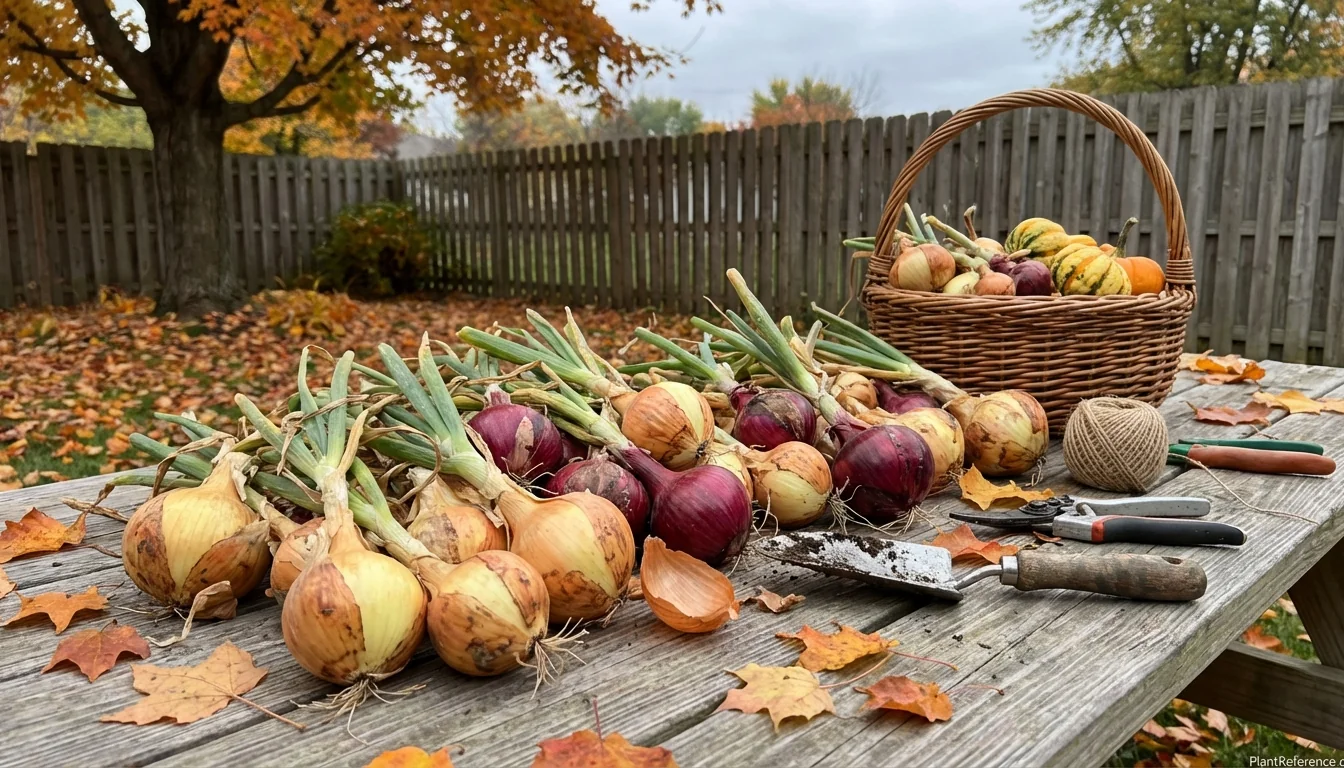
— Image © Plant Reference 2026
Growing onions in Indianapolis requires understanding that your Zone 5b climate demands long-day varieties planted in early spring. After forty years of gardening in the Midwest, I can tell you exactly when to plant onions in Indianapolis and which varieties will give you the best harvest in Indiana's 158-day growing season.
Best Onion Varieties for Indianapolis's Zone 5b Climate
Indianapolis sits at 39.7°N latitude, placing you squarely in long-day onion territory. The key to success here is choosing varieties that need 14-16 hours of daylight to trigger bulb formation. Plant the wrong type, and you'll get all green tops with tiny bulbs.
Long-day onions work perfectly in Indianapolis because our summer days peak at 15+ hours in June and July. These varieties use the long spring growing season to build substantial leaf growth, then switch to bulbing when day length hits their trigger point.
Variety | Days to Maturity | Best For | Notes for Indianapolis |
|---|---|---|---|
110-125 days | Fresh eating, early harvest | Perfect for Zone 5b, mild sweet flavor | |
105-120 days | Long storage | Stores 8-10 months, excellent keeper | |
110-120 days | Large bulbs | Can reach 1+ pounds in good soil | |
115-130 days | Maximum storage | Industry standard storage onion | |
240-270 days | Hardneck garlic | Plant October for July harvest |
The Walla Walla 🌿Allium cepa 'Walla Walla' (AH-lee-um SEE-pah) remains my top recommendation for Indianapolis gardens. This long-day variety produces large, mild bulbs perfect for fresh eating through fall. Plant transplants in late March, and you'll harvest sweet onions by early October.
For storage, Red Wing 🌿Allium cepa 'Red Wing' can't be beat. I've kept these red storage onions in my root cellar until the following June. The key is proper curing - something we'll cover in detail later.
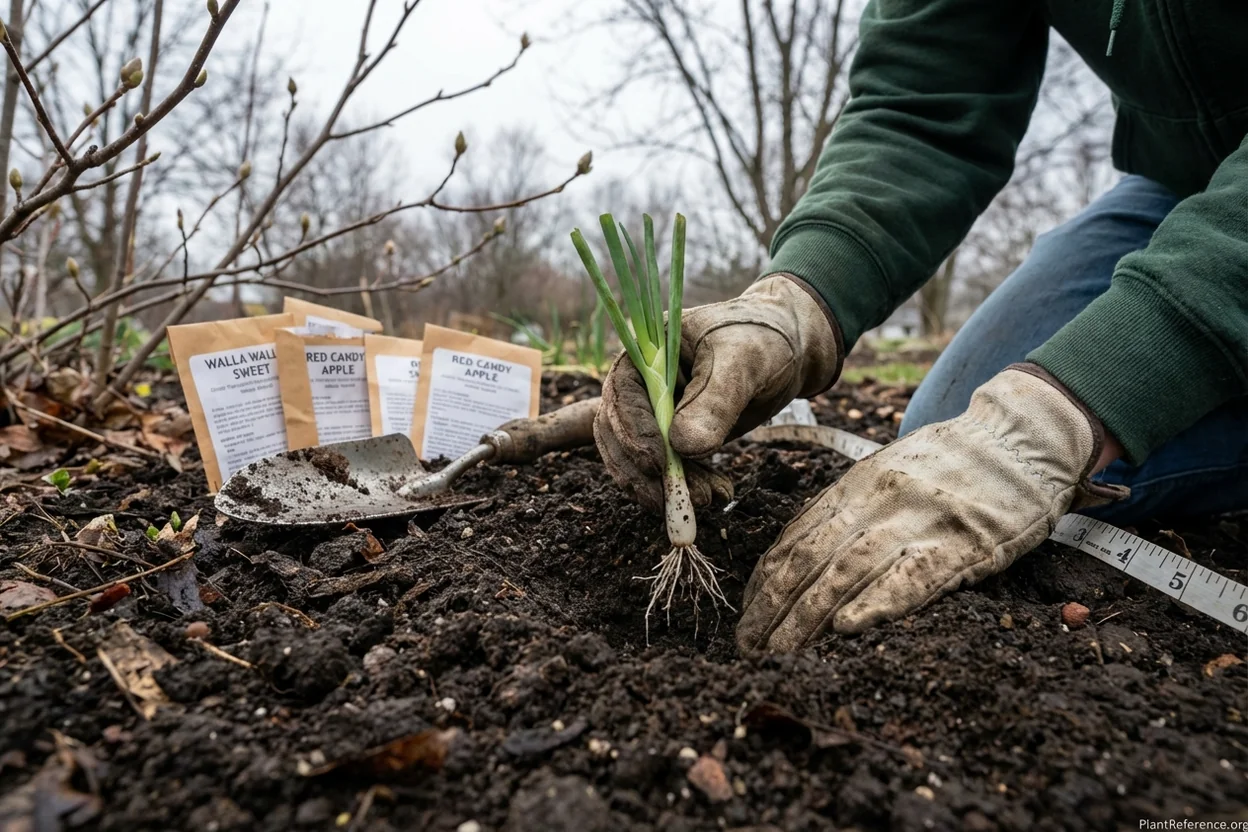
Yellow Sweet Spanish 🌿Allium cepa 'Yellow Sweet Spanish' deserves mention for gardeners wanting enormous onions. In Indianapolis's fertile soil, these can reach impressive sizes - I've grown them over 1.2 pounds. They require the full growing season, so don't plant late.
Garlic Selection for Zone 5b
Hardneck garlic varieties thrive in Indianapolis winters. Music 🌿Allium sativum 'Music' (AH-lee-um sah-TEE-vum) produces large bulbs with 4-6 jumbo cloves. Plant cloves in October, and they'll establish roots before winter, then size up through our cold months.
The vernalization (cold treatment) our Indianapolis winters provide is exactly what hardneck garlic needs to form proper clove segmentation. Without 4-8 weeks below 40°F (4°C), garlic produces "rounds" - single bulbs instead of separated cloves.
Specific Planting Dates for Indianapolis
Indianapolis gardeners work within a 158-day growing season from last frost May 4 to first frost October 9. This timing determines everything about successful onion cultivation here.
Spring Onion Planting Schedule
March 15 - April 1: Prime Transplant Window This represents 4-6 weeks before our May 4 last frost date. Onions tolerate light frost easily, and early planting maximizes leaf development before bulging triggers.
March 1 - March 30: Onion Set Planting Sets handle cold better than transplants. Plant small sets (dime-sized or smaller) to avoid bolting issues. Large sets often panic and flower when exposed to late spring cold snaps.
April 1 - April 15: Final Planting Window Latest recommended planting for full-season varieties. Later planting reduces yield because plants have less time to develop foliage before day length triggers bulbing.
Week of March 15: Plant transplants if soil workable
Week of March 22: Ideal planting window opens
Week of April 1: Latest for maximum yield
Week of April 15: Absolute cutoff for long-day varieties
Fall Garlic Planting Schedule
October 1 - October 15: Optimal Garlic Planting This timing allows 4-6 weeks of root establishment before soil freezes. Garlic needs roots established before winter dormancy but minimal top growth.
October 15 - October 30: Extended Window Still acceptable in mild years, but monitor weather forecasts. Early hard freeze can damage poorly established cloves.
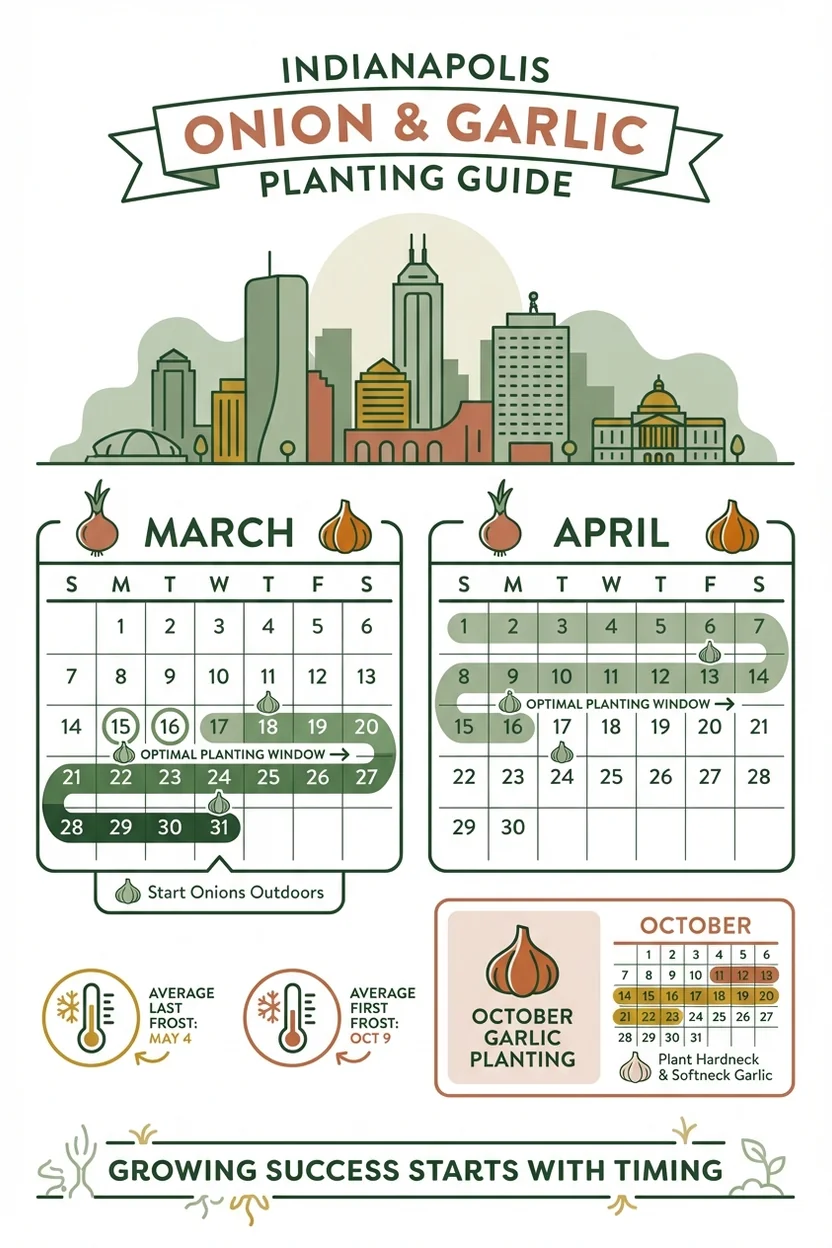
The mathematical precision here matters. Count backwards from our October 9 first frost: onions need 110-125 days to mature, placing ideal planting between March 15 and April 10. Earlier is better because it extends the vegetative growth phase.
Soil Temperature Considerations
Plant when soil reaches 45°F (7°C) at 2-inch depth. In Indianapolis, this typically occurs mid-March. Soil thermometer readings taken at 8 AM give accurate daily minimums.
Cold soil slows root development but won't kill properly hardened transplants or sets. I've successfully planted during late March snow flurries - the onions waited patiently for warming conditions.
Complete Growing Guide for Indianapolis Gardeners
Success with onions in Indianapolis depends on understanding their growth phases and providing appropriate care at each stage.
Soil Preparation for Indianapolis Clay
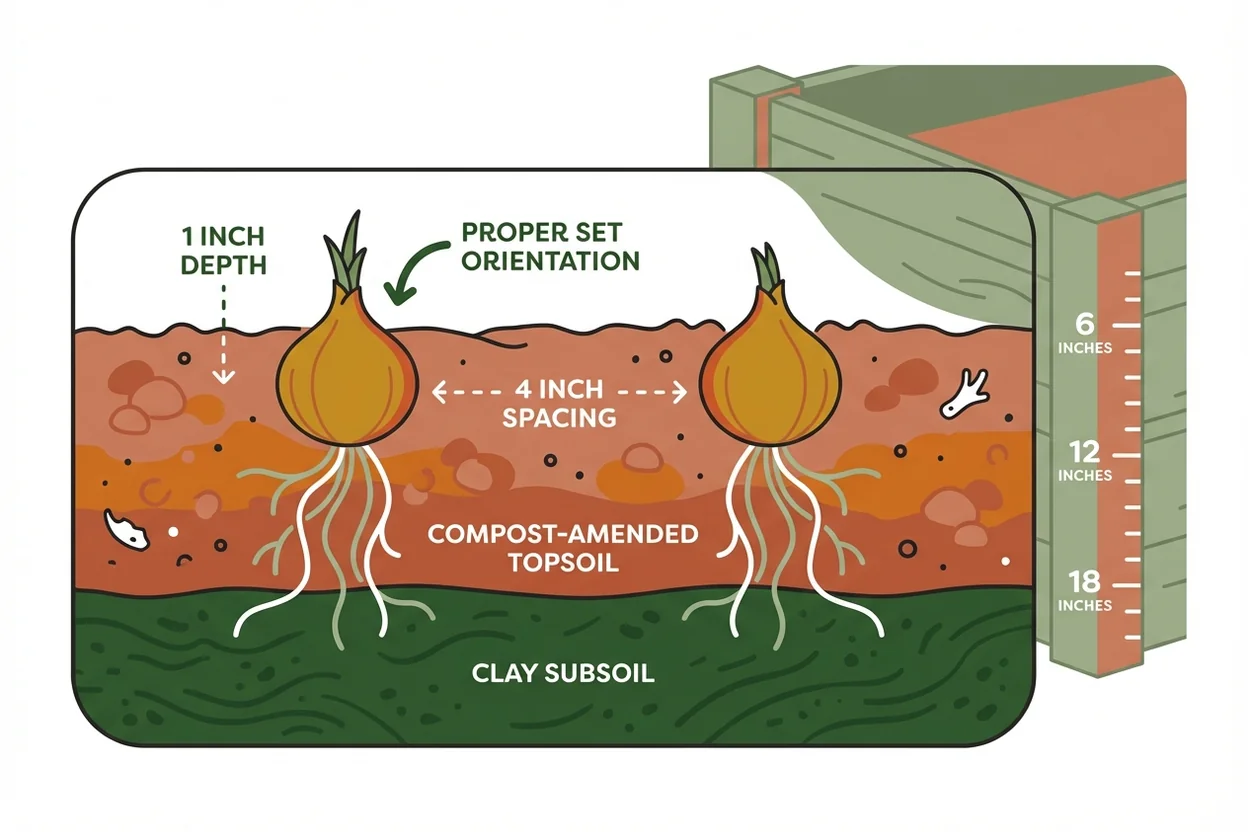
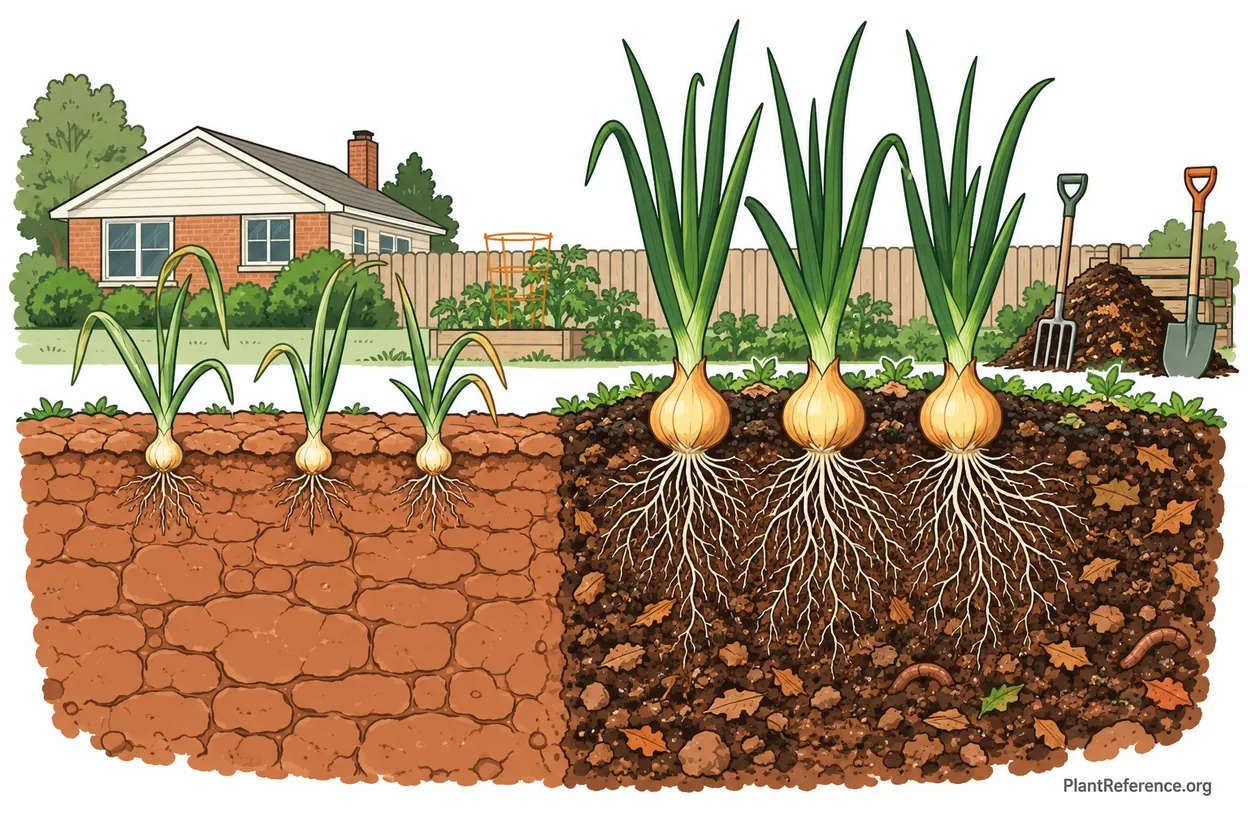
Indianapolis sits on heavy clay subsoil that challenges onion production. Onions need well-draining soil because bulbs rot in waterlogged conditions, yet our clay holds water like a basin.
Amendment Strategy: Add 2-3 inches of compost annually. I've worked the same garden beds for twenty years, and the soil transformation is remarkable. Heavy clay becomes friable loam with persistent organic matter additions.
Raised beds solve drainage issues immediately. Even 6 inches of elevation prevents spring waterlogging. Build beds 12 inches high for optimal drainage and easier harvest.
pH Requirements: Indianapolis soil typically runs 6.8-7.2 pH naturally - perfect for onions. Test every 3-4 years to monitor changes. Onions prefer 6.0-6.8 pH for optimal nutrient uptake.
Planting Technique
Transplant Method: Trim transplant roots to 2 inches and tops to 4 inches before planting. This reduces transplant shock and encourages rapid establishment. Plant 1 inch deep with just the white portion below soil level.
Space transplants 4 inches apart in rows 12 inches apart. Closer spacing reduces individual bulb size but increases total yield per square foot.
Set Planting: Push sets pointed-end up until just covered with soil. Plant too deep, and you get elongated bulbs. Too shallow creates instability and poor root contact.
Select sets smaller than a dime. Large sets often bolt (flower prematurely) when stressed by temperature fluctuations common in Indianapolis springs.
Fertilizer Program for Zone 5b
Indianapolis onions need aggressive nutrition during vegetative growth, then complete nutrient cutoff when bulbing begins.
Pre-Plant Nutrition: Work 10-10-10 fertilizer into beds at 2 pounds per 100 square feet before planting. Phosphorus and potassium need incorporation because they're immobile in soil.
Growing Season Feeding: Side-dress with 21-0-0 ammonium sulfate every 3 weeks through June. Stop nitrogen completely when you notice soil cracking around bulb bases - this signals bulbing initiation.
The Critical Cutoff: Late nitrogen applications create "thick necks" that won't cure properly. Thick-necked onions rot in storage within weeks. I learned this lesson the hard way in my early gardening years.
Water Management
Indianapolis receives approximately 40 inches annual precipitation, but distribution varies dramatically. Onions need consistent moisture during leaf development, then gradual reduction approaching harvest.
Spring Watering (March-June): Maintain consistent soil moisture but avoid waterlogging. Clay soil holds water longer than sandy soil, so adjust irrigation accordingly.
Summer Reduction (July-August): Gradually reduce watering as tops begin yellowing naturally. Excess moisture during bulb maturation reduces storage life.
March-May: Deep watering twice weekly
June-July: Monitor natural rainfall, supplement if needed
August-September: Reduce watering, allow natural senescence
September: Stop watering 2 weeks before harvest
Troubleshooting Indianapolis-Specific Onion Problems
Bolting (Premature Flowering)
Indianapolis spring weather creates perfect conditions for onion bolting. Temperature swings from 70°F (21°C) to 35°F (2°C) within 48 hours stress plants into reproductive mode.
Prevention Strategies: Use small sets exclusively. Large sets are physiologically mature and interpret cold spells as winter passage. When temperatures warm, they flower instead of bulbing.
Choose transplants over large sets for reliability. Transplants are younger physiologically and less prone to bolting triggers.
Management: Remove flower stalks immediately upon appearance. The hollow, hard stem runs through the bulb center, making it inedible and preventing storage.
Small Bulb Syndrome
Consistently small bulbs despite good cultural practices usually indicate variety mismatch. Short-day or intermediate-day varieties planted in Indianapolis never receive adequate daylight triggers.
Diagnosis: Plants produce massive green tops but pea-sized bulbs. This happens when day-length requirements exceed available photoperiod.
Solution: Stick strictly to long-day varieties rated for 14+ hour photoperiods. Don't experiment with southern varieties in Indianapolis.
Clay Soil Compaction
Heavy Indianapolis clay compacts easily, restricting bulb expansion and creating drainage problems.
Immediate Solutions: Never work wet clay soil. Wait until a handful crumbles rather than forms a ball when squeezed.
Add coarse organic matter - shredded leaves, aged manure, compost. Fine materials like peat moss worsen clay texture.
Harvest and Storage in Indiana
Indianapolis's climate provides excellent onion curing conditions during late summer and fall. Timing harvest correctly determines storage success through winter.
Harvest Timing for Zone 5b
Begin harvest when 50-75% of tops fall over naturally. This typically occurs late August through early October in Indianapolis, depending on planting dates and variety maturity.
Visual Indicators: Tops yellow from bottom up, then fall over at the neck. Don't force this process by breaking tops - it interrupts carbohydrate flow to bulbs and reduces storage life.
The papery outer skin becomes brown and crackling. Bulbs feel firm when squeezed gently. Soft spots indicate rot or immaturity.
Curing Process for Indianapolis Climate
Indianapolis's warm, dry September weather provides ideal curing conditions. Proper curing seals the neck and hardens outer scales for long-term storage.
Field Curing: If weather permits, leave harvested onions on soil surface for 24-48 hours. Cover bulbs with tops from adjacent rows to prevent sunscald.
Protected Curing: Move onions to covered, ventilated areas during wet weather. Garage, shed, or barn with good airflow works perfectly. Temperature 75-85°F (24-29°C) with low humidity accelerates curing.
Completion Signs: Properly cured onions have tight, dry necks that feel wiry when pinched. Outer skins rustle when handled. This process takes 2-4 weeks depending on bulb size and weather conditions.
→ Storage Mesh Bags ($8-12) - Essential for proper onion storage ventilation
Breathable mesh bags specifically designed for onion storage allow proper air circulation while containing bulbs securely. Each 24-inch bag holds 10-15 pounds of cured onions with drawstring closure. Durable polyethylene mesh prevents moisture buildup that causes rot. Six-bag set handles full season harvest. Reusable for multiple seasons. Essential for basement or root cellar storage where ventilation prevents decay.
Product link unavailable
Storage Conditions
Store cured onions in cool (32-40°F/-0-4°C), dry (60-70% humidity) locations. Indianapolis basements often provide ideal conditions during winter months.
Storage Duration by Variety: Red Wing and Copra storage varieties keep 8-10 months properly stored. Walla Walla sweet onions store only 1-2 months maximum due to high sugar and water content.
Avoid storage temperatures 50-70°F (10-21°C) - this range triggers sprouting as plants interpret it as spring conditions.
Frequently Asked Questions
Reading about plants and recognising them are different skills. These three build the second.
- Daily PlantIdentify the day’s mystery plant from a close-up photograph.
- Keyed OutWork a dichotomous key, lead by lead, to name a hidden specimen.
- Name That PlantName a specimen from botanical clues dealt hardest first.
Free to play, no account needed
Priya is a soil scientist at an agricultural extension office who gardens on a quarter-acre suburban lot in Indianapolis. Her professional work focuses on soil health and nutrient management, which gives her a perspective most gardening writers don't have—she thinks about what's happening underground before worrying about what's happening above it. Priya maintains a large pollinator garden, grows herbs and vegetables, and is slowly converting her conventional lawn to a mix of native grasses and low-growing groundcovers. She writes about soil health, composting, fertilizer use, and building the kind of foundation that makes plants thrive without constant intervention.