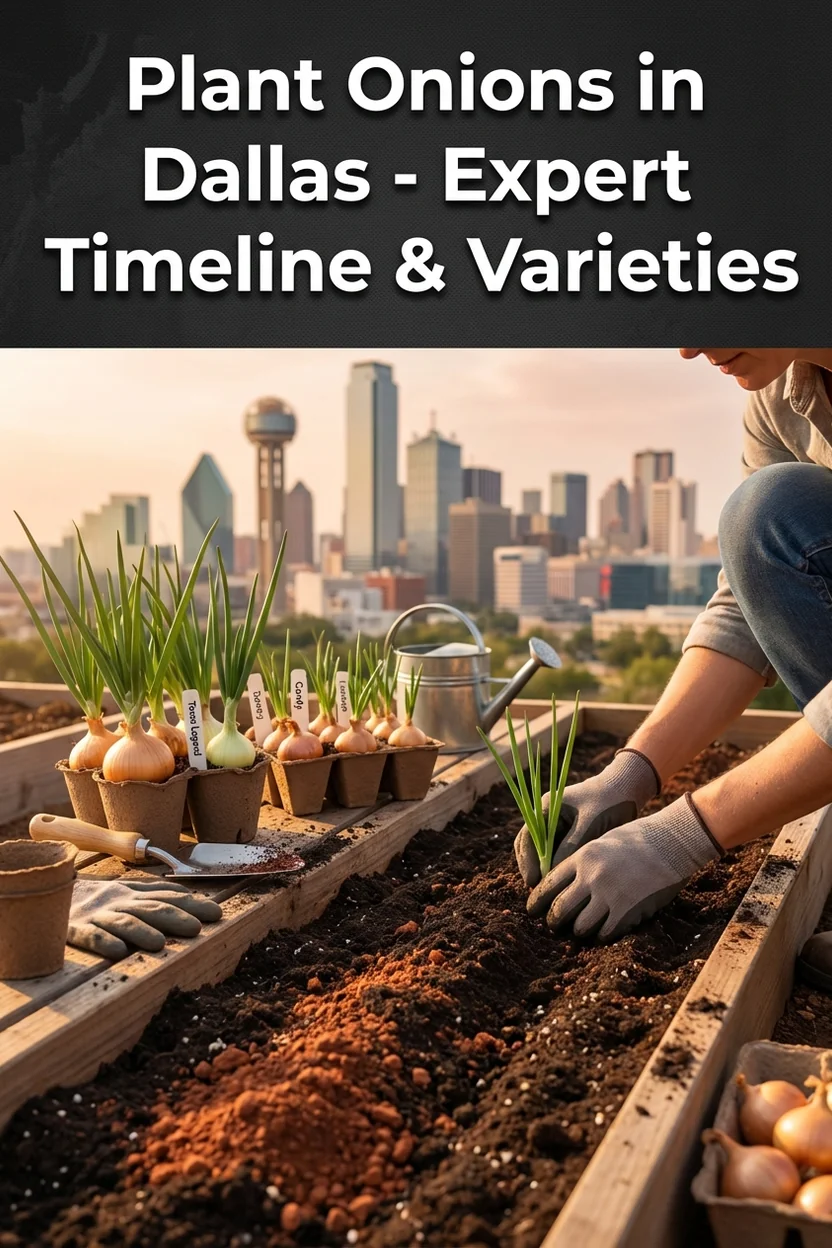
When to Plant Onions in Dallas: Complete Guide + Best Varieties for Zone 8a
Pets & Toxicity
Recorded toxicity for plants linked in this guide. An unknown status is not a safety assessment.
Toxic to pets: Granex onion, Texas super sweet onion, California early softneck garlic and 3 moreDetailsHide
Allium cepa 'Granex' — Toxicity Warning
Toxic to cats and dogs if eaten; cats are especially susceptible, and raw, cooked or concentrated plant material can damage red blood cells and cause anaemia.View Allium cepa 'Granex' plant profileAllium cepa 'Texas Super Sweet' — Toxicity Warning
Toxic to cats and dogs if eaten; cats are especially susceptible, and raw, cooked or concentrated plant material can damage red blood cells and cause anaemia.View Allium cepa 'Texas Super Sweet' plant profileAllium sativum 'California Early' — Toxicity Warning
Toxic to cats and dogs if eaten; cats are especially susceptible, and raw, cooked or concentrated plant material can damage red blood cells and cause anaemia.View Allium sativum 'California Early' plant profileAllium cepa 'Red Creole' — Toxicity Warning
Toxic to cats and dogs if eaten; cats are especially susceptible, and raw, cooked or concentrated plant material can damage red blood cells and cause anaemia.View Allium cepa 'Red Creole' plant profileAllium cepa 'Red Candy Apple' — Toxicity Warning
Toxic to cats and dogs if eaten; cats are especially susceptible, and raw, cooked or concentrated plant material can damage red blood cells and cause anaemia.View Allium cepa 'Red Candy Apple' plant profileAllium sativum 'Inchelium Red' — Toxicity Warning
Toxic to cats and dogs if eaten; cats are especially susceptible, and raw, cooked or concentrated plant material can damage red blood cells and cause anaemia.View Allium sativum 'Inchelium Red' plant profile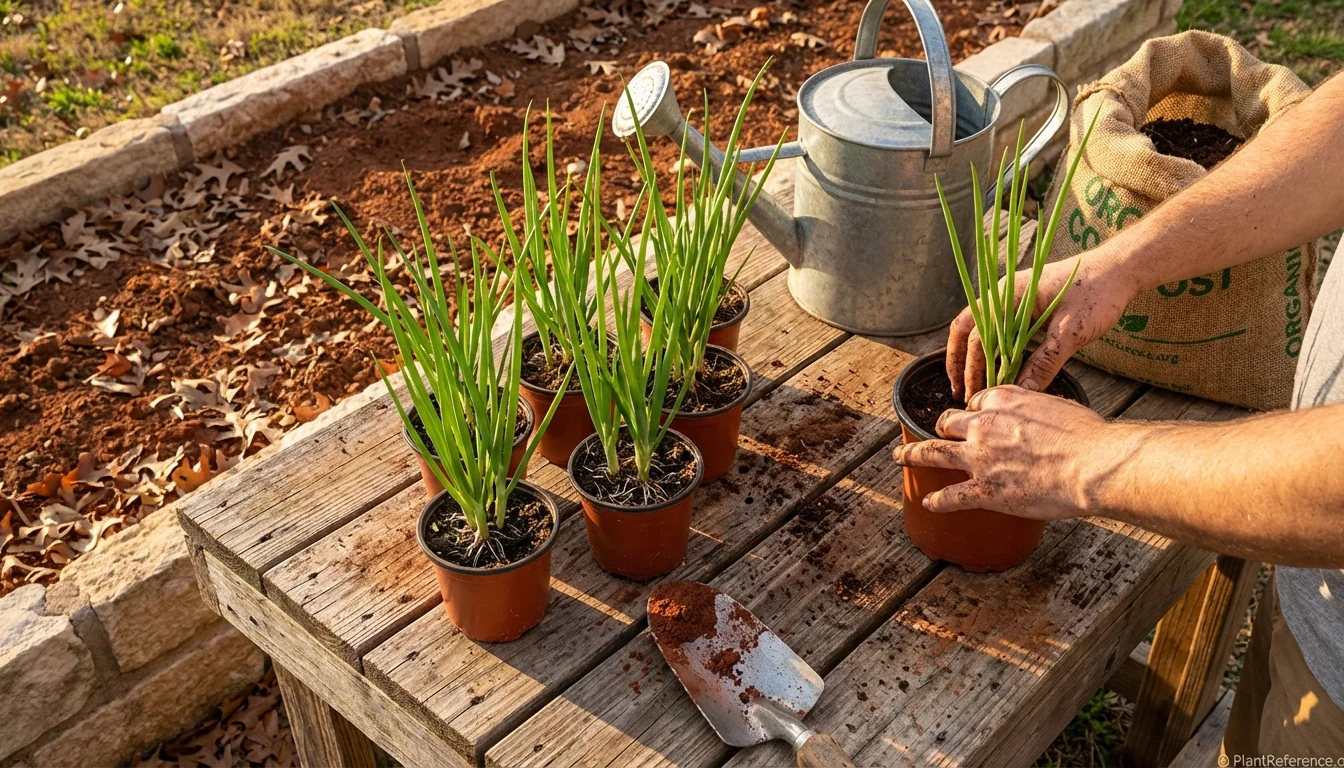
— Image © Plant Reference 2026
Growing onions in Dallas requires understanding a fundamental truth: latitude determines success more than soil or water. At 33°N latitude, Dallas sits squarely in short-day onion territory, where fall planting isn't just preferred—it's mandatory for bulb formation.
Best Onion Varieties for Dallas's Climate
Dallas's 33°N latitude requires short-day onion varieties that bulb when daylight reaches 10-12 hours in late winter. Long-day varieties planted here will grow enormous green tops but never form bulbs, essentially becoming expensive scallions.
The key to understanding onion success in Dallas lies in photoperiodism—how plants respond to day length. When daylight hours reach a variety's trigger point, the plant switches from producing leaves to forming bulbs. Miss this window, and summer heat kills the crop before bulbing occurs.
Recommended Short-Day Varieties for Dallas
Variety | Days to Maturity | Best For | Notes for Dallas |
|---|---|---|---|
110-125 days | Large sweet bulbs | Developed by Texas A&M specifically for Texas heat | |
95-110 days | Storage and heat tolerance | Traditional Louisiana variety, excellent disease resistance | |
Allium cepa 'Granex Yellow' | 100-115 days | Early harvest | Vidalia-type sweet onion, stores 2-3 months |
Allium cepa '1015Y Super Sweet' | 110-125 days | Jumbo bulbs | The "Million Dollar Baby," premium sweet onion |
95-110 days | Reliable intermediate | Day-neutral variety for transition zones | |
100-115 days | Red storage type | Intermediate-day red onion with good storage |
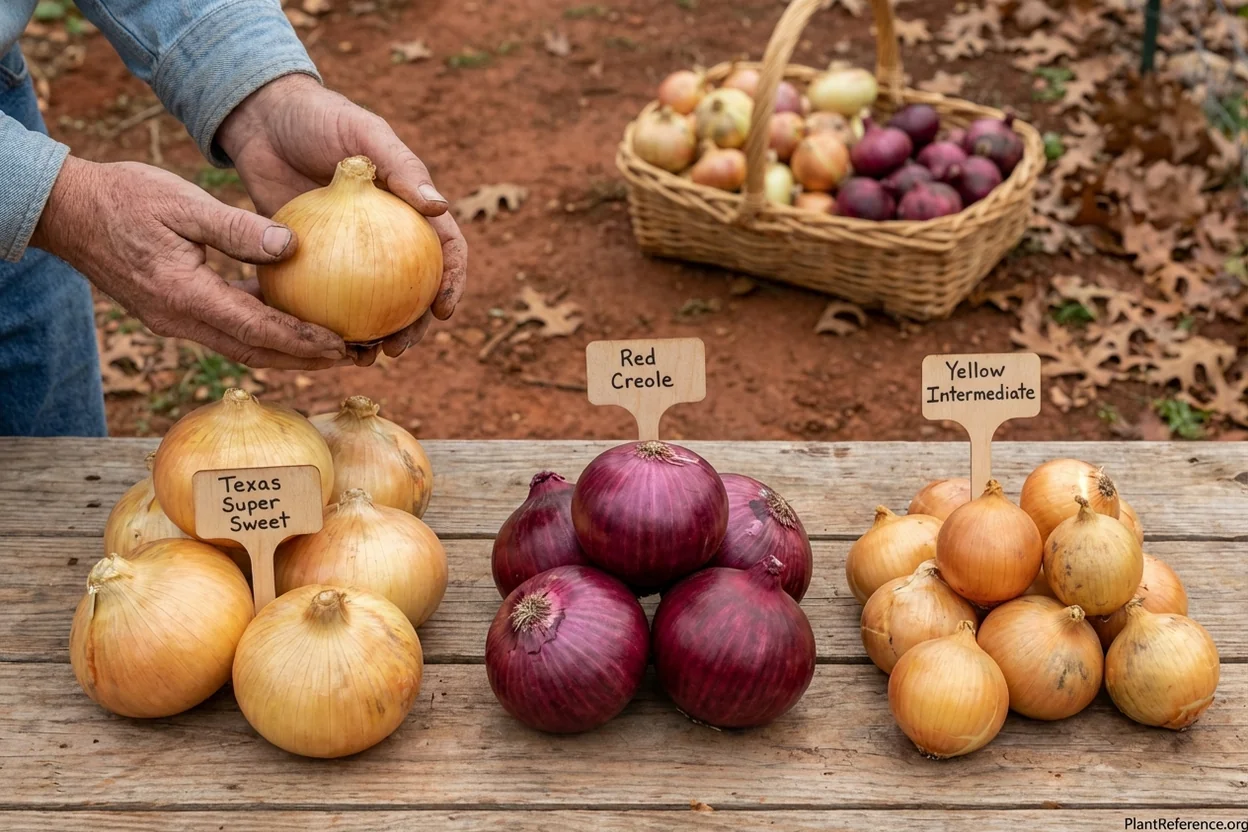
Allium cepa 'Texas Super Sweet' Released by Texas A&M University specifically for Texas growing conditions, this variety consistently produces 4-6 inch bulbs with exceptional sweetness and heat tolerance. The variety's 110-125 day maturity perfectly matches Dallas's October planting to April harvest window.
Allium cepa 'Red Creole' This traditional Louisiana variety tolerates heat and humidity better than most red onions, storing 4-6 months when properly cured. Its pungency makes it ideal for Tex-Mex cooking where strong onion flavor is desired.
For gardeners near the intermediate-day transition zone, Allium cepa 'Candy' This day-neutral hybrid bulbs successfully across a wider latitude range than strict short-day types.
Specific Planting Dates for Dallas
Dallas's Zone 8a climate with an average last frost of March 14 and first frost of November 24 provides a 255-day growing season perfect for fall-planted onions.
Fall Planting Schedule (Primary Method)
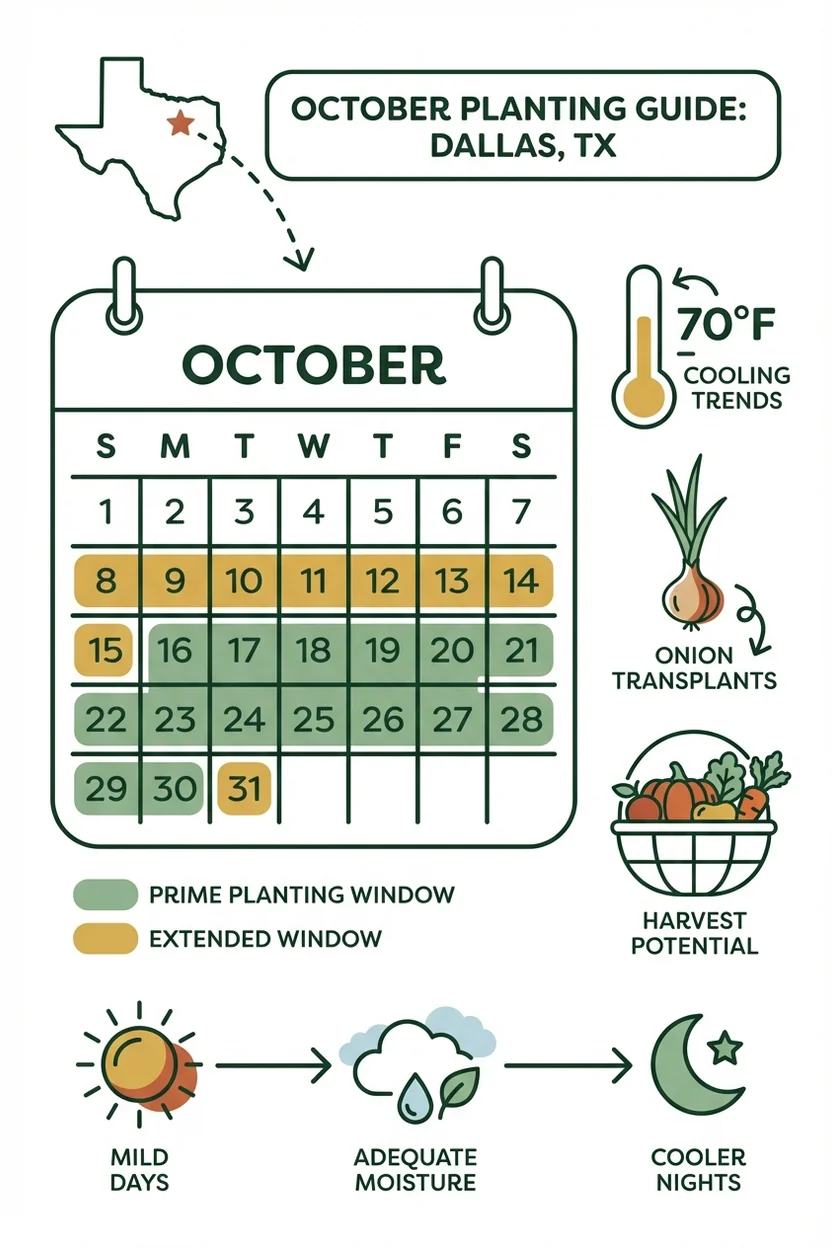
October 15 - November 15: Prime planting window - Soil temperatures have cooled from summer heat (70-75°F ideal) - Transplants establish root systems before winter dormancy - Plants reach pencil thickness by first frost for maximum cold tolerance
November 16 - December 1: Extended planting window - Still viable for southern Dallas areas - Choose smaller transplants for faster establishment - Mulch heavily for winter protection
December 2 - January 15: Late planting (emergency only) - Risk of smaller bulbs due to shortened growing season - Success depends on mild winter weather - Better suited for scallion production than bulb development
Why Spring Planting Fails in Dallas
Attempting spring onion planting in Dallas creates a physiological impossibility. Short-day onions planted in March begin bulbing immediately as day length exceeds their 10-12 hour trigger, but the plants lack sufficient leaf mass to fuel bulb development. Meanwhile, rising temperatures stress the shallow-rooted plants before meaningful bulb formation occurs.
I've watched countless Dallas gardeners lose spring onion crops to this fundamental misunderstanding of photoperiodism. The plants bolt (send up flower stalks) or simply wilt in May heat, producing nothing but frustration.
Garlic Planting Timing
October 15 - November 30: Softneck garlic planting - Plant 🌿Allium sativum 'California Early' and 🌿Allium sativum 'Inchelium Red' - Softneck varieties require less cold vernalization than hardneck types - 240-270 day maturity places harvest in June-July
November 15 - December 15: Extended garlic window - Later planting acceptable for Dallas's mild winters - Focus on quick-establishing varieties - Mulch heavily for soil temperature regulation
Complete Growing Guide for Dallas
Success with Dallas onions requires adapting traditional northern growing methods to short-day varieties and fall planting schedules.
Soil Preparation for Fall Planting
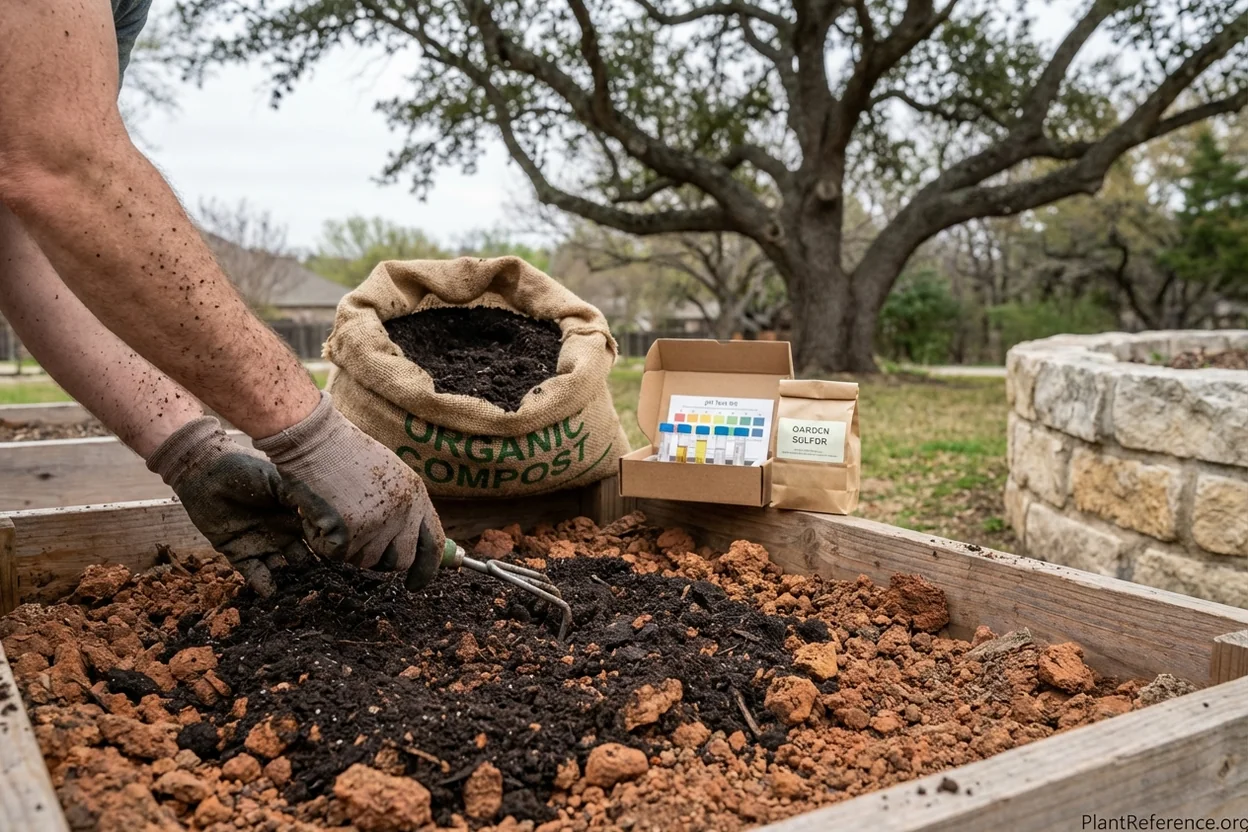
Dallas's heavy clay soils require amendment for proper onion growth. The shallow, inefficient root systems of onions demand well-draining soil with high organic matter content.
Soil Testing and Amendment (September) Test soil pH targeting 6.0-6.8 range. Dallas clay typically runs 7.2-8.0, requiring sulfur addition to lower pH. Apply 2-4 pounds sulfur per 100 square feet if pH exceeds 7.0.
Organic Matter Integration Work 3-4 inches of compost into the top 8 inches of soil. Dallas clay benefits from consistent organic matter addition—I add compost twice yearly to maintain soil structure. The compost improves drainage while retaining moisture during winter dry spells.
Drainage Improvement Raised beds perform exceptionally well in Dallas clay, elevating the root zone above winter drainage problems. Build beds 6-8 inches high using cedar boards to resist Texas heat and humidity.
Transplant Selection and Planting Technique
Choosing Quality Transplants Select transplants with pencil-thick stems and 6-8 inch green tops. Avoid transplants with yellowing leaves or soft stems—these indicate storage stress that reduces winter hardiness. Root systems should show white, actively growing roots.
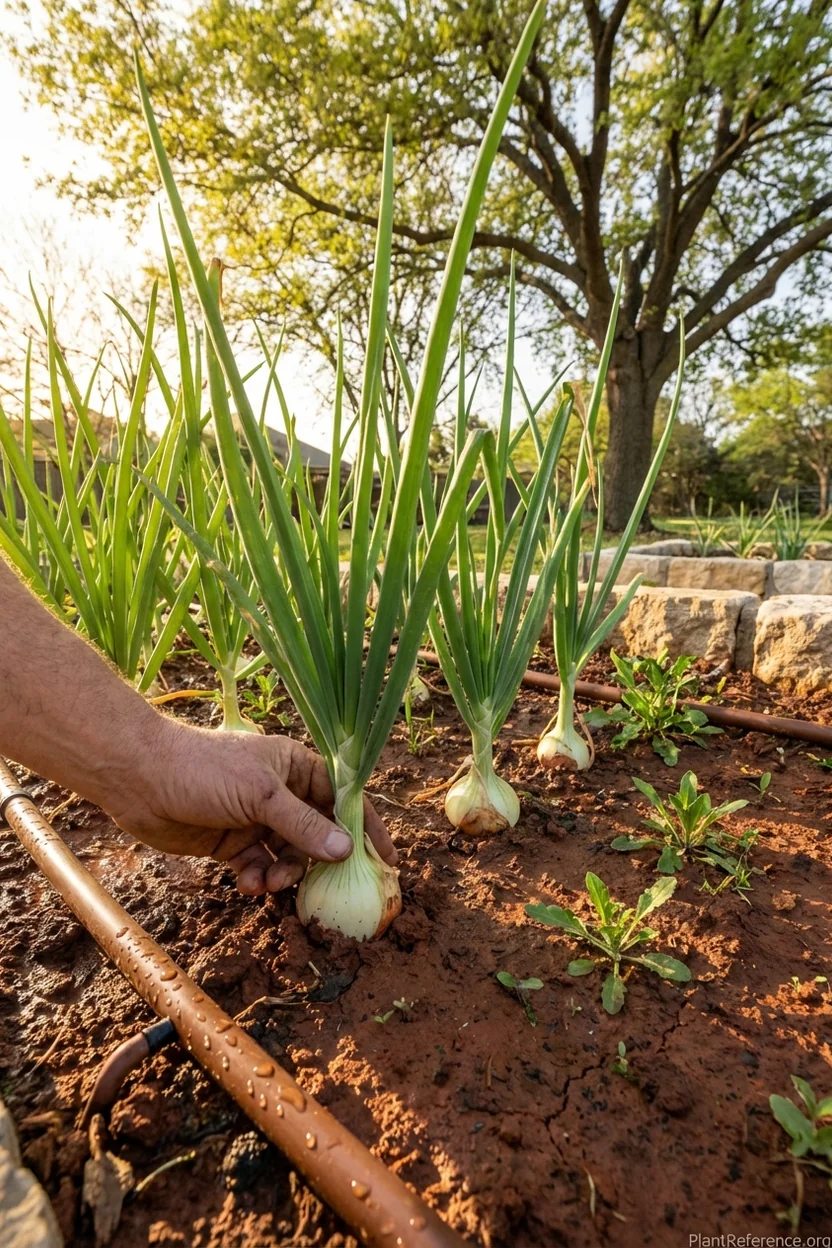
Planting Depth and Spacing Plant transplants 1 inch deep, measuring from the soil line on the transplant stem. Space plants 4-6 inches apart in rows 12 inches apart. Closer spacing produces smaller but more numerous bulbs—ideal for cooking onions rather than storage types.
Initial Establishment Care Water transplants immediately after planting, then reduce frequency to encourage deep root development. Dallas's October weather typically provides adequate natural moisture, requiring irrigation only during dry spells exceeding 10 days.
Winter Care and Protection
Dallas's Zone 8a winters rarely damage established onion transplants, but protection improves spring growth vigor.
Mulching Strategy Apply 2-3 inches of shredded hardwood mulch around plants in late November. Keep mulch 2 inches away from plant stems to prevent rodent damage and fungal problems. The mulch moderates soil temperature swings and retains moisture during winter dry periods.
Cold Protection Methods Row covers become necessary when temperatures drop below 20°F—rare but possible in Dallas. Remove covers when temperatures rise above 40°F to prevent overheating. I use lightweight spun fabric rather than plastic to maintain air circulation.
Spring Growth Management
As Dallas day length increases past 10-12 hours in February-March, short-day onions begin the transition from vegetative growth to bulb formation.
Fertilization Schedule Apply balanced 10-10-10 fertilizer in early February when new growth appears, using 1 pound per 100 square feet. Side-dress with nitrogen (21-0-0) in mid-March as bulbing begins, then cease all fertilization. Late nitrogen applications create thick necks that won't cure properly.
Irrigation Management Increase watering frequency as spring growth accelerates, maintaining consistent soil moisture without waterlogging. Dallas clay holds moisture well but can become waterlogged during spring rains—ensure adequate drainage to prevent root rot.
Troubleshooting Dallas-Specific Problems
Dallas's unique climate creates specific challenges that require targeted solutions.
Problem | Symptoms | Likely Cause | Quick Fix |
|---|---|---|---|
Bolting/Flower stalks | Seed stalks appearing in late spring | Temperature stress during establishment OR intermediate/long-day variety | Remove stalks immediately; verify variety is short-day; source transplants from Texas suppliers |
Poor bulb development | Large green tops but small elongated bulbs | Wrong day-length variety (intermediate or long-day) | Harvest as scallions; next year verify short-day varieties (10-12 hour trigger) |
Clay soil drainage | Yellow wilting plants despite adequate water | Waterlogged Dallas clay suffocating shallow roots | Add 4-6 inches compost; build raised beds 6-8 inches high; consider French drain systems |
Storage rot | Bulbs rot quickly after harvest despite curing | High Dallas humidity preventing proper curing OR sweet variety poor storage | Cure indoors with AC and fans; accept 1-3 month storage for sweet varieties; choose Red Creole for 4-6 month storage |
Harvest & Storage
Dallas's hot, humid summers create challenging conditions for onion harvest and storage, requiring modified techniques from traditional northern methods.
Harvest Timing Indicators
Begin harvest when 50-75% of onion tops fall over naturally, typically occurring in April-May for October plantings. This lodging indicates the plant has finished transferring carbohydrates from leaves to bulbs—the optimal harvest window.
Never bend tops over manually to force lodging. This practice, common in northern regions, creates an open wound that invites bacterial rot in Dallas humidity. Allow natural senescence to seal the neck properly.
Curing in Dallas Humidity
Dallas's spring humidity (60-80%) prevents proper field curing used in arid regions. Modify curing techniques for local conditions:
Indoor Curing Method Move harvested onions immediately to an air-conditioned space with fans for circulation. Spread onions in single layers on screens or hang in mesh bags. Maintain 75-80°F temperature with 50-60% humidity if possible.
Accelerated Curing Timeline Dallas humidity requires faster curing than the traditional 3-4 weeks. Monitor neck tightness daily—onions cure when necks feel firm and dry when pinched. This typically occurs within 10-14 days in controlled indoor conditions.
Storage Duration Expectations Sweet short-day onions store poorly regardless of curing quality: - 🌿Allium cepa 'Texas Super Sweet': 1-2 months maximum - Allium cepa '1015Y Super Sweet': 2-3 months with excellent curing - 🌿Allium cepa 'Red Creole': 4-6 months due to higher sulfur content
Plan to use sweet onions quickly or preserve by freezing, dehydrating, or pickling for long-term storage.
Frequently Asked Questions
Reading about plants and recognising them are different skills. These three build the second.
- Daily PlantIdentify the day’s mystery plant from a close-up photograph.
- Keyed OutWork a dichotomous key, lead by lead, to name a hidden specimen.
- Name That PlantName a specimen from botanical clues dealt hardest first.
Free to play, no account needed
James is a lawn care professional in Dallas who runs a small residential maintenance company. He started mowing lawns as a teenager and worked his way up to running crews for a large landscaping firm before going out on his own. James specializes in warm-season turf grasses—Bermuda, St. Augustine, and Zoysia—and knows how to keep a lawn alive through Texas summers without wasting water. He's also experienced with the transition zone challenges that Dallas faces, where warm-season and cool-season grasses overlap. James takes a practical, science-informed approach to lawn care and pushes back on the idea that a good lawn requires heavy chemical inputs.