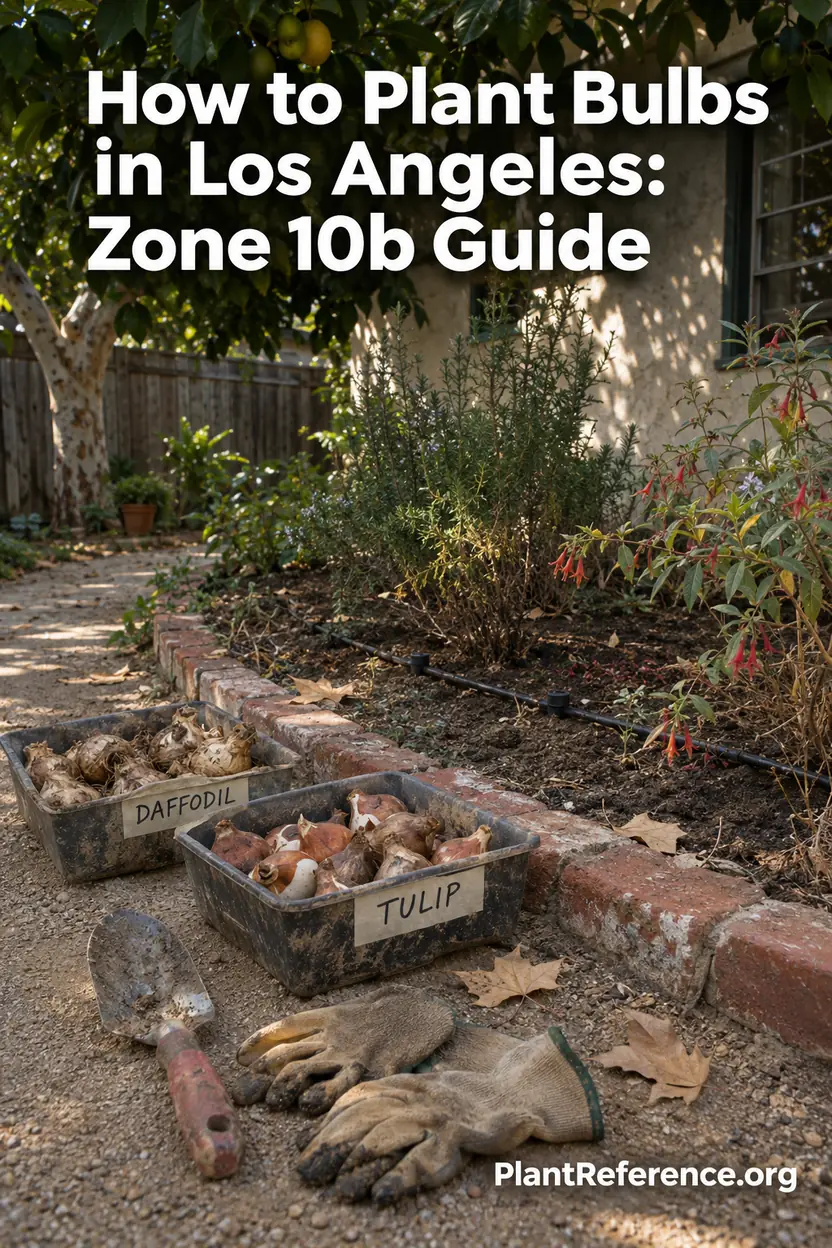
How to Plant Bulbs in Los Angeles: Zone 10b Guide
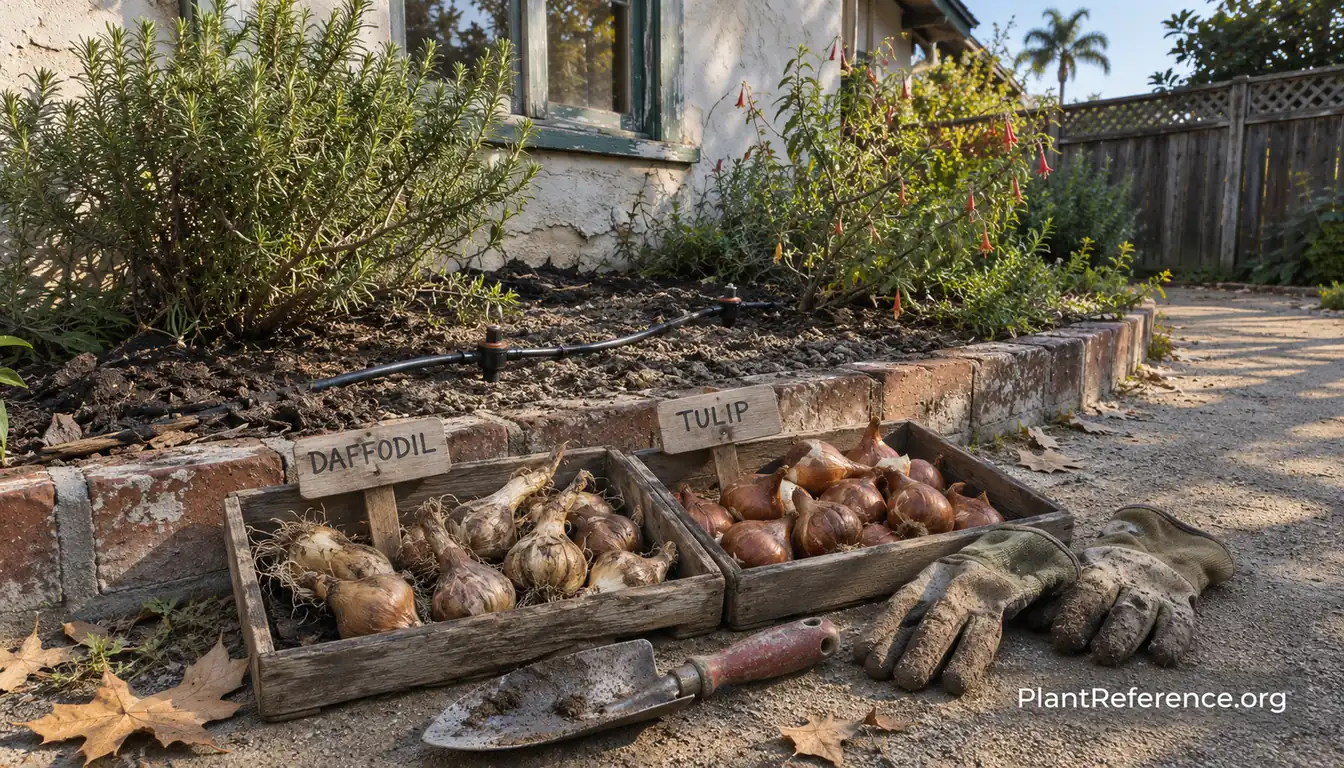
— Image © PlantReference.org 2026
To plant bulbs in Los Angeles successfully, give each plant the season it actually needs. Cold-dependent tulips require planned chilling before winter planting, while summer bulbs need warm soil and suitable moisture during active growth. A mild climate gives you choices, but it does not remove those differences.
You do not need to turn the whole garden into a high-maintenance flower bed. A small seasonal display near a path or patio can be enough. Keep it separate from plants that prefer very little summer water, and choose a place where you can inspect the soil rather than automatically running a sprinkler. This guide uses the stored Zone 10b city profile; individual coastal, inland, and sheltered sites still need their own weather and soil checks.
Best Bulbs for Los Angeles Gardens
Choose between a seasonal display and a returning planting
Large hybrid tulips are best approached as a seasonal project here. Many decline after their first flowering even in favorable climates. That does not mean you failed; it means the plant's long-term needs and the garden's conditions may not match.
Buy clearly labeled bulbs and ask whether they have already been chilled. Keep the variety and treatment information together. If you are using pots, the setup principles in Container Gardening: Pots, Soil, Water & Yields help you separate a seasonal display from the permanent garden.
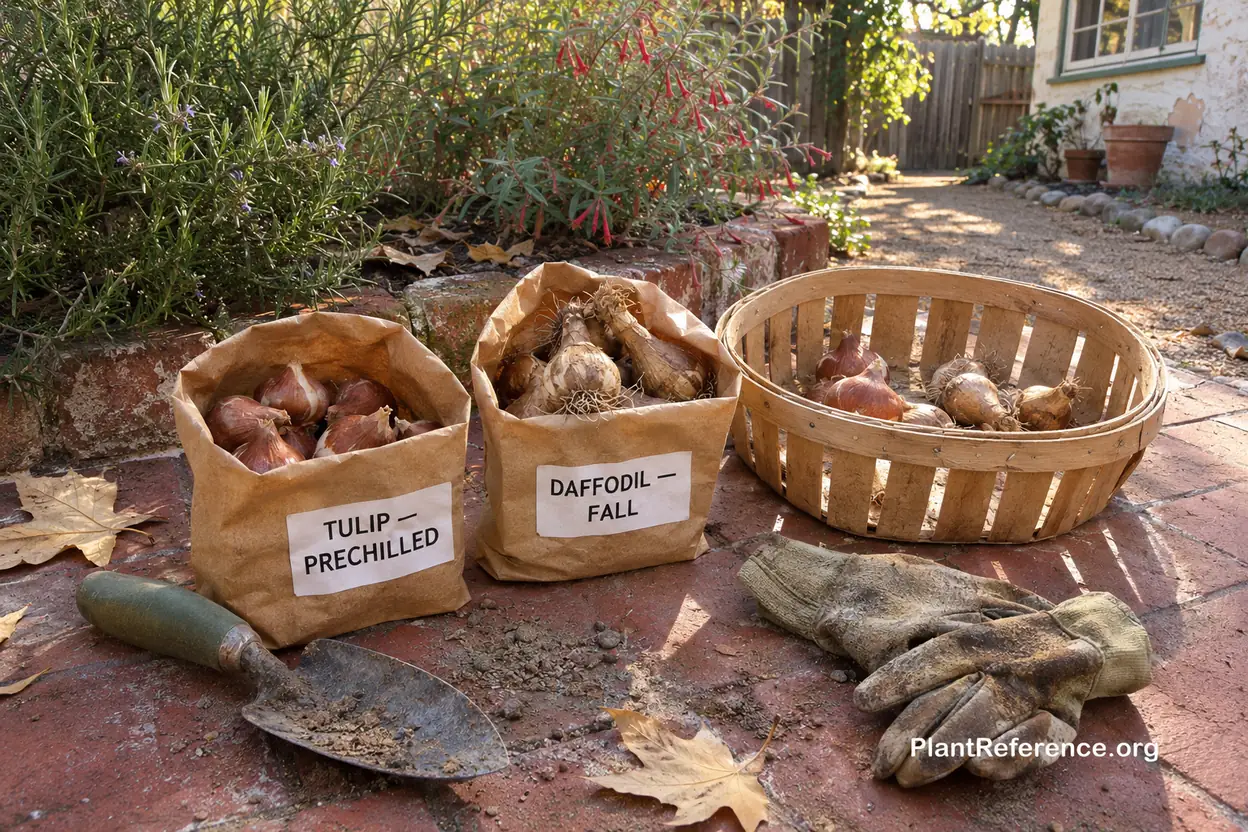
For returning spring flowers, the research points toward tazetta and jonquil daffodil groups in warmer regions. Choose named stock recommended for your local conditions rather than assuming every daffodil shares the same cold requirement. Paperwhites are an important exception to blanket chilling advice: the research identifies them as not requiring chilling for indoor forcing.
The familiar naturalizing selections Narcissus 'Carlton', Narcissus 'Ice Follies', and Narcissus 'Tete-a-Tete' appear in the broader research, but that is not a promise that every selection is equally suited to the warmest neighborhood. Local suitability and the supplier's treatment instructions should guide the actual purchase.
Species tulips such as Tulipa clusiana and Tulipa tarda have stronger perennial potential under suitable conditions than many large hybrids. They still need a compatible seasonal cycle. Do not assume a smaller flower means the bulb can ignore winter temperatures or tolerate constant summer irrigation.
Include locally suitable seasonal choices
The Los Angeles brief highlights ranunculus as a useful local choice. Treat it as its own planting group, not as a tulip with a different flower. Buy clearly identified stock and follow its specific preparation, planting, and seasonal instructions; the shared research does not support one universal soaking or chilling recipe for every selection.
For summer flowers, dahlias are another option if you can provide regular attention. Dahlia 'Cornel' and Dahlia 'Jowey Winnie' are identified as beginner-friendly choices in the research. Start with one or two plants so you can judge water demand, support needs, and performance in your own exposure.
Cannas offer warm-season foliage and flowers, while caladiums offer foliage for suitable shade. They are not automatically water-wise substitutes for a dry-climate planting. Their value depends on whether the garden can support their active-season needs without watering everything around them.
Bulb or group | Display period | Best use | Local decision |
|---|---|---|---|
Large hybrid tulips | Spring after chilling | Small seasonal displays | Plan artificial chilling and possible annual replacement |
Tazetta or jonquil daffodil groups | Cool-season flowers | Warm-climate returning plantings | Select stock suited to the actual site |
Paperwhites | Winter forcing or suitable seasonal display | A simpler no-chill option | Do not copy the tulip refrigerator schedule |
Ranunculus | Seasonal flowers | A locally suitable display | Follow the selected stock's planting instructions |
Tulipa clusiana | Spring | Smaller tulip trial | Confirm chilling and summer-dormancy needs |
Dahlia 'Cornel' | Summer into fall, conditions permitting | Cut flowers | Provide sun, support, and active-season water |
These are display periods, not guaranteed maturity counts. Flowering depends on treatment history, planting material, and weather. A fixed harvest date would imply more certainty than the available research supports.
Specific Planting Dates for Los Angeles
Use winter's cool period deliberately
The research gives January as the broad Zone 10 planting window for pre-chilled spring bulbs. That is a planning window, not a rule that every bulb must be planted on January 1. Have the chilling complete and the bed ready, then choose suitable conditions.
Tulips require approximately 12–18 weeks of chilling, depending on stock and treatment history. For a January 15 target, counting backward gives about September 11–October 23 as the start range for that duration. Confirm the supplier's actual recommendation before beginning.
Hyacinths have a different reference range of 10–15 weeks, and crocuses 8–17 weeks. Daffodil requirements vary with the selection; do not apply a generic cold treatment to a no-chill paperwhite simply because both are sold with spring bulbs.
Keep refrigerated bulbs away from ripening fruit because ethylene can damage developing flowers. Do not freeze them. Mark the start date, inspect periodically, and remove soft or decaying material rather than keeping it beside healthy bulbs.
Interpret the city frost record carefully
The stored record lists February 15, 2025 as the last-frost reference and December 15, 2025 as the first-frost reference. The interval is 303 days. These historical planning values do not mean every local garden experiences those frosts, nor do they guarantee a frost-free current season.
Adding a 7–14-day buffer to February 15 gives February 22–March 1 as a review window for tender planting. It is not an instruction to put summer bulbs into cold soil. Check the forecast and measure the intended bed.
Dahlias need soil of at least 60°F (16°C) after frost danger passes. Caladiums need about 65°F (18°C); the research gives cannas a minimum soil reference of 50°F (10°C). A warm patio wall does not tell you the temperature inside a shaded bed.
Plan around plant stages, not invented seed dates
This guide concerns purchased bulbs, tubers, corms, and rhizomes. There is no useful generic indoor seed-starting calculation to apply. Likewise, a fixed number of days from planting to cutting flowers is not available for every selection.
Use observable stages: chilling completed, soil suitable, growth established, flowers open, foliage naturally yellowing, and dormancy. In Southern California, that approach is more dependable than copying a northern fall-planting checklist.
Complete Growing Guide for Los Angeles Bulbs
Separate irrigation needs from the beginning
Put actively growing bulbs where you can water them without repeatedly soaking nearby drought-tolerant plants. A small dedicated bed, pot, or separately controlled irrigation area is often enough. The point is not to avoid watering a plant that needs it; it is to avoid watering unrelated plants unnecessarily.
Check the summer routine before choosing a permanent location. A spring bulb that prefers drier dormancy can struggle beside a plant receiving frequent summer irrigation. Mark dormant groups so their apparent absence does not lead to extra watering or accidental digging.
Prepare drainage without overcomplicating the soil
Bulbs need a rooting area that drains. If water collects in a low spot, use another location or a raised bed with an actual drainage route. How to Build a Raised Garden Bed: Step-by-Step Construction Guide covers the structure, but raised sides alone cannot make trapped water disappear.
Use How to Test Garden Soil: Jar, Ribbon & pH Tests to understand the basic texture and pH questions before adding amendments. A soil test can guide fertilizer or pH decisions. Do not treat yellow leaves as proof that the whole garden needs a chemical correction.
For dense ground, How to Improve Clay Soil Without Making It Worse explains why working wet soil and making isolated loose planting pockets can cause trouble. Improve the broader area and avoid compacting it with repeated foot traffic.
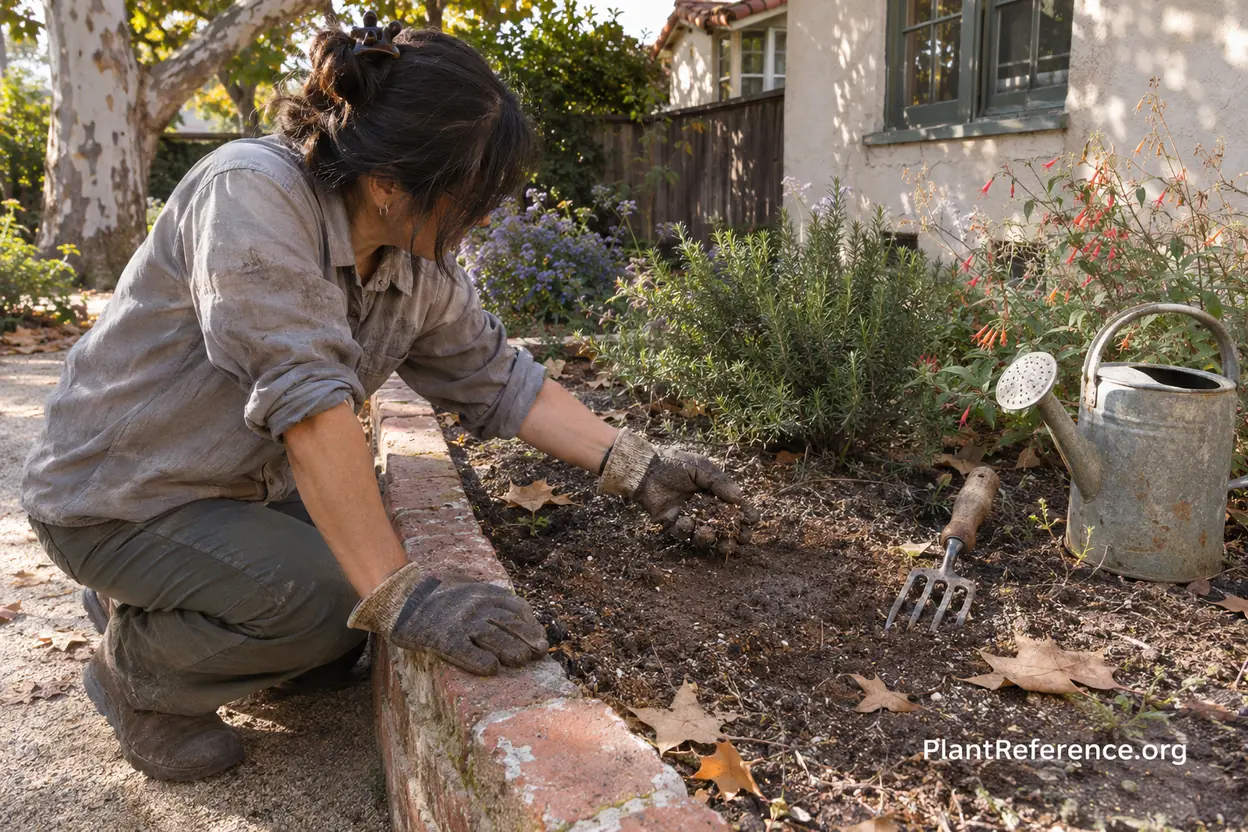
Where soil dries too quickly, use the approach in How to Improve Sandy Soil That Dries Out Fast instead of assuming every local garden has the same texture. Better moisture retention and good drainage are not opposites; both help roots avoid extremes.
Use the correct depth for each group
Large tulips, daffodils, and hyacinths use a typical planting depth of 6–8 inches (15–20 cm) and spacing of 4–6 inches (10–15 cm) in the research. Small crocuses use about 3–4 inches (8–10 cm) depth and 2–3 inches (5–8 cm) spacing.
Species tulips use approximately 4–5 inches (10–12 cm) depth. Follow the package's depth diagram and account for bulb size. Set true bulbs with the growing point upward, then settle the soil gently without stamping the bed hard.
Dahlia tubers go about 4–6 inches (10–15 cm) deep with the eye upward. Install stakes at planting so you do not drive them through tubers later. A canna rhizome or caladium tuber has a different form, so use its own planting directions rather than looking for a tulip-shaped tip.
Do not transfer these depth figures to ranunculus without checking the supplied stock's instructions. Shared retail labeling as “bulbs” does not make every underground storage organ identical.
Water while checking the roots' conditions
Water newly planted hardy bulbs to settle the soil, then assess moisture and rainfall before watering again. The surface can dry while the rooting zone remains wet. Use a finger or appropriate soil check rather than reading only the color of the top layer.
During active growth, avoid letting a planting alternate between prolonged saturation and severe drying. Apply water slowly enough to enter the soil rather than run away. A watering calendar is a reminder to inspect, not a command to add water regardless of conditions.
Keep fertilizer decisions equally restrained. DIY Organic Fertilizer Blends: A Soil-Test-First Guide offers a better starting point than assuming more phosphorus always creates more flowers. Inadequate chilling and poor drainage are not nutrient deficiencies.
Make containers a deliberate choice
Pots help separate seasonal flowers from permanent beds, but they also need more frequent observation. Check drainage holes, avoid leaving the pot standing in collected water, and use a suitable container medium. Do not fill a deep pot with compacted garden clay and expect it to behave like an open bed.
An exposed container can become much hotter than nearby ground. Raised Bed Too Hot in Summer: Protecting Plants from Heat Stress provides useful context for recognizing root-zone heat problems. Adjust placement when needed instead of automatically compensating with repeated watering.
Let foliage finish its work
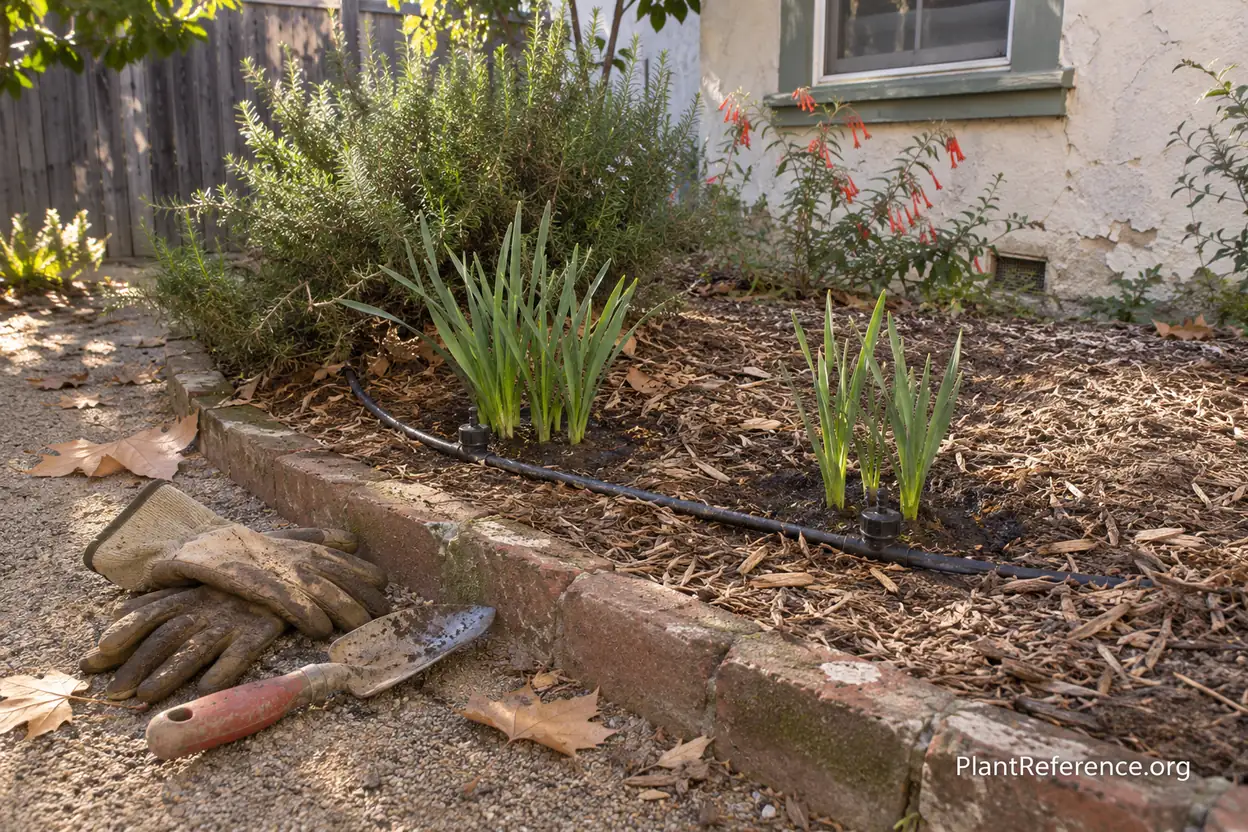
After spring flowers fade, remove spent heads if desired but retain green leaves. The research gives roughly 6–8 weeks for natural yellowing after bloom, with actual timing determined by the plant and conditions. Do not braid or tie leaves to make the planting disappear sooner.
If the appearance bothers you, place the display where neighboring growth softens the view. Avoid burying the leaves beneath mulch or new plants. A bulb cannot replenish its reserves if its working foliage is removed for tidiness.
For dahlias, provide roughly 6–8 hours of sun and support growth early. Pinching above the third or fourth leaf pair is described in the research as a branching technique. Keep the trial small enough to maintain without turning the whole garden into a demanding cutting plot.
Troubleshooting Los Angeles Bulb Problems
Tulips make short stems or no flowers
Review chilling duration, prior treatment, and storage near fruit. Those details can explain a poor display more directly than fertilizer. If bulbs arrived without reliable treatment information, note that uncertainty rather than assuming the garden soil caused everything.
Do not repeatedly replant weak bulbs in the hope that one more feeding will restore them. Many large hybrids are better managed as annual displays. Choose a different group if yearly replacement is not a worthwhile use of money or effort.
Bulbs soften or smell unpleasant
Soft tissue and unpleasant odor suggest decay. Remove failed material and look for water collecting around the planting. A blocked pot outlet, low spot, or irrigation overlap needs correction before new bulbs go in.
Avoid adding dry material only to the individual hole while leaving the surrounding drainage problem unchanged. The broader soil approach in Soil Health 101: How to Build Living, Productive Garden Soil helps keep the correction focused on the rooting environment.
A returning planting declines
Check foliage removal, increasing shade, crowding, and summer moisture. A plant can flower well once using stored reserves and still be poorly matched to its long-term location. That is useful information, not a reason to blame yourself.
Keep the label and compare results by selection. If one group persists and another declines, expand the successful group cautiously. A mixed bag without names makes that learning much harder.
Summer plants wilt during hot weather
Inspect moisture below the surface and compare morning and afternoon condition. Dry roots, excessive heat, and saturated roots can all produce disappointing foliage. Extra water helps only when lack of moisture is part of the problem.
Move an overheated container if practical, check whether light exposure suits the plant, and keep the rooting zone under observation. Do not use a succulent watering routine for actively growing dahlias, or a dahlia routine for nearby succulents.
Animals disturb the planting
Tulips are attractive to several bulb-eating animals. Daffodils are less palatable, but no planting is completely animal-proof. Physical protection can be more reliable than assuming one neighboring plant will repel everything.
The research describes ½-inch (1.3 cm) hardware cloth as a barrier material. Arrange any protection so shoots can emerge and sharp edges are inaccessible. Keep ornamental bulbs separate from food and away from children or pets likely to chew them.
Harvest and Dormant-Season Storage
Cut flowers during a cooler part of the day with clean tools, and place them promptly in clean water. Leave sufficient foliage on the plant to support continuing growth. Record the first cutting date as an observation rather than a promise for next year.
In Zone 10b, winter cold is not the only reason to lift bulbs or tubers. Drainage, irrigation compatibility, container exposure, and the plant's dormancy requirements also matter. Some material can remain in a suitable bed; some is easier to manage separately.
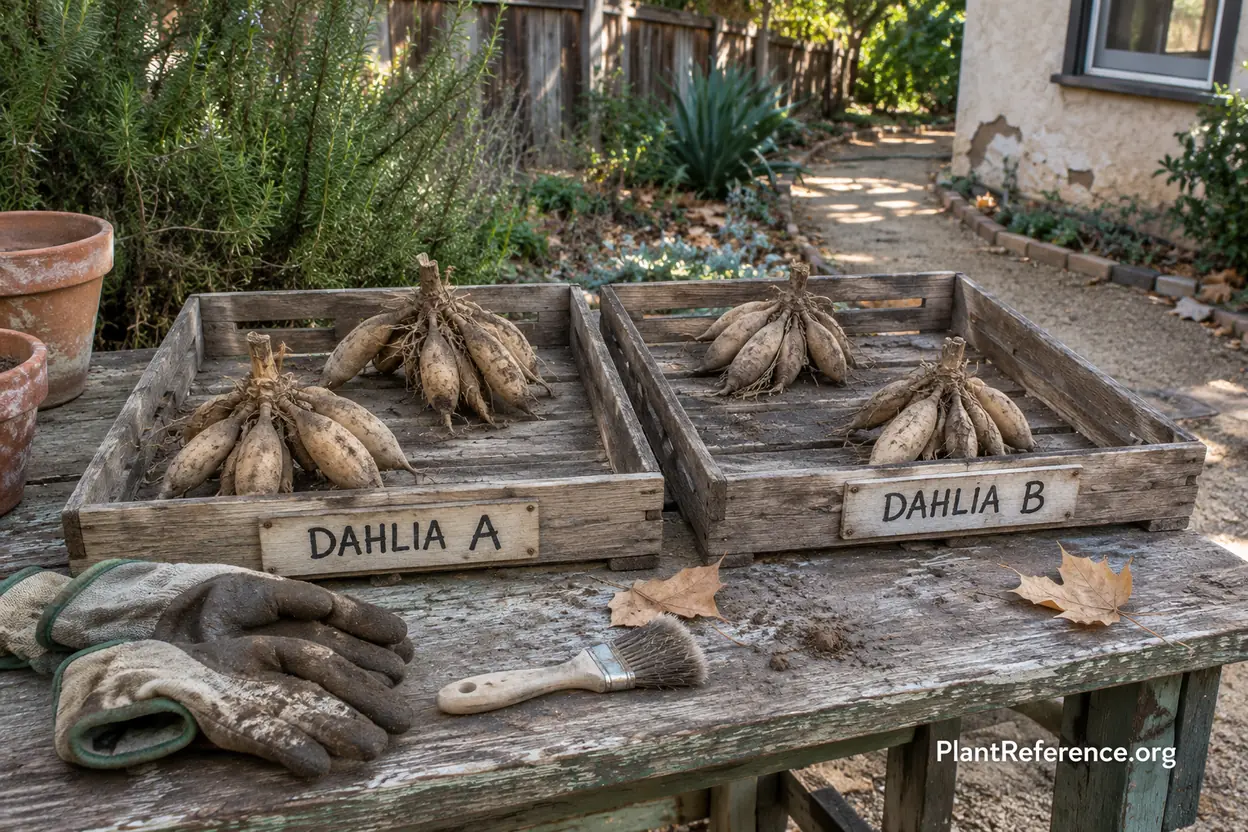
When lifting dahlias for storage, the research gives a short 1–3-day curing period and a storage range around 40–50°F (4–10°C). Keep labels attached and inspect monthly for rot or shriveling. Do not leave tubers drying indefinitely until they lose excessive moisture.
Cannas use approximately 40–50°F (4–10°C) when stored, while caladiums need about 60–65°F (16–18°C). Follow the plant's own routine instead of putting every kind of material in one box. For ranunculus, retain and follow the supplier's specific dormant-season instructions.
A simple record of chilling, planting, flowering, and watering makes the next season easier. Keep the choices that fit your garden's rhythm. You can enjoy a small winter flower display without asking every part of the landscape to live on the same schedule.
Frequently Asked Questions

Reading about plants and recognising them are different skills. These three build the second.
- Daily PlantIdentify the day’s mystery plant from a close-up photograph.
- Keyed OutWork a dichotomous key, lead by lead, to name a hidden specimen.
- Name That PlantName a specimen from botanical clues dealt hardest first.
Free to play, no account needed
Tagged with
Emma runs a small succulent propagation business from her home in San Diego, shipping starter plants and cuttings across the country. She fell into succulents after college when she realized they were the only plants that survived her travel schedule—she was working as a travel nurse at the time. San Diego's mild, dry climate is ideal for outdoor succulent gardens, and Emma's front yard is a living catalog of over 200 varieties. She completed a certificate program in ornamental horticulture and writes about succulent care, propagation techniques, and drought-tolerant garden design. Her writing is calm and reassuring—she knows people feel bad about killing plants, and she wants them to stop worrying so much.