Image 1 of 3
1 / 3
© Andrey Zharkikh from Salt Lake City, USA, some rights reserved (CC-BY) · Wikimedia Commons
Picea, Genus, glauca, Species, 'Pendula', Cultivar,
- Genus & species
- Cultivar
weeping white spruce
Overview
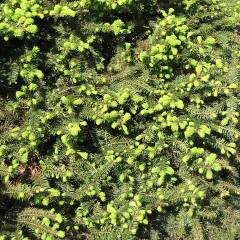
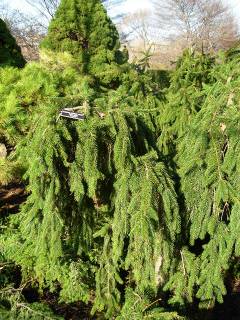
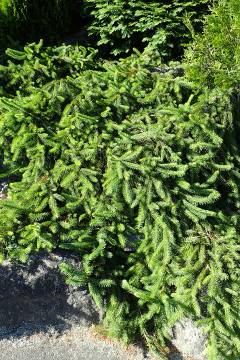
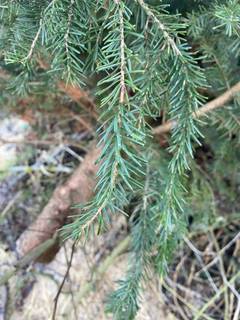
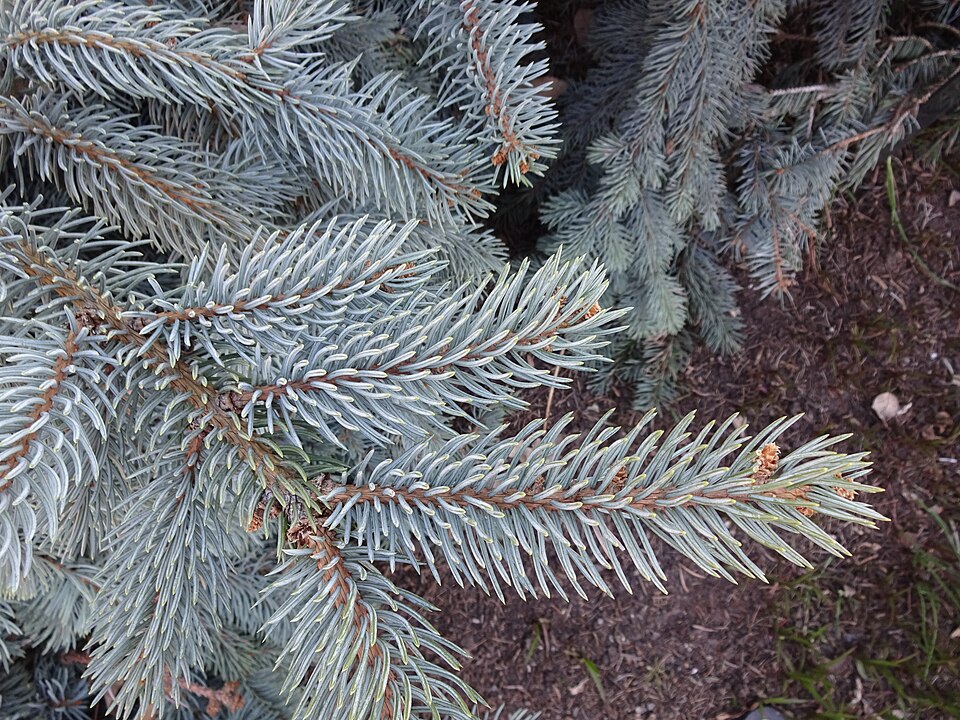
'Pendula' is a weeping cultivar of Picea glauca with a vertical central leader and strongly pendulous side branches. Mature trees reach 25-40 feet (7.5-12 m) tall and 6-10 feet (1.8-3 m) wide after 30 years, forming a narrow column with branches that hang downward against the trunk. Growth rate is 6-12 inches (15-30 cm) per year. Needles four-sided, stiff, 0.4-0.7 inch (10-18 mm) long, blue-green with whitish stomatal lines, persisting 4-7 years. Branches densely set on the leader, with side shoots curving sharply downward within their first year of growth. Bark grey-brown, scaly with age. Pollen cones reddish in May; female cones cylindrical, 1.5-2.5 inches (4-6.5 cm) long, ripening light brown in the same season. The leader requires staking for the first 5-10 years to maintain vertical growth; without support, plants assume a sprawling or cascading form. Susceptible to spruce spider mite in hot, dry summers and to needle drop on the lower trunk where branches press against bark.
Native Range
The species Picea glauca is native to a continent-wide boreal range across northern North America, from Alaska east to Newfoundland and south through the Great Lakes states, New England, and the Appalachians. The cultivar 'Pendula' originated in cultivation in the late 19th century, with multiple weeping forms documented in Europe and North America. It exists only as a vegetatively propagated clone.Suggested Uses
Used as a vertical specimen, with mature spread of 6-10 feet (1.8-3 m). Suited to small gardens, narrow planting strips, and entryway placements where the columnar form fits restricted widths. Spaced 8-12 feet (2.4-3.7 m) when grouped. Container culture is feasible in pots of at least 30 gallons (115 L) for the first 15 years.How to Identify
Appearance
Size & Dimensions
Height25' - 40'
Width/Spread6' - 10'
Colors
Foliage Colors
Fall Foliage Colors
Bloom Information
Spruces produce wind-pollinated cones rather than flowers. Male pollen cones reddish, develop at branch tips in May, releasing pollen for 1-2 weeks. Female cones develop the same season and reach 1.5-2.5 inches (4-6.5 cm) at maturity in late summer to early autumn. Cones fall during the first winter rather than persisting on branches.
Detailed Descriptions
Foliage Description
blue-green to grey-greenGrowing Conditions
Sun Requirements
Requires 6-12 hours of direct sunlight daily
• Full Sun: 6+ hours of direct sunlight
• Partial Shade: 3-6 hours of direct sunlight
• Full Shade: Less than 3 hours of direct sunlight
Care & Maintenance
Care Guide
Establish in well-drained acidic to neutral soil (pH 4.5-7.0) with full sun exposure of at least 6 hours daily. Water deeply once per week during the first two growing seasons; established plants tolerate drought once roots are established. The central leader requires staking vertically for the first 5-10 years to develop the columnar weeping form; without support, plants grow horizontally and lose the upright habit. Spruce spider mite (Oligonychus ununguis) feeds on needles in hot, dry summers, causing bronzing. Lower trunk needles may brown where pendulous branches contact the bark; this damage is cosmetic. Performance declines in zones warmer than 6 due to summer heat stress.Pruning
Spruces do not regenerate from old wood; pruning is limited to removal of dead or broken branches at any time of year. The pendulous habit forms the visible structure of mature plants; tip pruning shortens the cascade and does not regrow. Lower branches can be selectively removed to expose the trunk or improve air circulation, with cuts made flush to the branch collar.Pruning Schedule
Prune: June–July
summer
Container Growing
Suitable for container growing
Minimum container size: 30 gallons