Vicia, Genus, hirsuta, Species,
- Genus & species
tiny vetch
Europe and western Asia (native); naturalized across the Pacific Northwest
SunFull Sun – Part Shade
WaterMedium
Overview
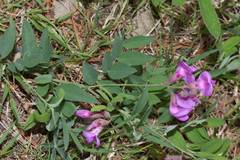
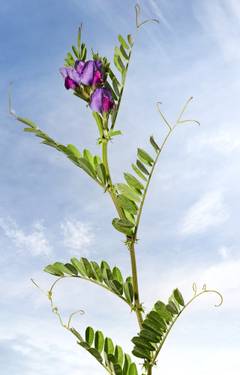
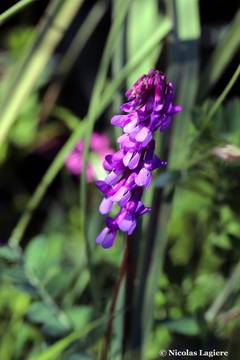
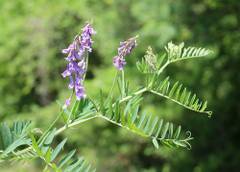
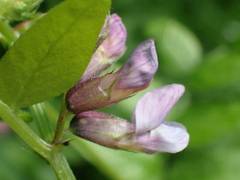
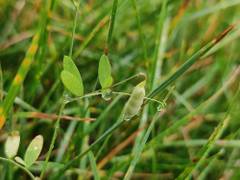
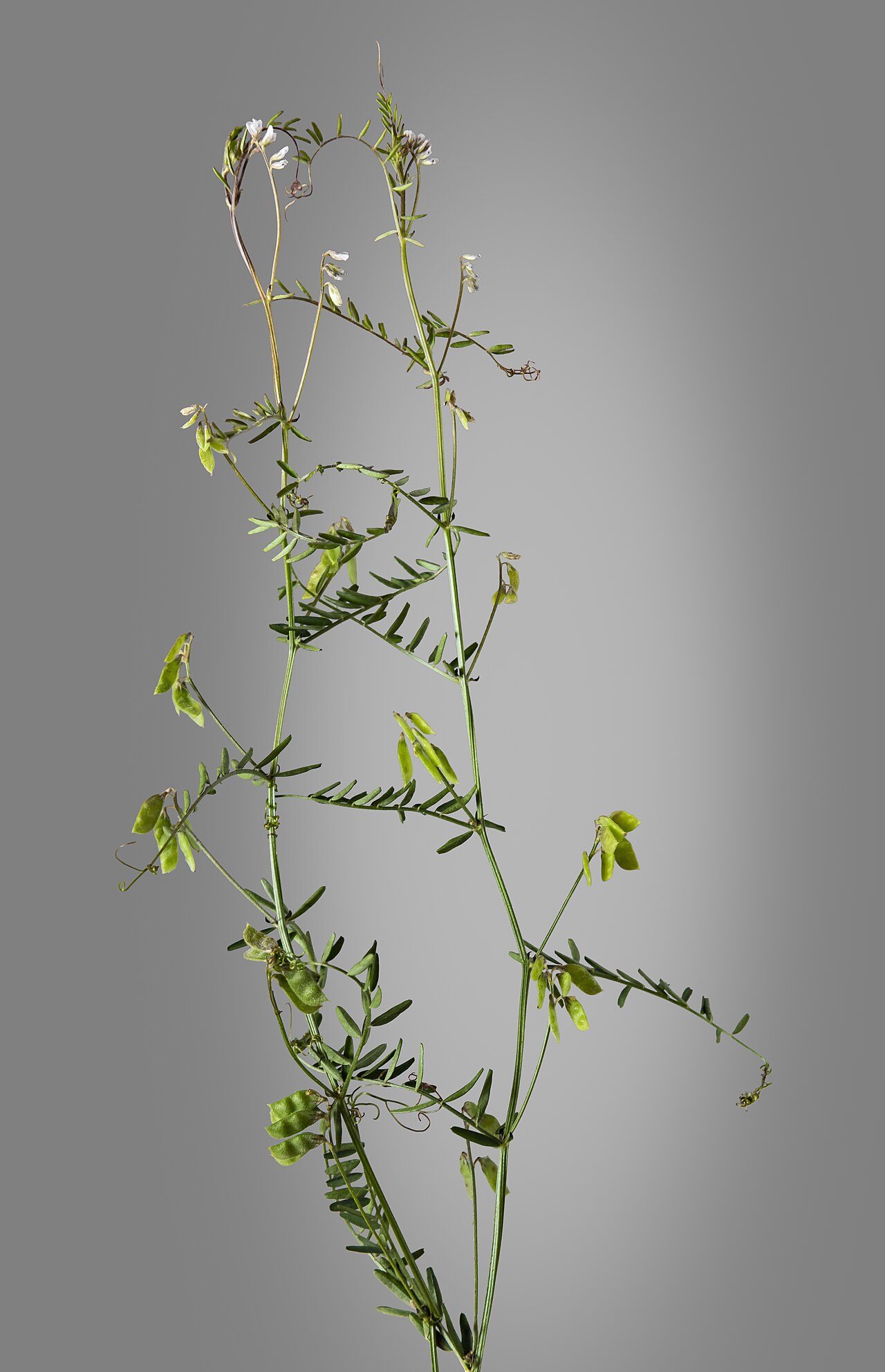
Vicia hirsuta is a slender delicate scrambling annual vine in the pea family (Fabaceae) reaching 12–36 inches (30–90 cm), climbing by branched terminal tendrils. Stems are slender, angular, sparsely hairy, wiry. Leaves are pinnately compound with 10–16 narrow linear leaflets 0.2–0.5 inch (5–12 mm) long and 0.04–0.08 inch (1–2 mm) wide, giving the plant a delicate appearance — the numerous small narrow leaflets are the primary identification feature. Flowers are minute, white to pale lavender, 0.08–0.16 inch (2–4 mm) long, in racemes of 1–6 on short axillary peduncles — the smallest Vicia flowers in the weed-identification collection. Fruit is a hairy flattened legume pod 0.3–0.4 inch (8–10 mm) long containing 2 seeds (versus 4–12 in other Vicia species). Nitrogen-fixing via Rhizobium root nodules. A single plant produces 100–500 seeds. The delicate small-scale appearance makes the species easy to overlook until it forms dense tangles over other vegetation.
Native Range
Vicia hirsuta is native to Europe and western Asia, occurring in meadows, roadsides, cultivated fields, and disturbed ground from sea level to approximately 5,000 feet (1,500 m). The species is naturalized across the Pacific Northwest — common but often overlooked because of the small size and delicate habit.Suggested Uses
Used in the four-species Vicia identification exercise as the delicate minute-flowered species: V. hirsuta (tiny white flowers, narrow leaflets, 2-seeded pods) versus V. americana (blue-purple pedunculate raceme, native) versus V. sativa (large sessile reddish-purple, broad leaflets) versus V. villosa (dense woolly raceme). The extremely small flowers are a hand-lens exercise in papilionaceous flower structure. The two-seeded pod is compared with the multi-seeded pods of other Vicia.How to Identify
Appearance
Size & Dimensions
Height1' - 3'
Width/Spread6" - 1'6"
Bloom Information
Detailed Descriptions
Flower Description
White to pale lavender; papilionaceous; minute (0.08–0.16 inch / 2–4 mm); in racemes of 1–6 on short axillary pedunclesFoliage Description
Light green; pinnately compound with 10–16 narrow linear leaflets 0.2–0.5 inch (5–12 mm) long and a branched terminal tendril; delicate small-scale textureGrowing Conditions
Sun Requirements
Requires 4-10 hours of direct sunlight daily
• Full Sun: 6+ hours of direct sunlight
• Partial Shade: 3-6 hours of direct sunlight
• Full Shade: Less than 3 hours of direct sunlight