Vicia, Genus, spp., Multiple species,
- Genus
- Multiple species
vetches
Temperate Northern Hemisphere, South America, and tropical East Africa
Overview
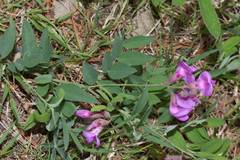
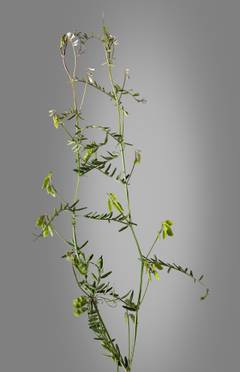
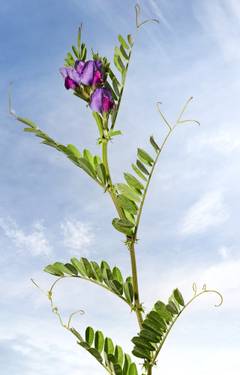
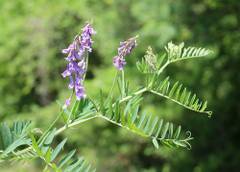
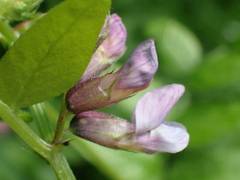
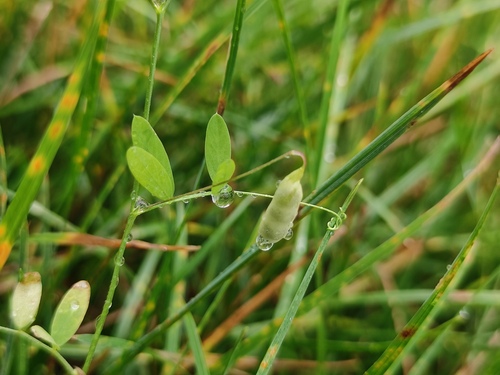
Vicia is a genus of roughly 140 to 160 species of annual and perennial legumes in the family Fabaceae, distributed across temperate regions of the Northern Hemisphere, South America, and tropical East Africa. Plants are herbaceous, climbing or scrambling 1–6 ft (0.3–1.8 m) by means of branched tendrils at the tips of pinnately compound leaves. Each leaf carries 4 to 12 pairs of leaflets, typically 0.4–1.2 in (1–3 cm) long, with the terminal leaflet modified into the clinging tendril. Flowers are pea-shaped, 0.3–1.2 in (8–30 mm) long, borne singly or in axillary clusters, and range from violet and blue-purple through pink, white, and pale yellow depending on species. Fruit is a flattened legume pod 1–3 in (2.5–7.5 cm) long that splits along two sutures to release several rounded seeds. Like other members of Fabaceae, Vicia forms root nodules with nitrogen-fixing bacteria, and several species are grown as forage and cover crops. The genus includes weedy species that self-seed readily and can spread beyond intended plantings. Seeds of some species, including V. sativa, contain compounds that are toxic when eaten raw in quantity. Across the genus, plants grow in grasslands, hedgerows, woodland edges, and disturbed ground.
Native Range
Vicia occurs naturally across temperate Europe, Asia, and North America, with additional centers of diversity in South America and the mountains of tropical East Africa. North American native species include V. americana and V. caroliniana. Several Eurasian species are now naturalized worldwide.Suggested Uses
Vicia species are grown as forage, green manure, and nitrogen-fixing cover crops in agricultural rotations. Climbing species are used on fences, trellises, and through wildflower meadows. The flowers are visited by bees and other pollinating insects.How to Identify
Appearance
Size & Dimensions
Height1' - 6'
Width/Spread1' - 3'
Bloom Information
Most Vicia species flower from late spring through summer, roughly May to August in temperate zones. Annual species bloom within a single growing season, while perennial species flower from the second year onward. Individual flowers last several days, and a plant may bloom over 4 to 8 weeks. Flower color ranges from blue-purple to white and pale yellow across the genus.
Detailed Descriptions
Flower Description
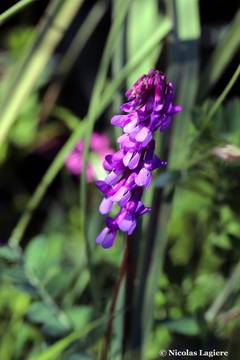
violet, blue-purple, pink, white, or pale yellowFoliage Description
greenGrowing Conditions
Sun Requirements
Requires 4-8 hours of direct sunlight daily
• Full Sun: 6+ hours of direct sunlight
• Partial Shade: 3-6 hours of direct sunlight
• Full Shade: Less than 3 hours of direct sunlight