Vicia, Genus, caroliniana, Species,
- Genus & species
Carolina vetch
Overview
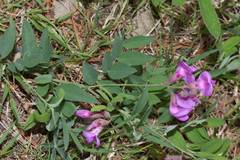
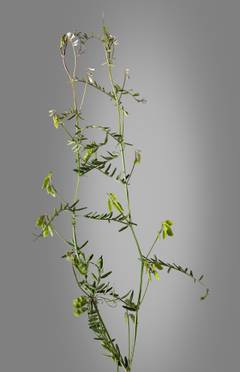
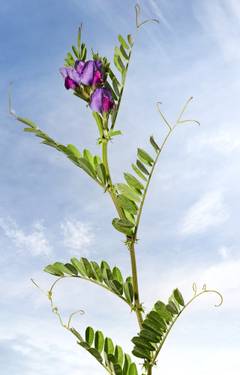
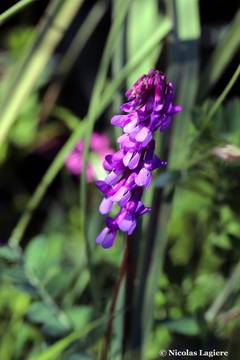
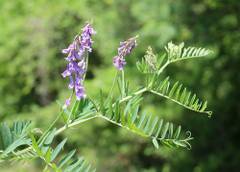
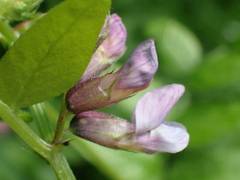
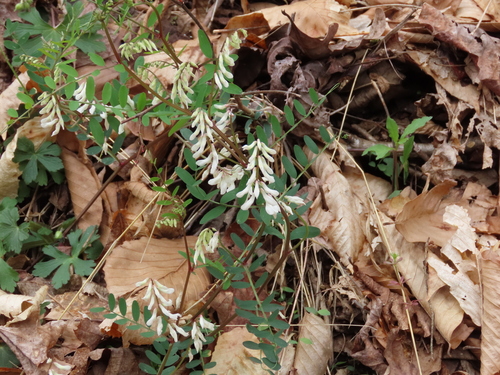
Vicia caroliniana is a slender herbaceous perennial that climbs or trails by branched tendrils, with weak stems reaching 1.5-3 feet (45-90 cm) long. The compound leaves are pinnately divided into 8-24 narrow, oblong leaflets each 0.4-0.8 inch (10-20 mm) long, ending in a forked tendril that grasps surrounding stems. From April to June it bears loose one-sided clusters of 8-20 small pea-like flowers, white to pale lavender with a faint bluish tip on the keel, each about 0.3 inch (8 mm) long. The flowers give way to flat, smooth pods 0.7-1 inch (18-25 mm) long that ripen brown and split to release several seeds. The plant grows in open woods, woodland edges, rocky slopes, and stream banks, climbing over low vegetation. Native across eastern North America, it fixes nitrogen through root nodules and tolerates a range of soils. It dies back to the root in winter and regrows in spring. The weak stems need neighboring plants or support to climb, and sprawl across the ground without them.
Native Range
Vicia caroliniana is native to eastern and central North America, from Ontario and New York south to Florida and west to Texas and the eastern Great Plains. It grows in open woodlands, thickets, rocky slopes, glades, and stream banks.Suggested Uses
Used in native plantings, woodland gardens, and meadow restorations, where it scrambles over low plants and fixes nitrogen. It supports bees and serves as a larval food plant for some butterflies. Suited to naturalized areas and slopes rather than tidy borders.How to Identify
Appearance
Size & Dimensions
Height1'6" - 3'
Width/Spread1' - 2'
Bloom Information
Loose one-sided clusters of 8-20 small white to pale lavender flowers open from April to June. Bees pollinate the pea-like flowers. Flat brown pods ripen through early summer and split open to scatter the seeds.
Detailed Descriptions
Flower Description
white to pale lavenderFoliage Description
greenGrowing Conditions
Sun Requirements
Requires 4-8 hours of direct sunlight daily
• Full Sun: 6+ hours of direct sunlight
• Partial Shade: 3-6 hours of direct sunlight
• Full Shade: Less than 3 hours of direct sunlight
Care & Maintenance
Care Guide
Vicia caroliniana grows in full sun to part shade on moist to dry, well-drained soils and tolerates rocky and low-fertility ground. As a legume it fixes nitrogen and needs no supplemental feeding. It establishes from scarified seed sown in autumn or spring and spreads modestly by seed rather than aggressively. Light support or neighboring plants let the tendrils climb; without them the stems sprawl. It tolerates drought once established and dies back to the root crown over winter. Hardy in USDA zones 4-9, it resprouts in spring.Pruning
Little pruning is needed. Old stems can be cut back to the ground in late autumn or late winter after they die down. Cutting during the growing season reduces flowering and seed set.Pruning Schedule
Prune: February & November
fallwinter