Vicia, Genus, sativa, Species,
- Genus & species
common vetch
Europe, western Asia, northern Africa (native); widely planted as a cover crop across North America and widely naturalized
SunFull Sun – Part Shade
WaterMedium
Overview
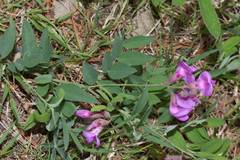
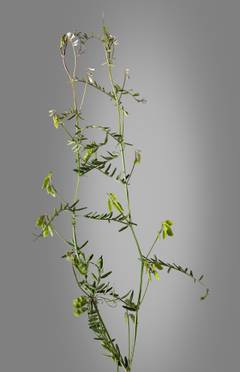
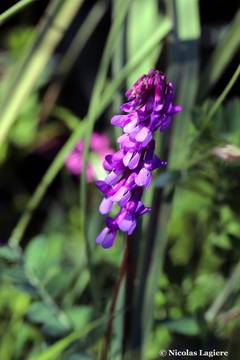
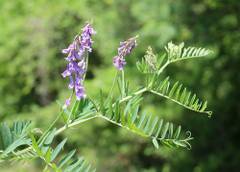
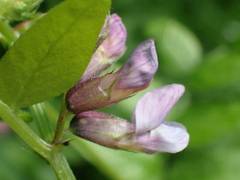
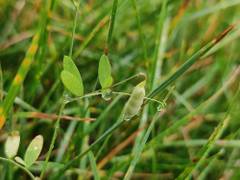
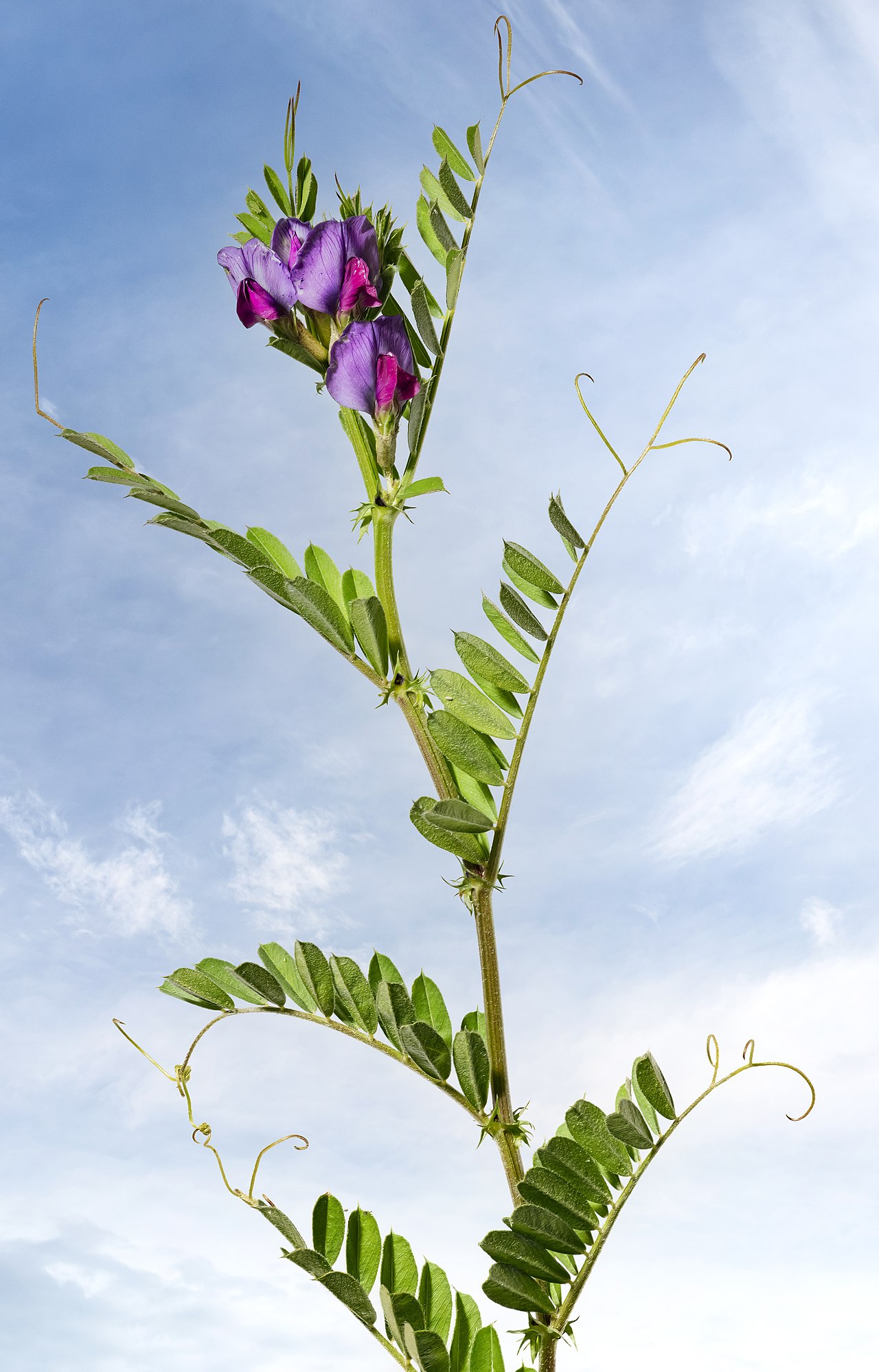
Vicia sativa is a scrambling annual vine in the pea family (Fabaceae) reaching 12–36 inches (30–90 cm), climbing by branched terminal tendrils. Stems are angular, smooth to sparsely hairy. Leaves are pinnately compound with 8–14 oblong to obovate leaflets 0.4–1 inch (10–25 mm) long and a branched terminal tendril. Stipules are small and often carry a dark nectary spot on the underside. Flowers are reddish-purple to pink, 0.6–1 inch (15–25 mm) long, papilionaceous, borne 1–2 in the leaf axils, sessile or nearly so (without a distinct peduncle) — the sessile axillary flower position is the primary distinction from V. americana. The banner petal is darker reddish-purple; the wings are lighter pink. Fruit is a flattened legume pod 1.6–2.8 inches (40–70 mm) long, turning black at maturity, containing 4–12 spherical seeds. Nitrogen-fixing via Rhizobium root nodules. A single plant produces 200–1,000 seeds. The species is widely planted as a cover crop and green manure and also occurs as a roadside and field-edge weed in the Pacific Northwest.
Native Range
Vicia sativa is native to Europe, western Asia, and northern Africa, occurring on roadsides, field edges, meadows, and disturbed ground from sea level to approximately 6,000 feet (1,800 m). The species is widely planted as a cover crop across North America and is widely naturalized. Common throughout the Pacific Northwest both as an intentional planting and as a weed.Suggested Uses
Used in the four-species Vicia identification exercise: V. sativa (sessile axillary, reddish-purple, large, annual) versus V. americana (pedunculate raceme, blue-purple, native perennial) versus V. hirsuta (minute white, narrow-leafleted) versus V. villosa (dense woolly raceme). The sessile-versus-pedunculate flower arrangement is a key identification exercise. Widely used as a cover crop and green manure for nitrogen fixation in sustainable agriculture and vineyard floor management.How to Identify
Appearance
Size & Dimensions
Height1' - 3'
Width/Spread1' - 2'
Bloom Information
Detailed Descriptions
Flower Description
Reddish-purple to pink; papilionaceous; 0.6–1 inch (15–25 mm); sessile or nearly so in the leaf axils, 1–2 per axil; banner petal darker reddish-purple, wings lighter pinkFoliage Description
Medium green; pinnately compound with 8–14 oblong to obovate leaflets 0.4–1 inch (10–25 mm) long and a branched terminal tendril; leaflets broader than those of V. hirsutaGrowing Conditions
Sun Requirements
Requires 4-10 hours of direct sunlight daily
• Full Sun: 6+ hours of direct sunlight
• Partial Shade: 3-6 hours of direct sunlight
• Full Shade: Less than 3 hours of direct sunlight