Vicia, Genus, americana, Species,
- Genus & species
American vetch (native)
North America (native) — Alaska to Mexico and coast to coast
Overview
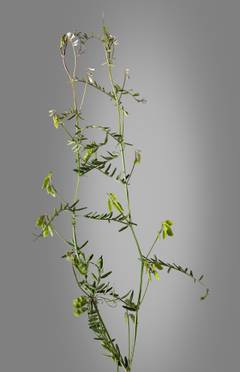
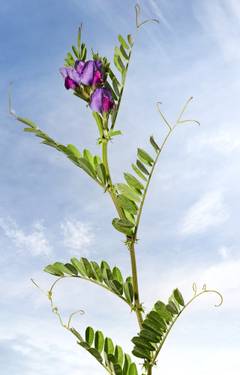
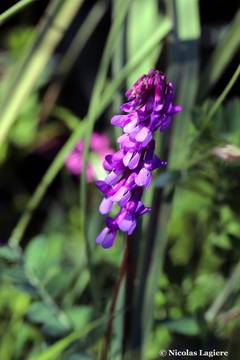
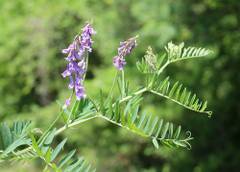
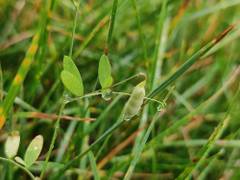
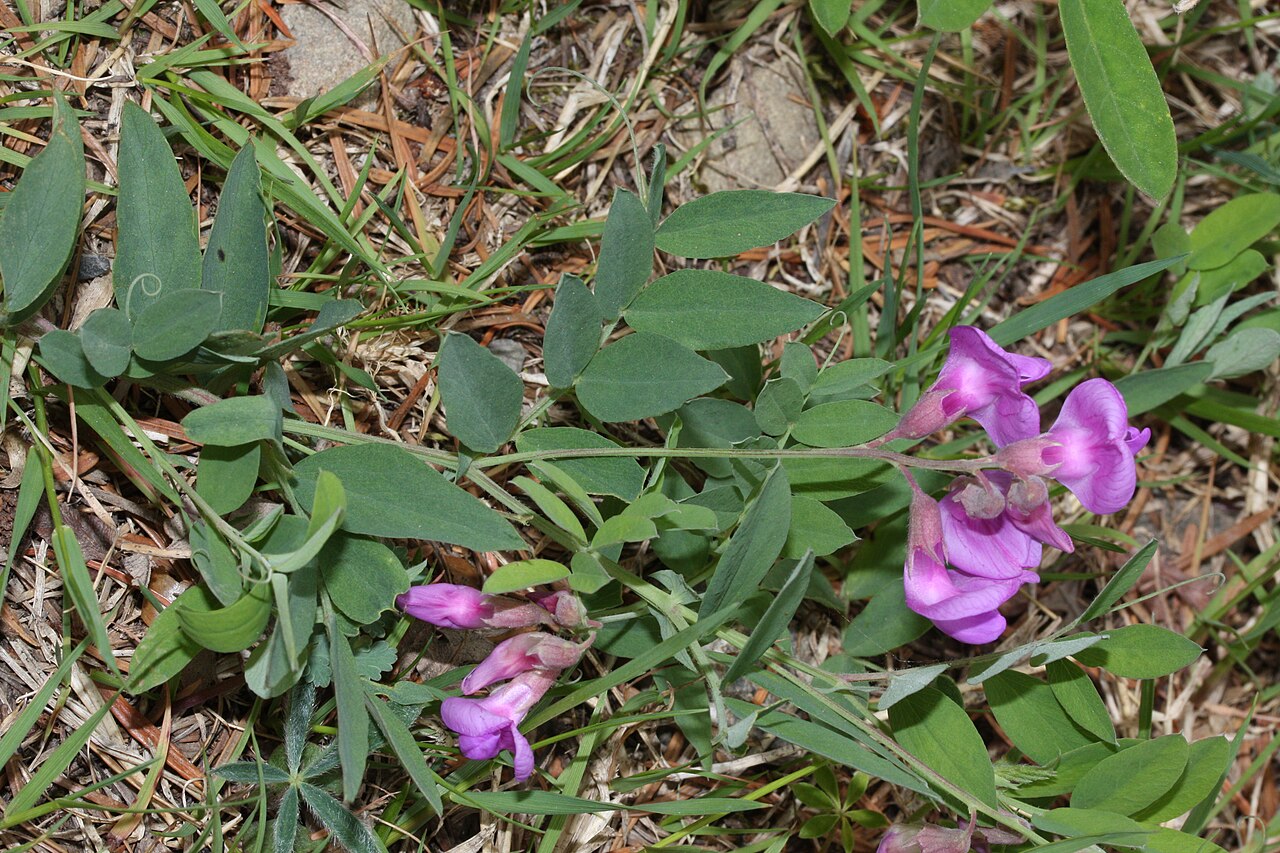
Vicia americana is a native perennial scrambling vine in the pea family (Fabaceae) reaching 12–36 inches (30–90 cm) tall, climbing by branched terminal tendrils on leaf rachises. Stems are slender, angular, smooth to sparsely hairy. Leaves are alternate, pinnately compound, with 8–14 ovate to elliptic leaflets 0.4–1 inch (10–25 mm) long and a branched terminal tendril replacing the terminal leaflet. Stipules are small, arrow-shaped, toothed. Flowers are blue-purple to violet, 0.6–0.8 inch (15–20 mm) long, papilionaceous (pea-type), in racemes of 3–9 flowers on axillary peduncles. Fruit is a smooth flattened legume pod 0.8–1.4 inches (20–35 mm) long. Nitrogen-fixing via Rhizobium root nodules. Native to North America and included in the weed-identification collection as the native reference species for comparison with three introduced Vicia species (V. hirsuta, V. sativa, V. villosa). The species occurs in meadows, open forests, and roadsides throughout the Pacific Northwest.
Native Range
Vicia americana is native to North America from Alaska to Mexico and coast to coast, occurring in meadows, open forests, thickets, and roadsides from sea level to approximately 10,000 feet (3,000 m). The species is common in the Pacific Northwest at low to mid elevations. Included in the HORT 280 weeds collection as the native reference for the Vicia genus comparison.Suggested Uses
Used as the native reference in the four-species Vicia identification exercise: native V. americana (pedunculate raceme, 3–9 blue-purple flowers, perennial) versus V. sativa (sessile, 1–2 reddish-purple, annual) versus V. villosa (dense woolly raceme, 10–30, annual or biennial) versus V. hirsuta (tiny flowers, 1–6, narrow-leaved annual). The native-versus-introduced comparison is a recurring theme in the weeds course. Nitrogen fixation via Rhizobium is taught alongside Trifolium and other Fabaceae.How to Identify
Appearance
Size & Dimensions
Height1' - 3'
Width/Spread1' - 3'
Bloom Information
Detailed Descriptions
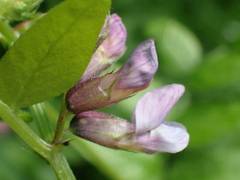
Flower Description
Blue-purple to violet; papilionaceous; 0.6–0.8 inch (15–20 mm) long; in racemes of 3–9 flowers on axillary pedunclesFoliage Description
Medium green; pinnately compound with 8–14 ovate to elliptic leaflets and a branched terminal tendrilGrowing Conditions
Sun Requirements
Requires 4-10 hours of direct sunlight daily
• Full Sun: 6+ hours of direct sunlight
• Partial Shade: 3-6 hours of direct sunlight
• Full Shade: Less than 3 hours of direct sunlight