Vicia, Genus, sepium, Species,
- Genus & species
bush vetch
Overview
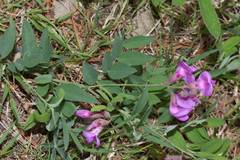
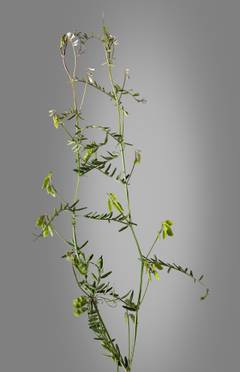
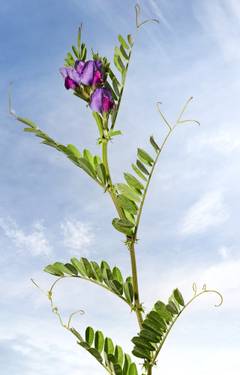
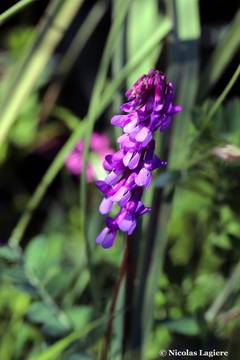
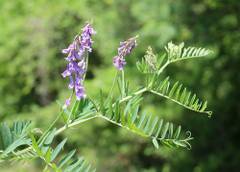
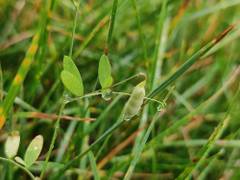
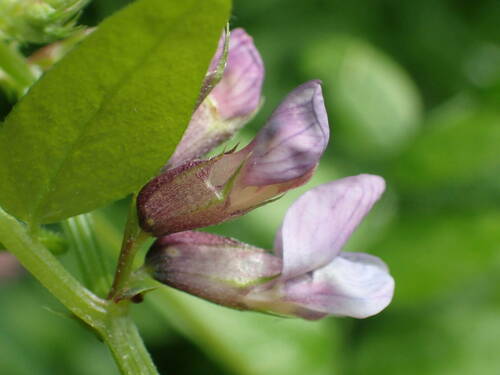
Vicia sepium is a sprawling perennial legume with weak, climbing stems 12-40 inches (30-100 cm) long that scramble over surrounding plants by means of branched tendrils. It spreads underground by creeping rhizomes, forming loose patches. The compound leaves have 5-9 pairs of oval leaflets 0.4-1.2 inches (1-3 cm) long, ending in a tendril rather than a terminal leaflet. Short clusters of 2-6 tubular pea flowers, each 0.5-0.6 inch (12-15 mm) long and dull purple to violet-blue, open in the leaf axils from May through August. Flowers are followed by smooth pods 0.8-1.4 inches (2-3.5 cm) long that ripen black and split to eject the seeds. Like other legumes, the roots fix nitrogen through bacterial nodules, enriching the soil. The stems die back to the rhizome each winter and regrow in spring. The weak, scrambling habit means plants lean on neighbors and can mat over low vegetation in meadows and hedge banks.
Native Range
Native to Europe and temperate Asia, from the British Isles east to Siberia, and naturalized in parts of North America. Grows in meadows, grassy banks, hedgerows, woodland edges, and rough grassland from lowlands to about 6,000 feet (1,830 m).Suggested Uses
Used in wildflower meadows, naturalistic plantings, and as a nitrogen-fixing component of rough grassland and hedge banks. Its scrambling habit suits informal settings more than formal borders, where it leans on other plants. Sown at low rates in meadow seed mixes rather than planted as a single specimen.How to Identify
Appearance
Size & Dimensions
Height1' - 3'4"
Width/Spread1' - 2'
Bloom Information
Detailed Descriptions
Flower Description
purple to violet-blueFoliage Description
greenGrowing Conditions
Sun Requirements
Requires 4-8 hours of direct sunlight daily
• Full Sun: 6+ hours of direct sunlight
• Partial Shade: 3-6 hours of direct sunlight
• Full Shade: Less than 3 hours of direct sunlight
Care & Maintenance
Care Guide
Grows in full sun to light shade on moist, moderately fertile soils and tolerates a range of grassland conditions. Nitrogen-fixing nodules let it grow on poorer soils where many plants struggle. It spreads by both seed and rhizome, so patches enlarge over several seasons. In borders it can scramble over and shade low neighbors. Stems collapse after frost and are cut back to ground level for tidiness; growth resumes from the rhizome in spring.Pruning
Cut spent stems to the ground in late fall or early spring; the rhizome carries the plant through winter. Shearing after the first flush of bloom can prompt a lighter second flowering. No other pruning is required.Pruning Schedule
Prune: March & November
fallearly spring