Sedum, Genus, oreganum, Species,
- Genus & species
Oregon stonecrop
Western North America (Alaska south through British Columbia, Washington, Oregon, into northern California)
Overview
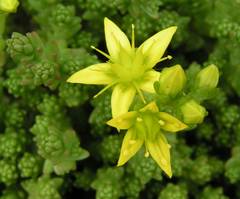
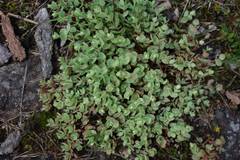
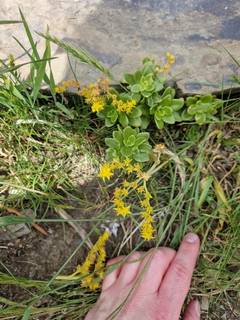
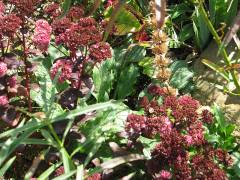
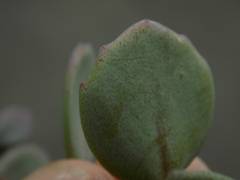
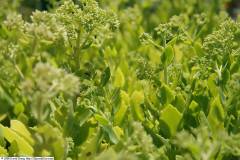
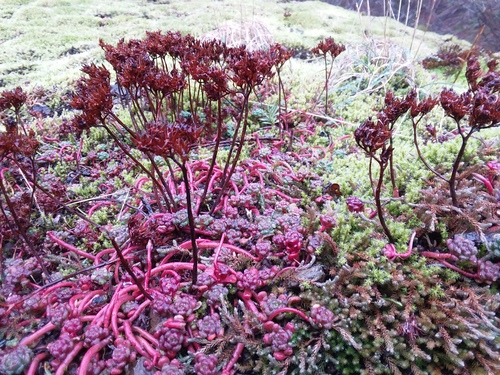
Sedum oreganum is an evergreen to semi-evergreen succulent perennial in the stonecrop family (Crassulaceae) reaching 2–4 inches (5–10 cm) tall with a spread of 12–18 inches (30–45 cm). The habit is low and mat-forming, with creeping stems tipped in small rosettes. Small spatulate fleshy glossy-green leaves 0.5–0.75 inch (1–2 cm) long form loose rosettes that turn bronze-red to cherry-red in autumn and winter; the seasonal color shift is reliable in full sun and lean soils. Clusters of small star-shaped bright yellow flowers 0.3 inch (8 mm) across appear in June–July on 2–4 inch (5–10 cm) stems. Native to rocky outcrops, coastal bluffs, and alpine scree from Alaska south through British Columbia, Washington, Oregon, and into northern California, the species ranges from sea level to 8,000 feet (2,400 m). Growth rate is moderate; a single start fills a 12–18 inch (30–45 cm) circle in 1–2 growing seasons. Hardy to zone 4. Winter rain is tolerated only where drainage is sharp; heavy clay soils cause crown rot regardless of cold hardiness.
Native Range
Sedum oreganum is native to western North America, from southern Alaska through British Columbia, Washington, Oregon, and into northern California. It occurs on rocky outcrops, coastal bluffs, and alpine scree from sea level to 8,000 feet (2,400 m).Suggested Uses
Grown in rock gardens, green roofs, crevice gardens, and native plantings at 10–12 inch (25–30 cm) spacing. Pacific Northwest native suited to restoration and habitat plantings. Container culture requires 1 gallon (4 L) or larger pots with gritty fast-draining mix. Shade and rich wet soils cause loss of autumn red color and crown rot.How to Identify
Appearance
Size & Dimensions
Height2" - 4"
Width/Spread1' - 1'6"
Bloom Information
Clusters of small star-shaped bright yellow flowers 0.3 inch (8 mm) across appear in June–July on 2–4 inch (5–10 cm) stems, held above the rosettes. Bloom duration is 3–4 weeks. The green-to-red foliage shift from late summer into winter is the primary seasonal feature.
Detailed Descriptions
Flower Description
Bright yellow, small star-shaped 0.3 inch in clustersFoliage Description
Glossy green in summer, shifting to bronze-red or cherry-red in autumn and winter; spatulate fleshy rosettes 0.5-0.75 inchGrowing Conditions
Sun Requirements
Requires 6-10 hours of direct sunlight daily
• Full Sun: 6+ hours of direct sunlight
• Partial Shade: 3-6 hours of direct sunlight
• Full Shade: Less than 3 hours of direct sunlight
Care & Maintenance
Care Guide
Grows in full sun in well-drained lean gritty soil at pH 5.5–7.5. Hardy to zone 4. Adapted to the Pacific Northwest pattern of wet winters and dry summers, with sharp drainage required for winter rain tolerance. Autumn and winter red color is most saturated in full sun and lean soils; rich, moist, or shaded sites keep the foliage green year-round. Drought-tolerant once established; supplemental watering is rarely needed after the first season. Crown rot occurs in heavy clay or poorly drained sites.Pruning
No routine pruning is needed. Spent flower stems can be cut back after bloom in late July if a tidy appearance is wanted. The mat develops without shaping.Container Growing
Suitable for container growing
Minimum container size: 1 gallons