Sedum, Genus, spathulifolium, Species,
- Genus & species
broadleaf stonecrop
Pacific coast of North America: British Columbia to Baja California
Overview
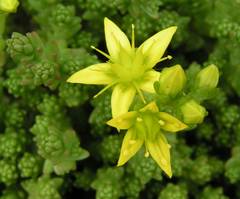
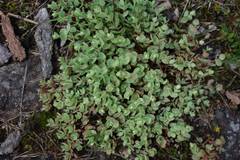
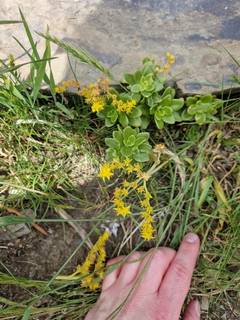
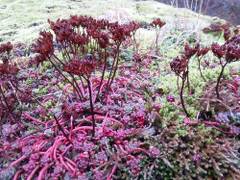
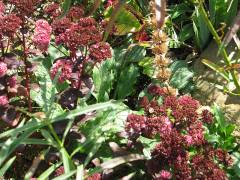
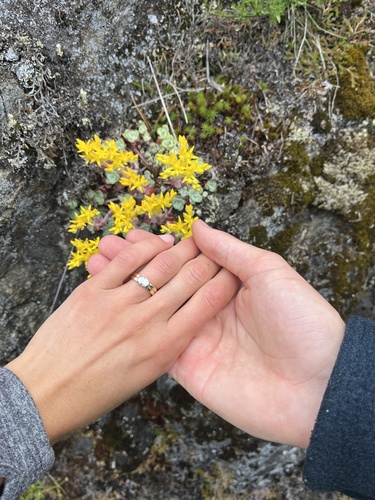
Sedum spathulifolium is a low evergreen succulent perennial reaching 2-6 inches (5-15 cm) tall in flower, with stems creeping 6-18 inches (15-45 cm) across and forming dense mats of small rosettes 0.6-1.2 inches (1.5-3 cm) wide. Leaves are spatulate (paddle-shaped), 0.4-1 inch (10-25 mm) long, succulent and glaucous, ranging from grey-green to silver-blue and frequently flushed pink or red along the margins on sun-exposed plants. Flowering stems rise 2-6 inches (5-15 cm) above the mat from May through July, bearing flat-topped cymes of 5-25 bright yellow star flowers 0.3-0.5 inches (8-13 mm) across. Stems root readily where they contact moist soil; broken rosettes regenerate as new plants if pressed onto bare grit. The species is highly variable across its range; named cultivars 'Cape Blanco' and 'Purpureum' are commonly available in the nursery trade. Plants tolerate seasonal drought once established but require sharp drainage; winter rot is the primary cause of plant loss in heavy clay or compacted lawn-edge sites. Foliage takes on stronger pink-red coloration on sun-stressed and cold-stressed plants.
Native Range
Native to the Pacific coast of North America from southern British Columbia south through Washington, Oregon, and California to the Coast Ranges of Baja California. Grows on coastal bluffs, rocky outcrops, gravelly slopes, and tree trunks in oak woodlands at 0-7,000 feet (0-2,100 m) elevation.Suggested Uses
Used in rock gardens, alpine troughs, green roofs, crevice plantings, and dry stone wall faces in zones 5-9 west of the Cascades. Spaced 8-12 inches (20-30 cm) apart for groundcover applications; full coverage develops in 2-3 seasons. Not suited to standard mixed perennial beds with rich moist soil or to humid southeastern gardens, where the species declines within 1-2 years.How to Identify
Appearance
Size & Dimensions
Height2" - 6"
Width/Spread6" - 1'6"
Colors
Bloom Information
May through July across most of the range; begins late April in coastal California and extends into early August at higher elevations in the Cascades. Individual flowers last 4-6 days; total bloom period at the mat level lasts 4-5 weeks. Cool wet springs delay bloom by 2-3 weeks compared to warm dry springs.
Detailed Descriptions
Foliage Description
Glaucous grey-green to silver-blue; pink-red margins on sun-exposed plantsGrowing Conditions
Sun Requirements
Requires 6-12 hours of direct sunlight daily
• Full Sun: 6+ hours of direct sunlight
• Partial Shade: 3-6 hours of direct sunlight
• Full Shade: Less than 3 hours of direct sunlight
Care & Maintenance
Care Guide
Establish in lean gritty mineral soil at pH 6.0-7.5; the species declines in heavy clay, rich loam, or compacted urban substrates. Full sun for 6+ hours per day produces the strongest pink-red leaf coloration and densest mats; afternoon shade in zones 8-9 below 1,000 feet (300 m) is required to limit leaf scorch and crown loss in summer heat. Water during the first growing season; established plants survive on natural rainfall in the native range and resent summer irrigation in low-elevation gardens. Crown rot develops in winter wet conditions on heavy soils; planting on raised beds, in rock garden crevices, or on top of well-drained mounds prevents this loss. Mealybugs colonize rosettes on container-grown plants in greenhouses but rarely affect outdoor populations. Few pests trouble the species in the native range.Pruning
Cut spent flowering stems back to the rosette base in late July or August after seed maturation. Trim sparse winter-damaged areas in early spring; new rosettes fill the gap from surrounding stems within one growing season. Mature mats need no annual pruning beyond removal of dead patches.Pruning Schedule
Prune: July–August
summer
Container Growing
Suitable for container growing
Minimum container size: 1 gallons