Sedum, Genus, kimnachii, Species,
- Genus & species
Kimnach's stonecrop
Overview
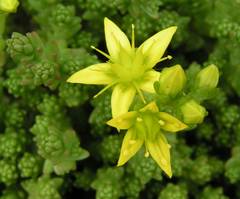
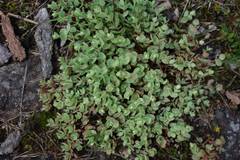
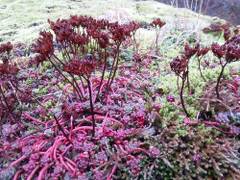
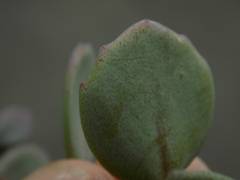
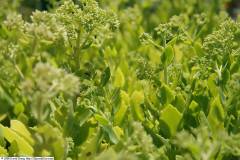
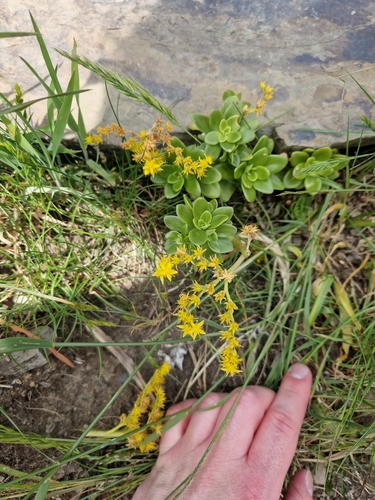
Sedum kimnachii is an evergreen succulent perennial reaching 4–6 inches (10–15 cm) tall with a spread of 12–18 inches (30–45 cm). Habit is low, mounding, and mat-forming, built from rosette-tipped stems. Leaves are club-shaped to spatulate, glossy bright green, 0.5–0.75 inch (1–2 cm) long, densely arranged in tight rosettes 0.75–1.25 inch (2–3 cm) across. Leaf tips redden to burgundy or orange under cold temperatures or high sun exposure. Clusters of small star-shaped bright yellow flowers appear in May–June on short stems held above the rosettes. Growth rate is moderate. Hardy to zone 7; the species is of Mexican origin and has less cold tolerance than temperate sedums. The glossy leaf surface and year-round green rosettes separate it from species that go dormant or develop glaucous silver coatings. Wet winter soils cause root rot, which is the principal cause of plant loss in climates with significant winter rainfall.
Native Range
Sedum kimnachii is native to Mexico, in the states of Guerrero and Oaxaca. It occurs on rocky outcrops and cliff faces at moderate elevations. The species is named after Myron Kimnach, former curator at the Huntington Botanical Gardens.Suggested Uses
Used in rock gardens, on green roofs, in trough gardens, and as edging at 10–12 inch (25–30 cm) spacing. Grows in containers of at least 1 gallon (4 L) with gritty mix and sharp drainage. Hardiness limited to zone 7 restricts in-ground use in colder regions; wet winter soils cause loss.How to Identify
Appearance
Size & Dimensions
Height4" - 6"
Width/Spread1' - 1'6"
Bloom Information
Clusters of small star-shaped bright yellow flowers 5–8 mm across open on short stems held just above the rosettes in May–June. Bloom duration is 3–4 weeks. Flowers are visited by bees and butterflies. Glossy evergreen rosettes carry visual interest the rest of the year.
Detailed Descriptions
Foliage Description
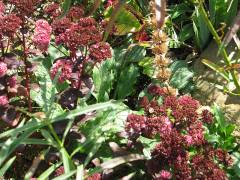
Glossy bright green; club-shaped to spatulate rosettes 0.5-0.75 inch (1-2 cm); reddening at the tips under cold or high sunGrowing Conditions
Sun Requirements
Requires 4-10 hours of direct sunlight daily
• Full Sun: 6+ hours of direct sunlight
• Partial Shade: 3-6 hours of direct sunlight
• Full Shade: Less than 3 hours of direct sunlight
Care & Maintenance
Care Guide
Plant in full sun to partial shade in lean, gritty, sharply drained soil (pH 6.0–7.5). Sharp drainage is essential — Mexican origin means the plant tolerates heat better than prolonged wet winter cold. Hardy to zone 7; in zones 5–6 the species declines or dies back. Drought-tolerant once established. Rosettes redden at the tips under cold or high-sun stress, shifting green to burgundy or orange. Wet winter soils cause root rot; container culture in pure gritty mix extends the useful range.Pruning
Spent flower stems are removed after bloom fades. No other pruning is required; the rosette mat develops and maintains itself.Container Growing
Suitable for container growing
Minimum container size: 1 gallons