Sedum, Genus, stenopetalum, Species,
- Genus & species
wormleaf stonecrop
Western North America: British Columbia to California, east to Rockies
Overview
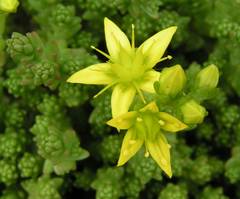
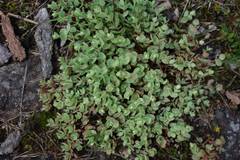
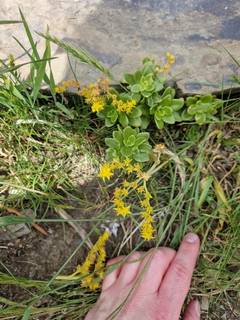
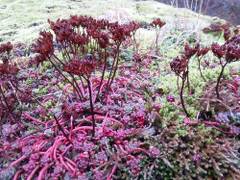
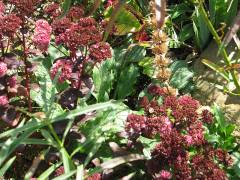
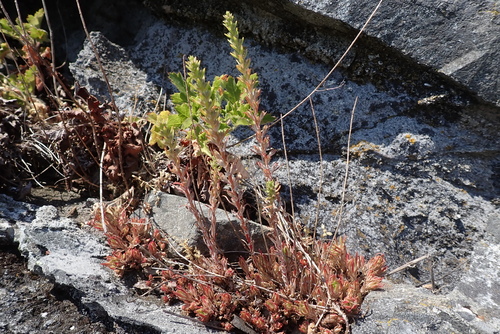
Sedum stenopetalum is a low evergreen succulent perennial reaching 3-10 inches (7.5-25 cm) tall in flower with stems creeping 4-10 inches (10-25 cm) across, forming open tufts on rocky and gravelly sites. Leaves are alternate, narrowly linear and nearly cylindrical (giving the worm-like appearance), 0.3-0.8 inches (8-20 mm) long and 0.04-0.08 inches (1-2 mm) wide, fleshy, green to red-tinged, with persistent dry brown leaves remaining along the stem base. Flowers are bright yellow, star-shaped with five narrow petals, 0.3-0.4 inches (8-10 mm) across, in flat-topped cymes of 5-30 atop slender stems from June through August. Vegetative bulbils form in the leaf axils of upper stems on most plants and drop to start new colonies; this is the primary mode of spread. Sexual seed set is low because flowers are often replaced by bulbils. S. stenopetalum hybridizes with S. lanceolatum where ranges overlap, and intermediate forms are recognized in some treatments. Plants tolerate intense alpine sun, short growing seasons, and seasonal drought but decline within 1-2 years in humid lowland gardens or on heavy clay soils.
Native Range
Native to western North America from southern British Columbia and Alberta south through Washington, Idaho, Montana, Wyoming, Oregon, and California to the central Rockies and Sierra Nevada. Grows on rocky outcrops, gravelly slopes, ponderosa pine flats, and dry meadows at 1,500-10,000 feet (450-3,000 m) elevation.Suggested Uses
Used in alpine troughs, rock gardens, scree gardens, and crevice plantings in zones 3-7. Spaced 6-10 inches (15-25 cm) apart for mass plantings; bulbil drop and self-sowing fill gaps within 2-3 seasons. Not suited to humid lowland gardens, mixed perennial borders with rich moist soil, or shaded sites.How to Identify
Appearance
Size & Dimensions
Height3" - 10"
Width/Spread4" - 10"
Bloom Information
June through August across the range; begins late May at lower elevations in the southern Rockies and extends into early September on north-facing alpine sites. Individual flowers last 4-7 days; total bloom period at the colony level lasts 4-6 weeks. Bulbil formation begins during late bloom and continues into September after flowers have faded.
Detailed Descriptions
Foliage Description
Green to red-tingedGrowing Conditions
Sun Requirements
Requires 6-12 hours of direct sunlight daily
• Full Sun: 6+ hours of direct sunlight
• Partial Shade: 3-6 hours of direct sunlight
• Full Shade: Less than 3 hours of direct sunlight
Care & Maintenance
Care Guide
Establish in lean gritty mineral soil at pH 6.0-7.5 with sharp drainage; rich loamy garden soil produces lax stems and increases winter rot risk. Full sun for 6-10 hours per day produces compact growth and the strongest red leaf coloration; partial afternoon shade is required in zones 7-9 below 1,500 feet (450 m), where summer heat scorches foliage. Water sparingly during the first growing season; established plants survive on natural rainfall in the native range. Plants resent summer irrigation in low-elevation gardens and decline within 1-2 years in humid regions in zones 8-10. Few pests trouble the species. Bulbils dropping from the parent plant produce volunteer colonies in surrounding gravel within 2-3 years.Pruning
Cut back spent flowering stems and bulbil-bearing stems to the basal rosette in early fall to limit unwanted spread from dropped bulbils. Trim dry leaf bases from older stems in early spring to tidy the form; this is cosmetic and not necessary for plant health. Mature tufts need no annual pruning beyond removal of patches lost to winter rot.Pruning Schedule
Prune: September–October
fall
Container Growing
Suitable for container growing
Minimum container size: 1 gallons