Sedum, Genus, lanceolatum, Species,
- Genus & species
spearleaf stonecrop
Western North America: Yukon to New Mexico
Overview
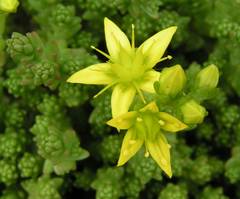
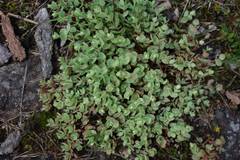
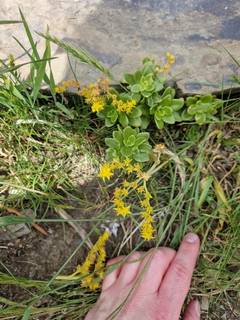
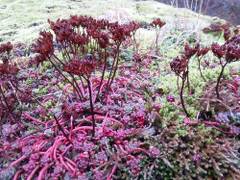
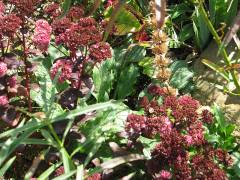
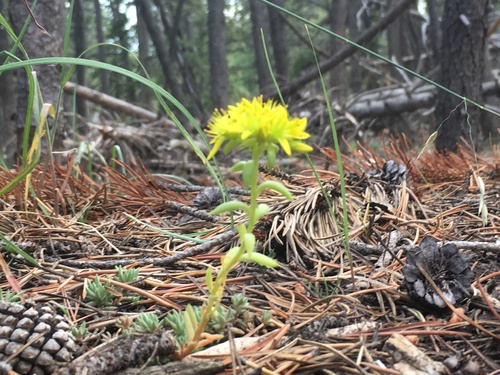
Sedum lanceolatum is a low evergreen succulent perennial reaching 2-8 inches (5-20 cm) tall and 4-12 inches (10-30 cm) wide, forming loose tufts on rocky alpine and subalpine sites. Leaves are alternate, lance-shaped to nearly cylindrical, 0.2-0.6 inches (5-15 mm) long, fleshy, blue-green to grey-green with a thin waxy bloom, often turning red-bronze in winter and on stressed plants. Stems are slender, ascending, and bear a flat-topped cyme of 5-25 bright yellow star-shaped flowers, each 0.4-0.5 inches (10-13 mm) across with five narrow pointed petals from June through August. Old leaves dry and persist along the stem base, marking previous years of growth. Plants spread by stem-rooting where prostrate stems contact soil; isolated tufts may also form from seed in disturbed gravel. Roots are shallow at 2-4 inches (5-10 cm) deep but strongly anchored in rock crevices. S. lanceolatum hybridizes with S. stenopetalum where ranges overlap; intermediate forms are common in the central Rockies. Plants tolerate intense alpine UV and short growing seasons but decline within 1-2 years on warm low-elevation sites with summer humidity.
Native Range
Native to mountains of western North America from southern Yukon and the Northwest Territories south through British Columbia, Alberta, and the western United States to northern Arizona, New Mexico, and northern California. Grows on rocky outcrops, scree slopes, alpine meadows, and dry pine flats at 4,000-13,000 feet (1,200-4,000 m) elevation.Suggested Uses
Used in alpine troughs, rock gardens, scree gardens, and crevice plantings in zones 3-7. Spaced 6-10 inches (15-25 cm) apart in mass plantings for groundcover function; full coverage develops in 2-3 seasons. Not adapted to humid lowland gardens, mixed perennial borders with rich soil, or container culture without full sun and sharp drainage.How to Identify
Appearance
Size & Dimensions
Height2" - 8"
Width/Spread4" - 1'
Colors
Bloom Information
June through August in alpine sites; bloom begins in late May at the lowest elevations in the southern Rockies and extends into early September on north-facing snowfield margins. Individual flowers last 4-7 days; total bloom period at the colony level lasts 4-6 weeks. Bloom timing follows snowmelt and varies 4-6 weeks across the elevation range.
Detailed Descriptions
Foliage Description
Blue-green to grey-green; red-bronze in winterGrowing Conditions
Sun Requirements
Requires 6-12 hours of direct sunlight daily
• Full Sun: 6+ hours of direct sunlight
• Partial Shade: 3-6 hours of direct sunlight
• Full Shade: Less than 3 hours of direct sunlight
Care & Maintenance
Care Guide
Establish in lean gritty mineral soil at pH 6.0-7.5 with sharp drainage; rich loamy garden soil produces lax stems and leads to winter rot. Full sun for 6-10 hours per day produces compact growth in cool maritime and montane climates; partial afternoon shade is required below 1,500 feet (450 m) elevation in zones 7-9, where summer heat causes leaf scorch. Water sparingly during the first growing season; established plants survive on natural rainfall in the native range and resent summer irrigation in low-elevation gardens. Plants are intolerant of summer humidity and decline within 1-2 years in zones 8-10 humid regions. Few pests trouble the species. Mealybugs colonize stem axils on container-grown plants in greenhouses; outdoor populations are rarely affected.Pruning
Cut back spent flowering stems to a basal rosette after seed dispersal in late summer. Trimming dead leaves from the stem base in early spring tidies the form but is not necessary for plant health. Mature mats need no annual pruning beyond removal of patches that develop winter rot.Pruning Schedule
Prune: September–October
fall
Container Growing
Suitable for container growing
Minimum container size: 1 gallons