Sedum, Genus, 'Bertram Anderson', Cultivar,
- Genus
- Cultivar
bertram anderson stonecrop
Garden hybrid ({Sedum telephium} × {Sedum cauticola}); both parent species native to temperate Asia
Overview
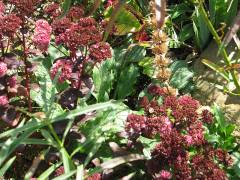
Sedum 'Bertram Anderson' (reclassified by recent molecular work as Hylotelephium 'Bertram Anderson') is a herbaceous perennial succulent reaching 6–8 inches (15–20 cm) tall and 12–18 inches (30–45 cm) wide, with a low spreading decumbent habit and arching stems. The cultivar is a garden hybrid between Sedum telephium and Sedum cauticola. Rounded fleshy leaves 1–1.5 inches (2.5–4 cm) long are deep purple-black — a pigment tone visibly darker than the blue-grey foliage of Sedum cauticola or the blue-green of Sedum ewersii — and are arranged in whorls along reddish-purple stems. Flat-topped clusters 2–3 inches (5–8 cm) across of small star-shaped dusky rose-pink flowers appear in August and September. Growth rate is slow. Hardy in USDA zones 4–9. The low decumbent habit separates the cultivar from taller upright border sedums such as 'Autumn Joy', which reach 18–24 inches. Stems root where they touch the soil, producing lateral expansion. In heavy or wet soils the cultivar may be short-lived (3–5 years), so sharp drainage supports longevity.
Native Range
Sedum 'Bertram Anderson' is a garden hybrid between Sedum telephium and Sedum cauticola. Both parent species are native to temperate Asia.Suggested Uses
Planted in rock gardens, as border edging, in troughs, in green-roof plantings, or at border fronts at 12–15 inch (30–38 cm) spacing in USDA zones 4–9. The deep purple-black foliage contrasts with silver-foliaged companions such as Stachys byzantina or with chartreuse grasses such as Carex elata 'Aurea' for year-round color-block effect. Container culture in 1-gallon (4 L) or larger pots holds the full habit well. Shaded positions, rich or fertilized soils, and heavy or wet ground fall outside the cultivar's adapted range; pigment loss and shortened lifespan result.How to Identify
Appearance
Size & Dimensions
Height6" - 8"
Width/Spread1' - 1'6"
Bloom Information
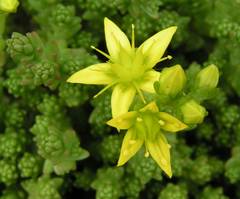
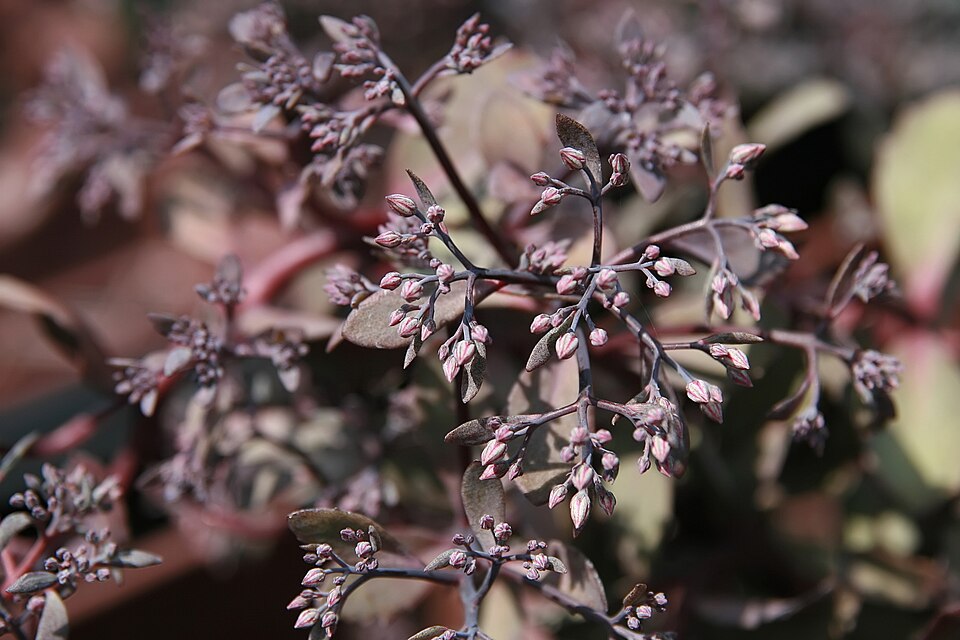
Produces flat-topped clusters 2–3 inches (5–8 cm) across of small star-shaped dusky rose-pink flowers in August and September. Bloom duration 4–6 weeks. The deep purple-black foliage is the year-round visual feature; flowers supply a late-summer pink note against the dark leaf background.
Detailed Descriptions
Flower Description
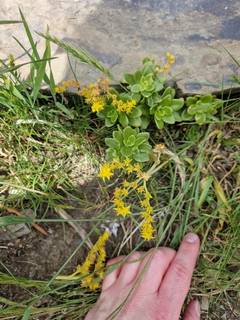
Dusky rose-pink; small star-shaped; in flat-topped clusters 2–3 inches (5–8 cm); August–SeptemberFoliage Description
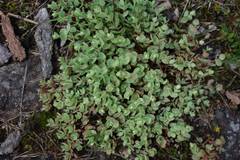
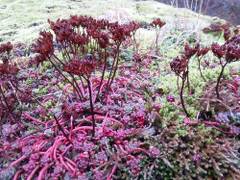
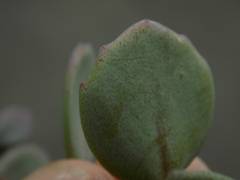
Deep purple-black (visibly darker than the blue-grey of Sedum cauticola or the blue-green of Sedum ewersii); rounded fleshy 1–1.5 inches (2.5–4 cm); whorled on reddish-purple stems; deciduousGrowing Conditions
Sun Requirements
Requires 6-10 hours of direct sunlight daily
• Full Sun: 6+ hours of direct sunlight
• Partial Shade: 3-6 hours of direct sunlight
• Full Shade: Less than 3 hours of direct sunlight
Care & Maintenance
Care Guide
Plant in full sun in well-drained lean sandy, loamy, or rocky soil at pH 6.0–7.5. Hardy in USDA zones 4–9. Lean soils produce the deepest purple-black foliage tone; rich or fertilized soils push greener leggier growth and dilute the pigment. Drought tolerance is high once established. Sharp drainage is critical in heavy or clay soils, where plants often survive only 3–5 years rather than the 8–10+ years typical on well-drained sites. Full sun intensifies pigment saturation; part-shade positions produce muted green-purple foliage rather than the signature purple-black.Pruning
Cut back dead stems in late winter (February–March). No other pruning is required. The low decumbent habit develops without intervention. Stems that root along the soil can be lifted and replanted where lateral expansion becomes inconvenient.Pruning Schedule
Prune: February–March
early spring
Container Growing
Suitable for container growing
Minimum container size: 1 gallons