Scabiosa, Genus, 'Butterfly Blue', Cultivar,
- Genus
- Cultivar
dwarf blue pincushion flower
Cultivar of garden origin; probable parent {Scabiosa columbaria} from Europe, the Mediterranean, and western Asia
Overview
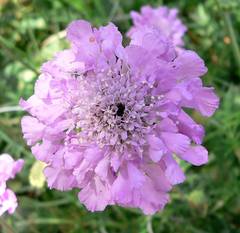
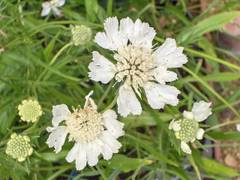
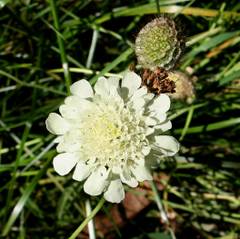
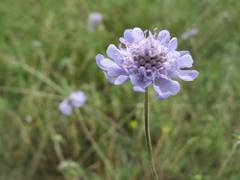
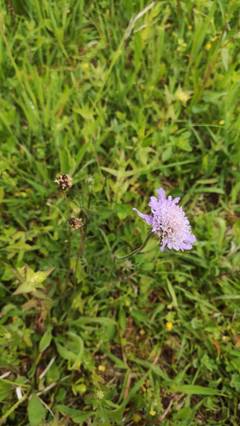
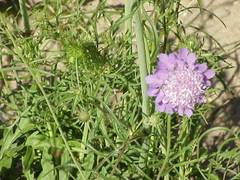
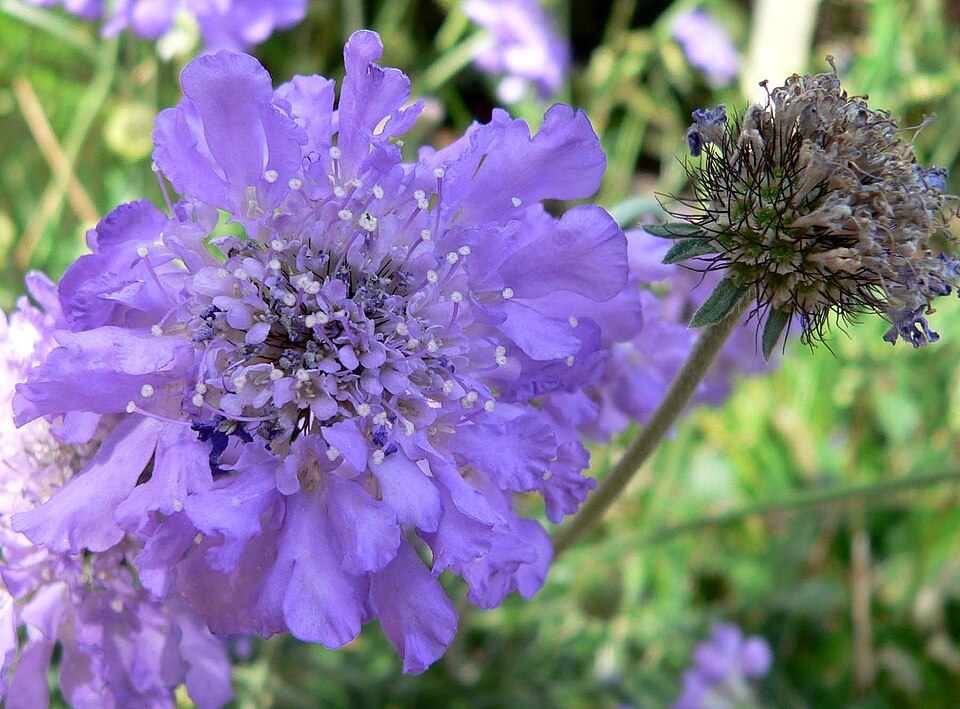
Scabiosa 'Butterfly Blue' is a deciduous perennial reaching 10-14 inches (25-35 cm) tall and 12-18 inches (30-45 cm) wide, with a compact mounding habit. A probable hybrid of Scabiosa columbaria, it carries lavender-blue to soft violet-blue domed pincushion flower heads 1.5-2 inches (4-5 cm) across, each with a raised central boss of stamens ringed by notched outer florets, on wiry stems from May through October, a window of up to 24 weeks when deadheaded regularly. The foliage is narrow, pinnately lobed, and gray-green. The plant sits in the honeysuckle family, Caprifoliaceae, in the teasel subfamily once treated as its own family, Dipsacaceae. Flowers are a steady butterfly nectar source through the second half of the season. It is short-lived, typically holding vigor for 3-5 years; division every 2-3 years keeps it going, while undivided clumps decline and die out. Growth is fast, and it is hardy in zones 4-9. Wet winter soils bring crown rot, so sharp drainage is the key requirement. The plant is non-toxic and passed over by deer.
Native Range
Scabiosa 'Butterfly Blue' is a cultivar of garden origin. Its probable parent, Scabiosa columbaria, is native to Europe, the Mediterranean, and western Asia, growing in dry grasslands and on rocky slopes.Suggested Uses
Grown in mixed perennial borders, rock gardens, cottage gardens, and containers of 3 gallons (11 L) or larger, spaced 12-15 inches (30-38 cm) apart in zones 4-9. The long May-to-October bloom feeds butterflies from late spring to first frost and pairs with Nepeta, Echinacea purpurea, and Rudbeckia fulgida. Wet soils, shade, and rich soils that push loose, floppy growth fall outside its range.How to Identify
Appearance
Size & Dimensions
Height10" - 1'2"
Width/Spread1' - 1'6"
Bloom Information
Lavender-blue domed pincushion heads 1.5-2 inches (4-5 cm) across open from May through October when deadheaded regularly, a window of up to 24 weeks. Weekly deadheading to the nearest lateral bud keeps the succession going; flowering falls off quickly after the first flush if spent heads are left on. The flower form draws butterflies.
Detailed Descriptions
Flower Description
Lavender-blue to soft violet-blue domed pincushion heads 1.5-2 inches (4-5 cm) across, with a raised central boss of stamens and notched outer florets, on wiry stemsFoliage Description
Gray-green, narrow, pinnately lobed, slightly rough, 2-4 inches (5-10 cm) longGrowing Conditions
Sun Requirements
Requires 6-12 hours of direct sunlight daily
• Full Sun: 6+ hours of direct sunlight
• Partial Shade: 3-6 hours of direct sunlight
• Full Shade: Less than 3 hours of direct sunlight
Care & Maintenance
Care Guide
Grow in full sun in lean, well-drained, alkaline sandy, chalky, or loamy soil at pH 6.5-7.5, hardy in zones 4-9. Sharp drainage is essential, since wet winter soil causes crown rot and is the main cause of plant loss. Weekly deadheading to the nearest lateral bud through the season keeps the bloom running from May into October. The plant is short-lived at 3-5 years; division every 2-3 years in spring holds vigor, while undivided clumps fade and die. Drought tolerance is high once the plant is established. It is non-toxic and passed over by deer.Pruning
Deadhead spent heads weekly to the nearest lateral bud through the May-to-October bloom. Cut the plant back to 3-4 inches (7-10 cm) in early spring, in March, before new growth starts. Divide every 2-3 years in spring, since clumps left longer lose vigor and flower less.Pruning Schedule
Prune: March
early spring
Container Growing
Suitable for container growing
Minimum container size: 3 gallons