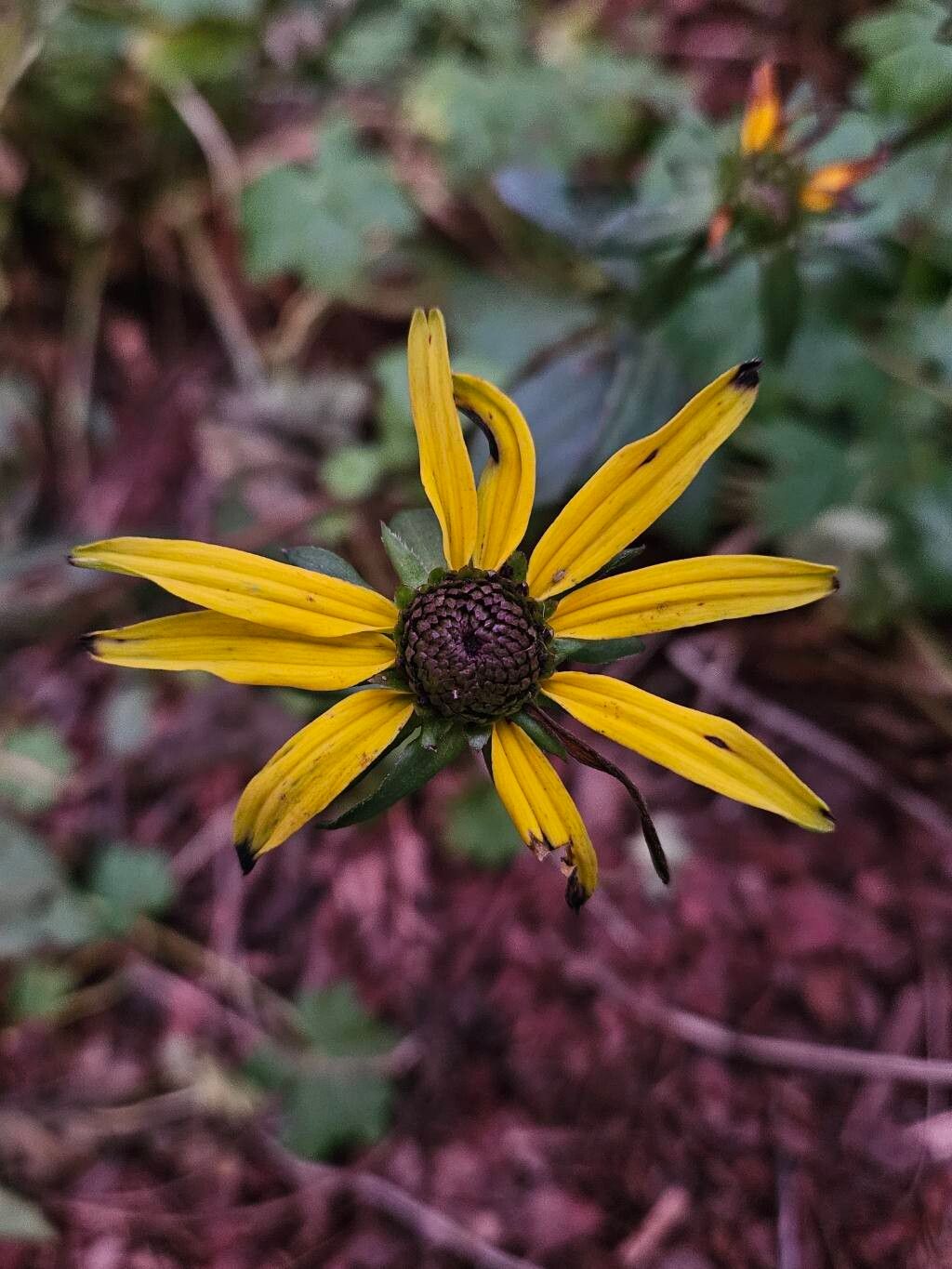
Rudbeckia, Genus, fulgida, Species,
- Genus & species
black-eyed susan
Overview
Rudbeckia fulgida is a clump-forming herbaceous perennial reaching 18-36 inches (45-90 cm) tall and 18-24 inches (45-60 cm) wide. Stems erect, branching in the upper third, dark green and slightly hairy. Basal leaves ovate to lanceolate, 3-5 inches (7.5-13 cm) long with toothed margins and rough, hairy surfaces; stem leaves smaller and clasping. Flowers solitary on each stem, 2-3 inches (5-7.5 cm) across, with 8-15 yellow to yellow-orange ray florets surrounding a domed dark brown to black central disc 0.5-0.8 inch (12-20 mm) wide. Bloom July through October; individual flowers last 2-3 weeks. Spreads by short rhizomes to form patches 24-36 inches (60-90 cm) wide within 3-4 years. Self-seeds in disturbed soil, producing 5-15 volunteers per parent plant annually. Foliage develops yellow-brown spotting from Septoria leaf spot in humid conditions. Crowns die back to ground level after first hard frost; seed heads persist through winter and are eaten by goldfinches and chickadees. Plants live 6-10 years; central crown weakens after 4-5 years and division restores flowering.
Native Range
Native to eastern and central North America from southern Ontario and New England south to Florida and Texas, west to eastern Iowa and Missouri. Found in open woodlands, woodland edges, prairies, moist meadows, and stream banks at 100-3,000 feet (30-900 m) elevation. Most populations occur in the central and southern Appalachians and Ozark Highlands.Suggested Uses
Planted in perennial borders, prairie-style and meadow plantings, and pollinator gardens at 18-24 inch (45-60 cm) spacing in zones 3-9. Self-seeding habit suits naturalistic plantings but may volunteer aggressively in formal beds. Grown in containers of at least 3 gallons (11 L); plants tend to be shorter-lived in containers than in-ground.How to Identify
Appearance
Size & Dimensions
Height1'6" - 3'
Width/Spread1'6" - 2'
Bloom Information
July through October across most of the range, with peak bloom in August-September. In zones 3-4, bloom begins in late July; in zones 8-9, bloom may begin in late June and continue into November. Individual flowers last 2-3 weeks; total flowering on a single plant extends 8-10 weeks. Deadheading lengthens bloom by 2-3 weeks but eliminates seed for overwintering birds.
Detailed Descriptions
Flower Description
Yellow to yellow-orange with dark brown centerFoliage Description
Dark green, hairyGrowing Conditions
Sun Requirements
Requires 6-10 hours of direct sunlight daily
• Full Sun: 6+ hours of direct sunlight
• Partial Shade: 3-6 hours of direct sunlight
• Full Shade: Less than 3 hours of direct sunlight
Care & Maintenance
Care Guide
Plants establish from spring divisions or 4-inch (10 cm) pots within one growing season; first-year flowering is reduced compared to subsequent years. Water weekly during the first growing season in the absence of rain; mature plants tolerate 2-3 weeks without rain in zones 5-7. Septoria leaf spot and powdery mildew develop on lower leaves in humid summers; defoliation is cosmetic and does not affect flowering. Aphid colonies may appear in July on flower stalks. Crowns lift and weaken after 4-5 years; division in early spring every 4-5 years maintains flower production. Self-seeding produces 5-15 volunteers per plant annually in mulched beds.Pruning
Cut stems to ground level in late fall after first hard frost or in early spring before new growth emerges; spring cleanup retains seed for overwintering goldfinches and standing stems shelter beneficial insects. Deadhead spent flowers during August and September to extend bloom by 2-3 weeks and reduce self-seeding. Yellowing lower leaves can be removed mid-season; removal does not affect plant health.Pruning Schedule
Prune: March & November
fallearly spring
Container Growing
Suitable for container growing
Minimum container size: 3 gallons
Toxicity
Non-toxicRelated Rudbeckia species
 Large black-eyed susanRudbeckia hirta
 Black-eyed susanRudbeckia fulgida var. sullivantii 'Goldsturm'
 Deams black-eyed susanRudbeckia fulgida var. deamii
 Little suzy black-eyed susanRudbeckia fulgida var. speciosa 'Viette's Little Suzy'
 Indian summer black-eyed susanRudbeckia hirta 'Indian Summer'
 Brown-eyed susanRudbeckia triloba