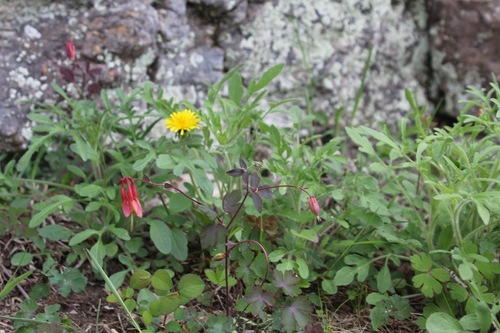
Rudbeckia, Genus, triloba, Species,
- Genus & species
brown-eyed susan
Eastern and central North America, from Ontario south to Florida and west to Colorado
Overview
Rudbeckia triloba is the brown-eyed Susan — a tall, bushy, short-lived native perennial that grows 36–60 inches (90–150 cm) tall and produces hundreds of small golden-yellow daisy flowers 1.5 inches (4 cm) across with dark brown-purple raised central cones from August through October. The species name 'triloba' means 'three-lobed', describing the lower leaves, which are divided into three lobes — the upper stem leaves are simple and lance-shaped. The defining characteristic is the sheer number of small flowers: where R. fulgida might produce 20–30 medium flowers, R. triloba produces 200–300+ small flowers per plant, creating a dazzling mass effect like a constellation of golden stars. The small flowers branch from every stem node, covering the upper third of the plant in a dense golden cloud. Short-lived — typically 2–3 years — but self-sows prolifically, maintaining colonies indefinitely. More shade-tolerant than other rudbeckias, growing well in partial shade where R. fulgida would struggle. The tall, bushy growth may need staking or pinching. Dark green foliage. Tolerates clay, drought, and partial shade. Deer avoid the foliage.
Native Range
Rudbeckia triloba is native to eastern and central North America, from Ontario south to Florida and west to Colorado. It grows in open woodlands, meadows, roadsides, and disturbed areas.Suggested Uses
Used in naturalized plantings, cottage gardens, woodland edges, and meadows. The mass of small flowers creates a dazzling late-season display. More shade-tolerant than other rudbeckias. The self-sowing habit maintains the display without replanting.How to Identify
Appearance
Size & Dimensions
Height3' - 5'
Width/Spread2' - 3'
Colors
Bloom Information
Detailed Descriptions
Flower Description
Golden-yellow ray florets with a dark brown-purple raised central cone; smaller and more numerous than other rudbeckiasFoliage Description
Dark green, lower leaves three-lobed, upper leaves lance-shapedGrowing Conditions
Sun Requirements
Requires 4-10 hours of direct sunlight daily
• Full Sun: 6+ hours of direct sunlight
• Partial Shade: 3-6 hours of direct sunlight
• Full Shade: Less than 3 hours of direct sunlight
Care & Maintenance
Care Guide
Plant in full sun to partial shade. Average to moist soil; tolerates clay and shade. Short-lived — allow self-sowing for colony persistence. Pinch by one-third in early June for shorter growth. Leave standing through winter. Cut to ground in early spring.Pruning
Pinch by one-third in early June if shorter growth is desired. Cut to ground in late February–March. Allow self-sowing.Pruning Schedule
Prune: March
early spring
Toxicity
Non-toxicRelated Rudbeckia species
 Large black-eyed susanRudbeckia hirta
 Black-eyed susanRudbeckia fulgida var. sullivantii 'Goldsturm'
 Deams black-eyed susanRudbeckia fulgida var. deamii
 Orange coneflowerRudbeckia fulgida var. fulgida
 Little suzy black-eyed susanRudbeckia fulgida var. speciosa 'Viette's Little Suzy'
 Indian summer black-eyed susanRudbeckia hirta 'Indian Summer'