Image 1 of 24
1 / 24
Plant Reference
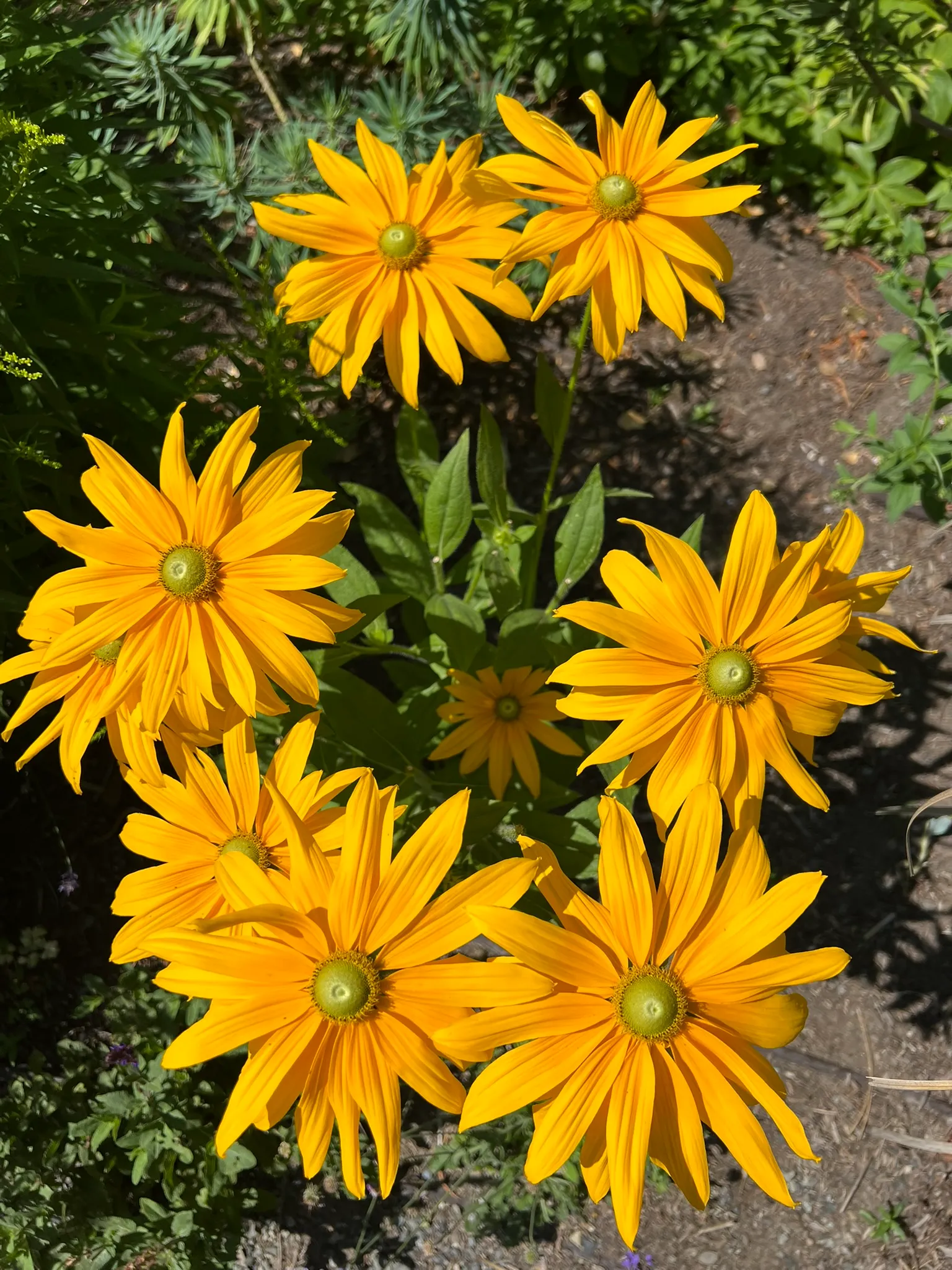
Rudbeckia, Genus, hirta, Species,
- Genus & species
large black-eyed susan
North America east of the Rocky Mountains, from southern Canada to northern Mexico; prairies, open woodlands, roadsides, and disturbed ground
Overview
Rudbeckia hirta is black-eyed Susan (brown-eyed Susan), an upright biennial or short-lived perennial growing 12-36 inches (30-90 cm) tall and 12-18 inches (30-45 cm) wide. Bright golden-yellow ray florets surrounding dome-shaped brown-purple to nearly black central discs in flower heads 2-4 inches (5-10 cm) from June through October (20 weeks). Medium green ovate to lance-shaped densely rough-hairy leaves 2-7 inches (5-18 cm) — hirta = hairy, the diagnostic species feature. In Asteraceae. State flower of Maryland. Native to North America east of the Rocky Mountains. Technically a biennial or short-lived perennial — most plants flower in the second year and die after seeding, but self-sows freely so the planting persists. Often grown as an annual from spring-sown seed. Drought-tolerant once established. Tolerates poor soil, clay, and heat. Susceptible to powdery mildew and septoria leaf spot. Deer-resistant. Non-toxic. Zones 3-9. Full sun. Growth rate is fast.
Native Range
Native to North America east of the Rocky Mountains, from southern Canada to northern Mexico. Found in prairies, open woodlands, roadsides, and disturbed ground.Suggested Uses
Grown in prairie plantings, cottage gardens, mixed borders, cut flower gardens, and in containers of at least 3 gallons (11 L), spaced 12-18 inches (30-45 cm). Long bloom. Self-sowing. Native to eastern North America. Non-toxic. Zones 3-9.How to Identify
Appearance
Size & Dimensions
Height1' - 3'
Width/Spread1' - 1'6"
Bloom Information
Detailed Descriptions
Flower Description
Bright golden-yellow ray florets surrounding a dome-shaped brown-purple to nearly black central disc; flower heads 2-4 inches (5-10 cm) on long upright stems; June-October — 20-week bloom seasonFoliage Description
Medium green, ovate to lance-shaped, 2-7 inches (5-18 cm), coarsely toothed margins, densely rough-hairy throughout (hirta = hairy — diagnostic feature for the species)Growing Conditions
Sun Requirements
Requires 6-8 hours of direct sunlight daily
• Full Sun: 6+ hours of direct sunlight
• Partial Shade: 3-6 hours of direct sunlight
• Full Shade: Less than 3 hours of direct sunlight
Care & Maintenance
Care Guide
Full sun (6-8 hours). Well-drained loam, sand, or clay pH 5.5-7.0. Drought-tolerant once established. Tolerates poor soil and heat. Self-sows freely. Susceptible to powdery mildew. Deer-resistant. Non-toxic. Zones 3-9.Pruning
Deadhead through summer to extend bloom. Leave seed heads in fall for goldfinches. Cut back to ground in late fall or early spring. Allows self-sowing for naturalized plantings.Pruning Schedule
Prune: August–September
summerfall
Container Growing
Suitable for container growing
Minimum container size: 3 gallons
Toxicity
Non-toxicPlanting Guide
Planting Methods & Timing
Planting Method
both
Indoor Start
9 weeks before last frost
Direct Sow Timing
Direct sow after last frost; or start indoors 8–10 weeks before last frost for early bloom
Days to Maturity
70–100 days
Plant Spacing
15 inches
Related Rudbeckia species
 Black-eyed susanRudbeckia fulgida var. sullivantii 'Goldsturm'
 Deams black-eyed susanRudbeckia fulgida var. deamii
 Little suzy black-eyed susanRudbeckia fulgida var. speciosa 'Viette's Little Suzy'
 Indian summer black-eyed susanRudbeckia hirta 'Indian Summer'
 Brown-eyed susanRudbeckia triloba
 American gold rush black-eyed susanRudbeckia × 'American Gold Rush'