Rudbeckia, Genus, laciniata, Species,
- Genus & species
cutleaf coneflower
Overview
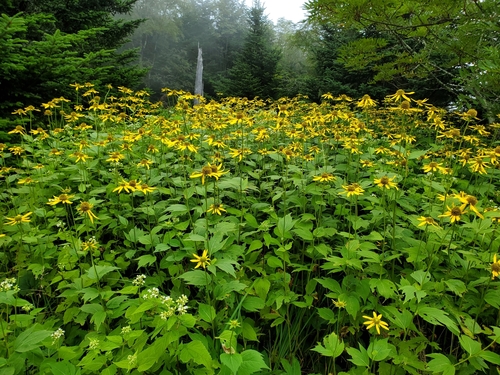
Rudbeckia laciniata is a tall, clump- to colony-forming perennial 3-9 feet (90-270 cm) high with branching, smooth, slightly waxy green stems. The lower leaves are large and deeply cut into three to seven toothed lobes, 4-12 inches (10-30 cm) long, becoming smaller and less divided up the stem. From midsummer into early autumn it carries yellow flower heads 2.5-4 inches (6-10 cm) across, each with 6 to 12 drooping yellow ray florets around a raised, dome-shaped greenish-yellow central disc that lengthens as it matures. The heads sit on long stalks above the foliage and draw bees, butterflies, and other insects. R. laciniata grows in moist meadows, thickets, ditches, and along streams across much of North America. It spreads by rhizomes into broad stands and can crowd smaller plants. The tall stems may lean or topple in wind, rich soil, or shade.
Native Range
Rudbeckia laciniata is native across much of North America, from Quebec and the eastern provinces south to Florida and west to the Rocky Mountains and Arizona. It grows in damp, partly shaded ground such as floodplains, streambanks, moist meadows, and thickets.Suggested Uses
Planted in rain gardens, moist borders, native meadows, and the back of large beds where its height suits the scale. It is used in pollinator and wildlife plantings for late-season nectar and seed. The yellow flower heads suit cottage, naturalistic, and cut-flower gardens.How to Identify
Appearance
Size & Dimensions
Height3' - 9'
Width/Spread2' - 4'
Bloom Information
Detailed Descriptions
Foliage Description
greenGrowing Conditions
Sun Requirements
Requires 4-12 hours of direct sunlight daily
• Full Sun: 6+ hours of direct sunlight
• Partial Shade: 3-6 hours of direct sunlight
• Full Shade: Less than 3 hours of direct sunlight
Care & Maintenance
Care Guide
Grow Rudbeckia laciniata in full sun to partial shade in moist, fertile soil, including loam and clay, at a slightly acidic to neutral pH. It is hardy through USDA zones 3 to 9 and tolerates wet ground and short flooding. In rich or shaded sites the tall stems lean, so an open, sunny position or a cut-back in early summer keeps them upright. Plants spread by rhizome and self-seed, so the colony widens each year unless edges are divided off. Water in drought, since the foliage wilts on dry ground. Dividing clumps every few years renews growth and limits spread.Pruning
Cut stems by one third to one half in late spring to lower the height and reduce flopping. Deadhead through summer to extend bloom, or leave late heads for the birds. Cut the plant to the ground in late autumn or winter and divide congested clumps in spring.Toxicity
Non-toxicRelated Rudbeckia species
 Large black-eyed susanRudbeckia hirta
 Black-eyed susanRudbeckia fulgida var. sullivantii 'Goldsturm'
 Deams black-eyed susanRudbeckia fulgida var. deamii
 Little suzy black-eyed susanRudbeckia fulgida var. speciosa 'Viette's Little Suzy'
 Indian summer black-eyed susanRudbeckia hirta 'Indian Summer'
 Brown-eyed susanRudbeckia triloba