Scabiosa, Genus, columbaria, Species,
- Genus & species
Small scabious
Europe, western Asia, and northern Africa
Overview
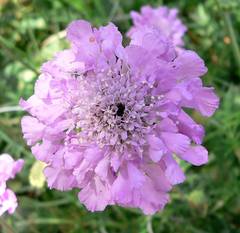
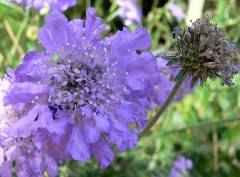
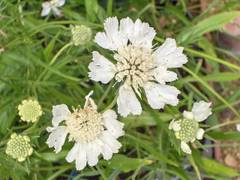
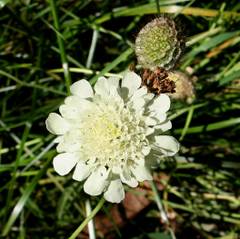
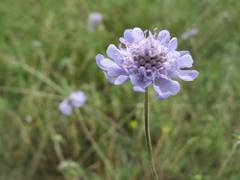
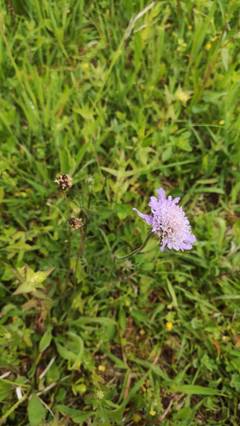
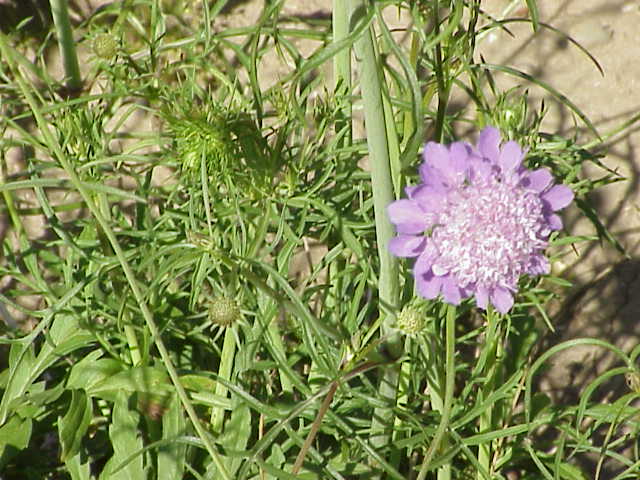
Scabiosa columbaria is a herbaceous perennial forming a basal rosette 12-18 inches (30-45 cm) across from which wiry flowering stems rise 12-24 inches (30-60 cm). Basal leaves are spoon-shaped to lyre-shaped, 2-4 inches (5-10 cm) long, grey-green and softly hairy with shallow lobes, while stem leaves are pinnately cut into narrow segments 0.1-0.2 inch (3-5 mm) wide. Flowers are grouped into flat pincushion heads 1-1.5 inches (2.5-4 cm) across in lilac-blue to mauve, with the outer florets larger and more deeply cut than the inner ones. Heads open from June through October on unbranched stalks 8-16 inches (20-40 cm) long held above the foliage. Seed heads form papery cups tipped with five bristles and hold on the stem into winter. Plants persist 3-4 years in free-draining alkaline ground and 1-2 years where soil stays wet through winter. Flowering stops within 3-4 weeks if heads are left to set seed, and each plant then sows 10 to 30 seedlings nearby. Foliage stays green through mild winters in zones 7-8 and dies back to the crown in zones 3-6.
Native Range
Scabiosa columbaria grows in chalk and limestone grassland, dry meadows, roadside banks, and open scrub across Europe, western Asia, and northern Africa, with the densest populations on calcareous downland in Britain and central Europe. It occupies thin, free-draining soils from sea level to 6,500 feet (2,000 m). Populations in northwest Europe have contracted with the loss of species-rich grassland to fertiliser use and cultivation.Suggested Uses
Planted in borders, gravel gardens, and chalk grassland restoration at 12-18 inch (30-45 cm) spacing, and in wildflower turf on thin alkaline soils. Flowers carry bees and butterflies from June through October, and the species is included in pollinator seed mixes for calcareous ground. Container culture uses pots of 3 gallons (11 L) or larger in a gritty free-draining mix, and cut stems hold 5-7 days in water.How to Identify
Appearance
Size & Dimensions
Height1' - 2'
Width/Spread1' - 1'6"
Bloom Information
Heads open from June through October in zones 5-8, with the first flush in June and July and continued production to the first frost where spent heads are cut away. An individual head lasts 7-12 days. Plants left to set seed stop producing new buds within 3-4 weeks. Total flowering runs 16-20 weeks under regular removal of spent heads.
Detailed Descriptions
Flower Description
lilac-blue to mauveFoliage Description
grey-greenGrowing Conditions
Sun Requirements
Requires 6-12 hours of direct sunlight daily
• Full Sun: 6+ hours of direct sunlight
• Partial Shade: 3-6 hours of direct sunlight
• Full Shade: Less than 3 hours of direct sunlight
Care & Maintenance
Care Guide
Plants take 1 inch (25 mm) of water weekly in the first season and go 3-4 weeks without rain once established. Winter wet is the main cause of loss, and crowns rot within one season on heavy soil; plants on clay are set with 2-4 inches (5-10 cm) of grit worked into the planting hole and the crown at or slightly above grade. Soil below pH 6.0 produces weak growth and thin flowering, and lime raises performance on acid ground within one season. Spent heads are cut at intervals of 7-10 days through the season, since seed set halts new bud production. Powdery mildew appears on the basal foliage in late summer in humid conditions without reducing flowering. Clumps are divided in spring every 2-3 years, since plants decline after 3-4 years.Pruning
Flower stems are cut at the base as heads fade, at intervals of 7-10 days from June through September. Basal foliage is left standing over winter, since the rosette shelters the crown, and dead leaves are cleared in March as new growth starts. Cutting the whole plant back to the basal rosette in early August brings a fresh set of stems within 3-4 weeks in zones 7-9. No woody growth forms, so no structural pruning applies.Pruning Schedule
Prune: March & August
early springsummer
Container Growing
Suitable for container growing
Minimum container size: 3 gallons