Sambucus, Genus, gaudichaudiana, Species,
- Genus & species
white elderberry
Overview
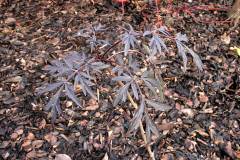
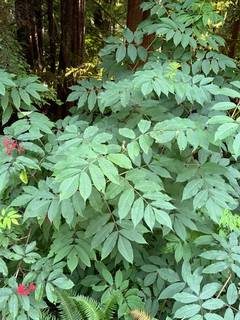
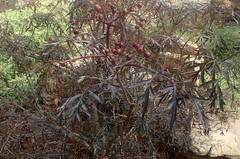
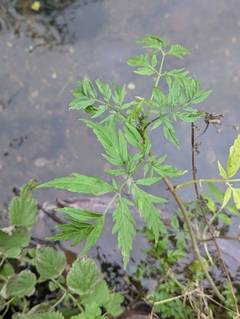
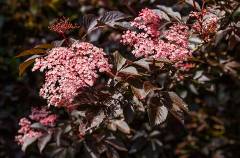
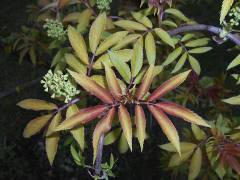
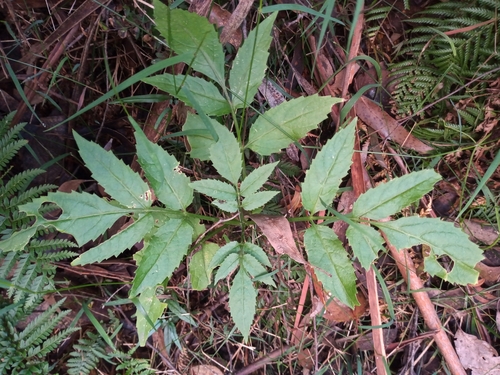
Sambucus gaudichaudiana is a soft-wooded shrub in the Viburnaceae family growing 3-5 feet (0.9-1.5 m) tall, often spreading into colonies by underground suckers. The pinnate leaves have 5-9 lance-shaped, toothed leaflets 1.5-4 inches (4-10 cm) long. Small white flowers are held in flat-topped clusters 2-4 inches (5-10 cm) across from spring into summer, followed by soft white to translucent berries about 0.2 inch (5 mm) wide. The berries are edible when fully ripe and cooked, while the stems, leaves, and unripe fruit contain cyanogenic compounds that cause nausea if eaten. Stems are soft and pithy, and the top growth often dies back in dry seasons or after frost, regrowing from the rootstock. Growth is rapid in moist soil, and the suckering habit allows it to form a thicket that can spread beyond its planting position.
Native Range
Native to southeastern Australia, occurring in Queensland, New South Wales, Victoria, and Tasmania. Grows along forest margins, creek banks, and moist gullies, often in disturbed ground and clearings.Suggested Uses
Planted in moist native gardens, along pond and creek edges, and in habitat plantings, spaced 3-5 feet (0.9-1.5 m) apart. The flowers draw insects and the berries feed birds. The suckering habit makes it difficult to contain in small gardens.How to Identify
Appearance
Size & Dimensions
Height3' - 5'
Width/Spread3' - 6'
Bloom Information
Detailed Descriptions
Foliage Description
greenGrowing Conditions
Sun Requirements
Requires 4-8 hours of direct sunlight daily
• Full Sun: 6+ hours of direct sunlight
• Partial Shade: 3-6 hours of direct sunlight
• Full Shade: Less than 3 hours of direct sunlight
Care & Maintenance
Care Guide
Grows in full sun to part shade on moist, fertile soil along watercourses and in gullies. Water during dry spells, as the soft growth wilts and dies back under drought stress. Spreads by root suckers and can form a thicket, sending up shoots away from the original plant. Stems, leaves, and unripe berries contain cyanogenic glycosides that cause nausea and stomach upset if eaten raw. Top growth often dies down in winter and regrows from the base in spring.Pruning
Cut spent and frost-damaged stems back to the base in late winter, as new growth rises from the rootstock each spring. Remove root suckers along the margins to limit the spread of the colony. The soft stems cut easily and regrow quickly.Pruning Schedule
Prune: July–August
winter