Sambucus, Genus, racemosa, Species,
- Genus & species
red elderberry
Alaska south through British Columbia, Washington, Oregon, and into California; moist forests, forest edges, stream banks, and disturbed sites
Overview
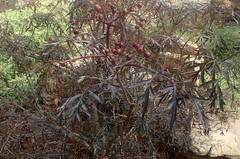
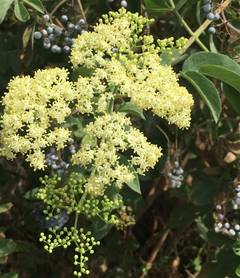
Sambucus racemosa is an upright deciduous shrub reaching 6-15 feet (1.8-4.6 m) tall and 6-12 feet (1.8-3.7 m) wide. Opposite pinnately compound leaves bear 5-7 lance-shaped sharply serrated leaflets, each 2-5 inches (5-13 cm) long; stems contain prominent soft white pith visible in cross-section. Cream-white flowers in dome-shaped to pyramidal panicles 2-5 inches (5-13 cm) appear April through June over 6 weeks; the cone-shaped panicle separates the species from blue elderberry (S. cerulea), whose flowers form flat-topped umbel-like cymes. Clusters of bright red shiny berries follow in July and August. Frequently among the early colonizers of disturbed forest openings, clearings, and avalanche tracks in its native range. Spreads by suckers and seed; in moist sites a single shrub can form a thicket within 5-7 years. All raw parts (berries, leaves, stems, bark, roots, and seeds) contain cyanogenic glycosides including sambunigrin and are toxic to humans, pets, and livestock if ingested raw. Unlike S. cerulea and European black elder (S. nigra), the red berries of S. racemosa are not considered safe for human food even when cooked, and the seeds are particularly toxic. Birds tolerate the raw berries. Foliage may be browsed by deer in winter. Hardy in USDA zones 4-9.
Native Range
Native to North America from Alaska south through British Columbia, Washington, Oregon, and into California, with disjunct populations elsewhere across the continent. Found in moist forests, at forest edges, on stream banks, and in disturbed sites. Frequently among the early colonizers of forest openings and avalanche paths.Suggested Uses
Used in mixed native shrub borders, woodland edges, riparian buffer plantings, and disturbed-site restoration plantings, spaced 6-12 feet (1.8-3.7 m). Toxicity of the raw berries is relevant where plantings are sited near patios or play areas. Foliage is browsed by deer in winter where populations are dense.How to Identify
Appearance
Size & Dimensions
Height6' - 15'
Width/Spread6' - 12'
Bloom Information
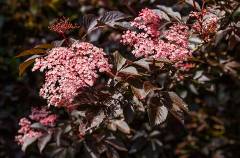
Cream-white flowers in dome-shaped to pyramidal panicles 2-5 inches (5-13 cm) open April through June across the native range, with peak flowering in May at low elevations and June at higher elevations. Total bloom period extends 6 weeks; individual panicles last 10-14 days. Bee-pollinated, with a faint musty scent. Bright red berry clusters follow in July and August.
Detailed Descriptions
Flower Description
Cream-white in dome-shaped to pyramidal panicles 2-5 inches (5-13 cm) — cone-shaped, not flat-topped (which separates the species from blue elderberry, S. cerulea, whose clusters are flat-topped umbel-like cymes); musty scent; April-June; followed by clusters of bright red shiny berries in July and AugustFoliage Description
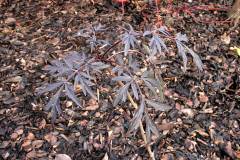
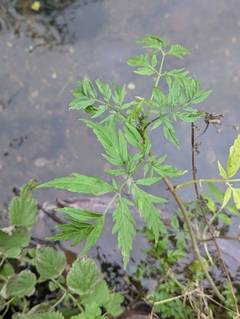
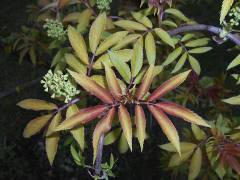
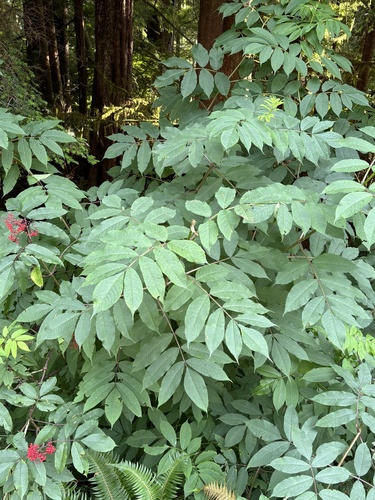
Medium to dark green; opposite, pinnately compound with 5-7 lance-shaped sharply serrated leaflets, each 2-5 inches (5-13 cm) long; stems contain prominent soft white pith visible in cross-section; turns yellow in fallGrowing Conditions
Sun Requirements
Requires 2-10 hours of direct sunlight daily
• Full Sun: 6+ hours of direct sunlight
• Partial Shade: 3-6 hours of direct sunlight
• Full Shade: Less than 3 hours of direct sunlight
Care & Maintenance
Care Guide
Grows in part sun to full sun with 2-10 hours direct light. Tolerates clay, loam, and silt soils at pH 5.5-7.0; shows reduced vigor in dry sites once temperatures exceed 85°F (29°C). Hardy in USDA zones 4-9. Aphids occasionally cluster on new shoots in spring; stem borers occur in older wood, removed by renewal pruning every 3-4 years. All raw parts contain cyanogenic glycosides; skin handling causes no known reaction, but ingestion of raw berries, leaves, stems, or seeds causes nausea, vomiting, and diarrhea in humans, pets, and livestock. The red berries are not considered safe for human food even when cooked.Pruning
Renew oldest stems at the base every 3-4 years in February or early March before bud break. Tolerates renovation pruning to ground level, with full canopy regrowth from the base in 2-3 seasons. Cut wood fades from cream to tan within a few weeks.Pruning Schedule
Prune: February–March
early spring