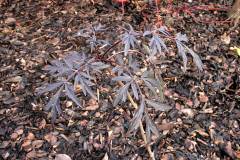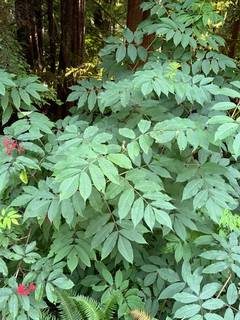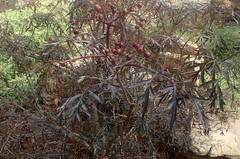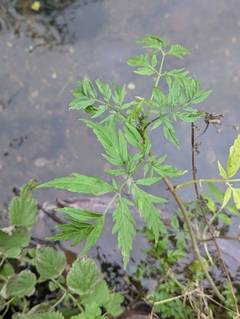
Sambucus, Genus, cerulea, Species,
- Genus & species
blue elderberry
Overview
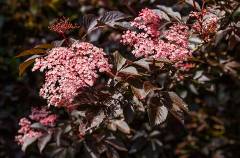
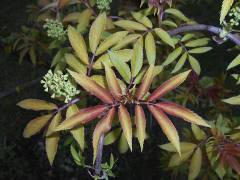
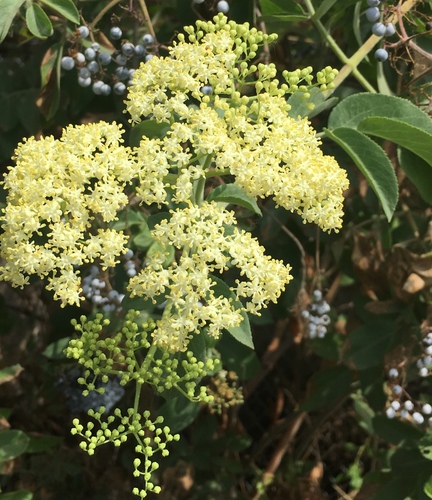
Sambucus cerulea is a deciduous shrub or small tree reaching 10-25 feet (3-7.5 m) tall and 8-15 feet (2.4-4.5 m) wide at maturity, with multiple stems rising from the base or a short single trunk on older plants. Bark is gray-brown and shreds in long strips on older wood. Leaves are opposite, pinnately compound with 5-9 leaflets, each leaflet 2-6 inches (5-15 cm) long with toothed margins; foliage is medium green and turns yellow before drop in October. Flat-topped cymes 4-8 inches (10-20 cm) across bear 100+ small creamy-white flowers from May through July; flowers carry a sweet-musky fragrance and attract honeybees, native bees, and beetles. Fruit is a small drupe 0.2-0.3 inches (5-8 mm) across with a heavy waxy bloom that gives ripe clusters a powder-blue cast in August and September. Cooked or dried fruit is edible and used in jam, syrup, wine, and pies; raw fruit and all other plant parts contain cyanogenic glycosides and cause gastric upset if eaten in quantity. Plants grow at 12-24 inches (30-60 cm) per year and reach mature size in 6-10 years; lifespan is 60-100 years.
Native Range
Native to western North America from southern British Columbia south to Baja California, east to Montana, Texas, and northern Mexico. Found along streambanks, in moist meadows, on canyon walls, and at the edges of riparian forests at sea level to 9,000 feet (2,750 m) elevation. Most common on alluvial soils with seasonal subsurface moisture and full sun.Suggested Uses
Used in native shrub borders, riparian restoration plantings, edible landscapes, and pollinator gardens in zones 5-10 at 10-15 foot (3-4.5 m) spacing for individual specimens or 5-7 feet (1.5-2.1 m) for hedge effect. Cooked fruit is the basis for traditional and commercial elderberry products including syrup, jelly, and wine. Cyanogenic glycosides in raw fruit, leaves, stems, and roots make all plant parts other than cooked ripe fruit unsafe for ingestion.How to Identify
Appearance
Size & Dimensions
Height10' - 25'
Width/Spread8' - 15'
Bloom Information
Flat-topped cymes 4-8 inches (10-20 cm) across appear at branch tips from late May through mid-July in zones 5-10, depending on elevation. Bloom lasts 3-4 weeks at any single site; sequential cyme opening on the same plant extends the visible flowering period to 5-6 weeks. Honeybees, native solitary bees, hoverflies, and beetles visit the flowers; the sweet-musky fragrance is detectable 30-50 feet (9-15 m) downwind.
Detailed Descriptions
Foliage Description
medium greenGrowing Conditions
Sun Requirements
Requires 4-12 hours of direct sunlight daily
• Full Sun: 6+ hours of direct sunlight
• Partial Shade: 3-6 hours of direct sunlight
• Full Shade: Less than 3 hours of direct sunlight
Care & Maintenance
Care Guide
Grows in full sun to part shade on moist, well-drained loam to clay loam at slightly acid to neutral pH; tolerates seasonal flooding for 2-4 weeks. Water deeply once weekly during the first two growing seasons; established plants tolerate dry summers in zones 7-10 once past the second season but produce smaller fruit clusters in dry years. Verticillium wilt and powdery mildew can develop in poorly drained sites or shaded plantings; severity is cosmetic in most years. Hollow stems are easily broken by wind and ice load; older plants commonly lose a stem during winter storms. Plants resprout from the base after stem dieback or hard pruning. Wildlife (cedar waxwings, robins, mammals) commonly removes 60-90% of the fruit crop in unfenced sites.Pruning
Prune in late winter (February to early March) before bud break to remove dead, broken, or crossing stems; the plant resprouts strongly from the base after hard pruning. Every 7-10 years, cutting all stems to within 12-18 inches (30-45 cm) of the ground rejuvenates the canopy and increases the next year's fruit set; full regrowth and a fruit crop return in 2-3 years. Hollow stems are cut just above a leaf node to reduce fungal entry through the pith.Pruning Schedule
Prune: February–March
winterearly spring