Sambucus, Genus, nigra, Species, f., Form, laciniata, Form,
- Genus & species
- Form
cut-leaved elder
Europe (Britain east through continental Europe to western Russia), western Asia, North Africa
Overview
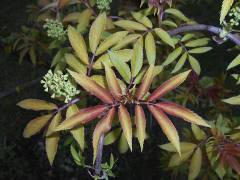
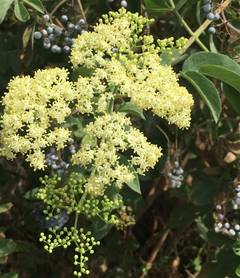
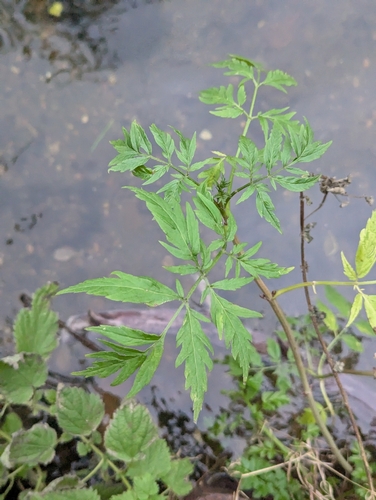
Sambucus nigra f. laciniata is a deciduous shrub reaching 8–12 feet (2.4–3.6 m) tall and 6–10 feet (1.8–3 m) wide, with a vigorous arching spreading habit. The plant is a naturally occurring forma of the European black elder, carrying pinnately compound leaves with deeply and finely dissected leaflets rather than the broad undissected leaflets of the species type — the leaflets are cut almost to the midrib, producing a fern-like texture that reads as a different textural layer in mixed plantings than the surrounding broad-leaved shrubs. Foliage is bright green through the growing season and turns yellow in October–November. Flat-topped corymbs 6–8 inches (15–20 cm) across of creamy-white musky-scented flowers appear in June–July, followed by clusters of glossy black berries 0.25–0.3 inch (6–8 mm) in diameter that ripen in September–October. Growth rate is fast at 2–4 feet (0.6–1.2 m) per year of stem extension after the first season, and the shrub reaches full mature size in 4 growing seasons. Hardy to USDA zone 4. The forma has been in cultivation since at least the 16th century, predating the modern purple-leaved selections ('Eva' / Black Beauty, 'Gerda' / Black Lace, 'Guincho Purple') by several centuries. All plant parts contain cyanogenic glycosides and sambunigrin and are toxic to pets and humans except for the ripe cooked berries and the open flowers (both of which are used in European culinary traditions); raw berries and all green plant tissues cause gastrointestinal symptoms including nausea, vomiting, and diarrhea if ingested.
Native Range
Sambucus nigra f. laciniata occurs naturally within the native range of Sambucus nigra — Europe from Britain east through continental Europe to western Russia, plus western Asia and North Africa — in hedgerows, woodland margins, and disturbed sites. The dissected-leaf forma has been cultivated since at least the 16th century from wild-collected or garden-origin stock.Suggested Uses
Used as a specimen shrub, in mixed borders, along woodland edges, in hedgerows, or in wildlife plantings at 6–8 foot (1.8–2.4 m) spacing. The dissected bright green foliage reads as a textural contrast against broad-leaved shrubs such as Viburnum plicatum, Hydrangea macrophylla, or Cornus alba and matches well with other delicate-textured shade plants such as Athyrium filix-femina or Dryopteris erythrosora. Flowers attract native pollinators including hoverflies and solitary bees, and the ripe berries support migrating songbirds including cedar waxwing, American robin, and gray catbird in the plant's introduced North American range. The aggressive suckering habit and 8–12 foot mature size rule out small residential gardens, formal borders, or positions where children or pets could access the toxic raw berries and foliage. The plant does not grow well in dry soils, full shade, or climates below USDA zone 4.How to Identify
Appearance
Size & Dimensions
Height8' - 12'
Width/Spread6' - 10'
Bloom Information
Flat-topped corymbs 6–8 inches (15–20 cm) across of creamy-white musky-scented flowers appear in June–July over a 3–4 week window. Clusters of glossy black berries 0.25–0.3 inch (6–8 mm) in diameter ripen in September–October. Open flowers and ripe cooked berries are used in European culinary traditions; raw berries and green plant tissues are toxic and cause gastrointestinal symptoms if ingested.
Detailed Descriptions
Flower Description
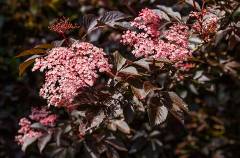
Creamy-white; musky-scented; flat-topped corymbs 6-8 inches across; June-July; followed by clusters of glossy black berries 0.25-0.3 inch ripening September-OctoberFoliage Description
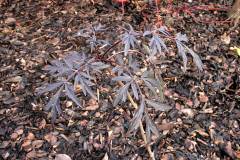
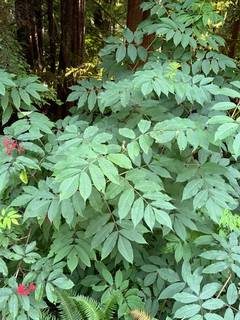
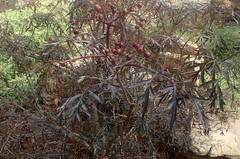
Bright green; pinnately compound with deeply and finely dissected laciniata leaflets producing a fern-like texture; yellow autumn color October-November; deciduousGrowing Conditions
Sun Requirements
Requires 4-10 hours of direct sunlight daily
• Full Sun: 6+ hours of direct sunlight
• Partial Shade: 3-6 hours of direct sunlight
• Full Shade: Less than 3 hours of direct sunlight
Care & Maintenance
Care Guide
Grow in full sun to partial shade with 4–10 hours of direct light in moist fertile loam, clay, or sandy loam at pH 5.5–7.0. The forma tolerates a wide range of soil types including heavy clay and seasonally wet soils that kill most flowering shrubs. Full sun produces the densest canopy and heaviest flower display; partial shade positions grow the plant but produce more open arching growth and approximately 30–50% fewer flower corymbs. Water deeply once per week during the first two growing seasons to establish, then rely on natural rainfall during typical weather. Suckering from the base is common and colonies 10–15 feet (3–4.5 m) across develop over 8–10 years without active sucker removal. Hardy to USDA zone 4.Pruning
Prune in late winter (February–March) during dormancy. Annual removal of one-third of the oldest stems at the base maintains a balance of young vigorous growth and mature flowering stems — older 4+ year stems produce progressively fewer flowers and should be cut out. Hard coppicing to 12–18 inches (30–45 cm) from the ground in late winter produces larger, more finely textured foliage the following season at the expense of that year's flower crop; the coppice technique is used in European ornamental plantings on a 2–3 year rotation when foliage texture is the design goal rather than flower and fruit display.Pruning Schedule
Prune: February–March
early spring