Sambucus, Genus, nigra, Species, 'Guincho Purple', Cultivar,
- Genus & species
- Cultivar
Guincho purple elder
Europe, western Asia, and North Africa; cultivar selected at Guincho, Portugal
Overview
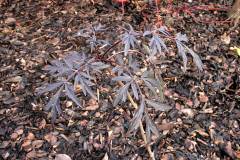
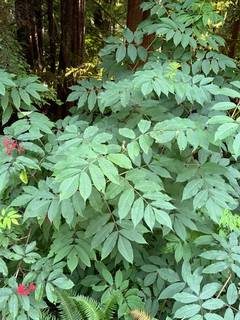
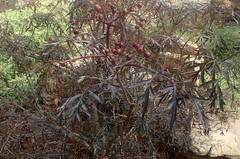
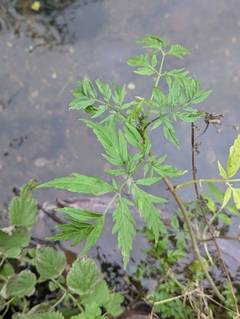
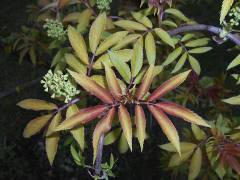
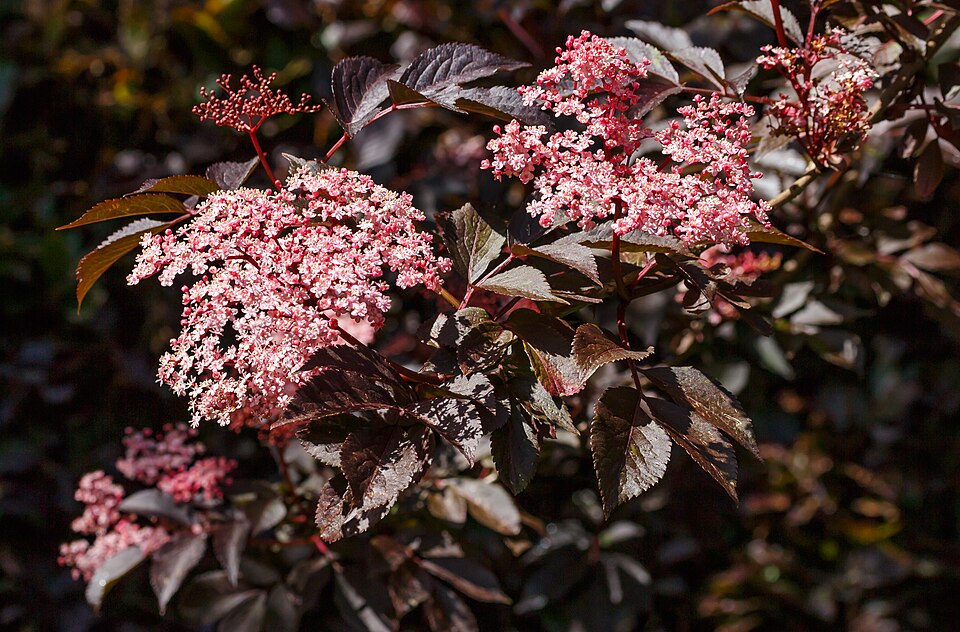
Sambucus nigra 'Guincho Purple' is a deciduous shrub reaching 10-15 feet (3-4.5 m) tall with a spread of 8-12 feet (2.4-3.6 m) in an upright, vase-shaped habit with arching outer canes at maturity. Selected from a garden in Guincho, near Cascais, Portugal, it produces pinnately compound leaves with broad, flat, undissected leaflets that emerge green flushed bronze, darken to deep bronze-purple through summer in full sun, and turn red-purple in autumn. Flat-topped corymbs 6-8 inches (15-20 cm) across open creamy-white and age to dusty pink during June-July, followed by glossy black berries in September-October. Growth rate is fast, reaching full size in 3-4 years. Hardy to USDA zone 5. The 10-15 foot mature size exceeds compact purple selections such as 'Eva' (Black Beauty) at 8-12 feet and 'Gerda' (Black Lace) at 8 feet. Leaves, stems, unripe berries, and raw seeds contain cyanogenic glycosides; only fully cooked ripe berries and flowers are edible. The broad leaflets reduce the lacy effect that 'Gerda' produces, and the shrub can outgrow small gardens without annual coppice pruning.
Native Range
Sambucus nigra is native to Europe, western Asia, and North Africa, in hedgerows, woodland edges, streambanks, and scrub. The cultivar 'Guincho Purple' was selected from a garden in Guincho, near Cascais, Portugal.Suggested Uses
Used as a large specimen, in mixed shrub borders, as a deciduous screen, and as a dark-foliage anchor in cottage and cutting gardens, at 8-10 foot (2.4-3 m) spacing. The purple foliage pairs with white, pink, and chartreuse companions. Ten to fifteen foot mature size and annual pruning needs limit use in compact gardens, where 'Eva' or 'Gerda' fit smaller footprints.How to Identify
Appearance
Size & Dimensions
Height10' - 15'
Width/Spread8' - 12'
Bloom Information
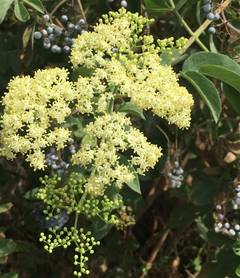
Flat-topped corymbs 6-8 inches (15-20 cm) across of small creamy-white flowers that age to dusty pink, borne June-July. Bloom duration is approximately 3-4 weeks. Glossy black berries ripen September-October. Fragrance is moderate and of the typical elderflower type.
Detailed Descriptions
Flower Description
Creamy-white aging to dusty pink; flat-topped corymbs 6-8 inches (15-20 cm); June-July; glossy black berries September-OctoberFoliage Description
Bronze-green on emergence, darkening to deep bronze-purple in summer, red-purple in autumn; pinnately compound with broad flat undissected leaflets; deciduousGrowing Conditions
Sun Requirements
Requires 4-10 hours of direct sunlight daily
• Full Sun: 6+ hours of direct sunlight
• Partial Shade: 3-6 hours of direct sunlight
• Full Shade: Less than 3 hours of direct sunlight
Care & Maintenance
Care Guide
Grows in full sun to partial shade in moist, fertile soil at pH 5.5-7.0. Hardy to USDA zone 5. Full sun produces the darkest foliage color; heavy shade reduces bronze-purple tones toward green. Even moisture supports the fast growth rate, and the roots tolerate seasonal clay saturation. Annual renewal pruning keeps the 10-15 foot potential in check on tight sites. Suckering is occasional rather than aggressive. Leaves, stems, unripe berries, and raw seeds contain cyanogenic glycosides, and only fully cooked ripe berries and flowers are edible.Pruning
Pruning is in late winter before bud break. Annual removal of one-third of the oldest canes at the base maintains the vase shape and supports new purple growth. Hard coppicing to 12-18 inches (30-45 cm) produces larger leaves and a shorter final height at the cost of that season's flower corymbs. The shrub regenerates vigorously from hard cuts.Pruning Schedule
Prune: February–March
early spring