Sambucus, Genus, nigra, Species, 'Eva', Cultivar,
- Genus & species
- Cultivar
black beauty elderberry
Europe, W Asia, N Africa (hedgerows, woodland margins; Eva/Black Beauty bred Robert Vernon 1999; darkest elderberry foliage; pink flowers; edible cooked berries; z4)
Overview
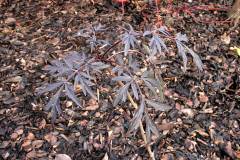
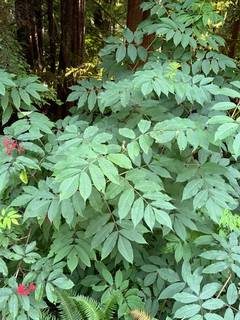
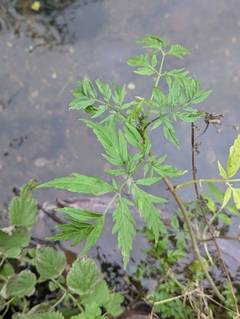
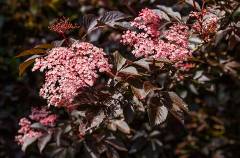
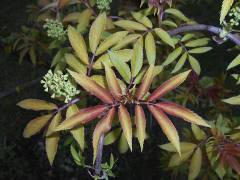
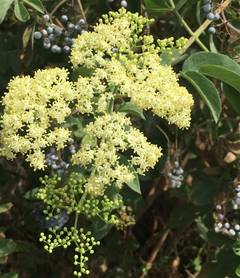
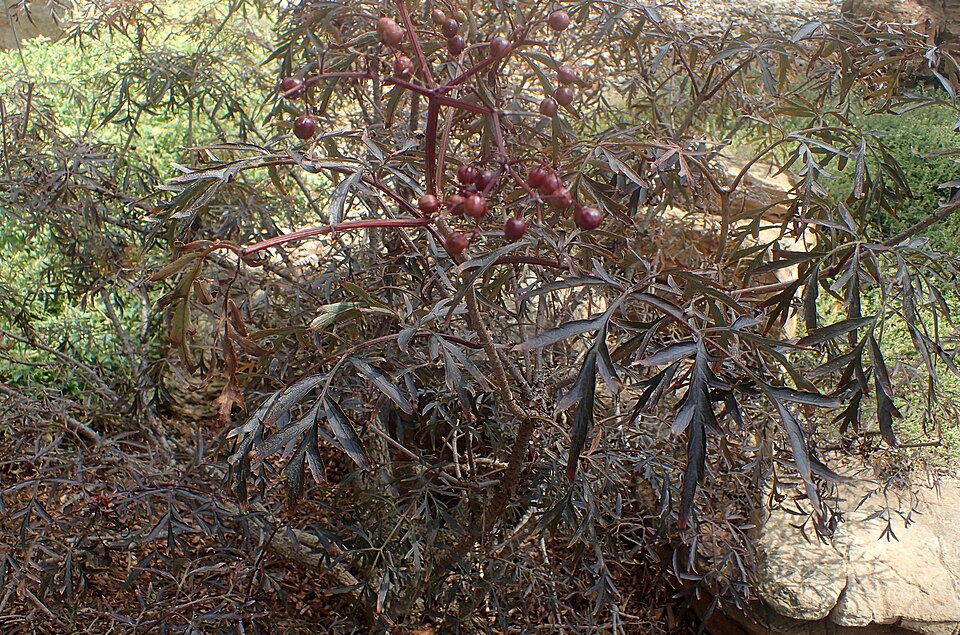
Sambucus nigra 'Eva', sold under the trade name Black Beauty, is a deciduous shrub reaching 8-12 feet (2.4-3.6 m) tall with a spread of 6-8 feet (1.8-2.4 m) and a vigorous, upright, vase-shaped habit. Bred by Robert Vernon, 1999, it produces pinnately compound leaves with 5-7 leaflets that emerge deep bronze-purple and darken to near-black purple through summer—the darkest foliage of any elderberry. Flat-topped corymbs 6-8 inches (15-20 cm) across of lemon-scented, pale pink flowers appear in June-July, followed by clusters of small, glossy, dark purple-black berries in September-October. Growth rate is fast. Hardy to zone 4. The berries are edible when cooked (toxic raw). The lemon-scented pink flowers against near-black foliage create a strong contrast. May produce root suckers.
Native Range
Sambucus nigra is native to Europe, western Asia, and North Africa—in hedgerows, woodland margins, and disturbed areas from lowlands to moderate elevations.Suggested Uses
Planted as a specimen, in mixed borders, or as a hedge at 6-8 foot (1.8-2.4 m) spacing. Darkest elderberry foliage—near-black purple. Lemon-scented pink flowers. Edible cooked berries (toxic raw). Fast growing. Cold hardy z4. Full sun for darkest color. May sucker. Cross-pollinate for berries. Not suitable for shade (greens up) or very dry soils.How to Identify
Appearance
Size & Dimensions
Height8' - 12'
Width/Spread6' - 8'
Bloom Information
Flat-topped corymbs 6-8 inches (15-20 cm) of lemon-scented pale pink flowers June-July. Clusters of glossy dark purple-black berries September-October. Berries edible when cooked; toxic raw. Flowers and near-black foliage create strong contrast.
Detailed Descriptions
Flower Description
Pale pink lemon-scented; flat corymbs 6-8 inches; Jun-Jul; dark purple-black berries Sep-OctFoliage Description
Deep bronze-purple to near-black purple; pinnately compound 5-7 leaflets; darkest elderberry; deciduousGrowing Conditions
Sun Requirements
Requires 4-10 hours of direct sunlight daily
• Full Sun: 6+ hours of direct sunlight
• Partial Shade: 3-6 hours of direct sunlight
• Full Shade: Less than 3 hours of direct sunlight
Care & Maintenance
Care Guide
Plant in full sun to partial shade in moist, fertile soil (pH 5.5-7.0). Hardy to zone 4. Full sun produces the darkest foliage—shade results in more green. Fast growing—can reach 8-12 feet in 3-4 years. Tolerates a range of soils. May sucker. Cross-pollination with another elderberry cultivar improves berry production.Pruning
Prune in late winter to early spring. Can be cut hard to the ground for renewal—responds vigorously. Remove one-third of oldest stems annually. Can be coppiced for larger, more intensely colored foliage. Manage suckers.Pruning Schedule
Prune: February–March
early spring