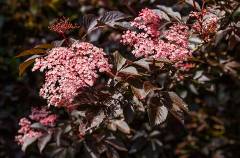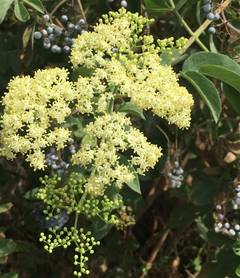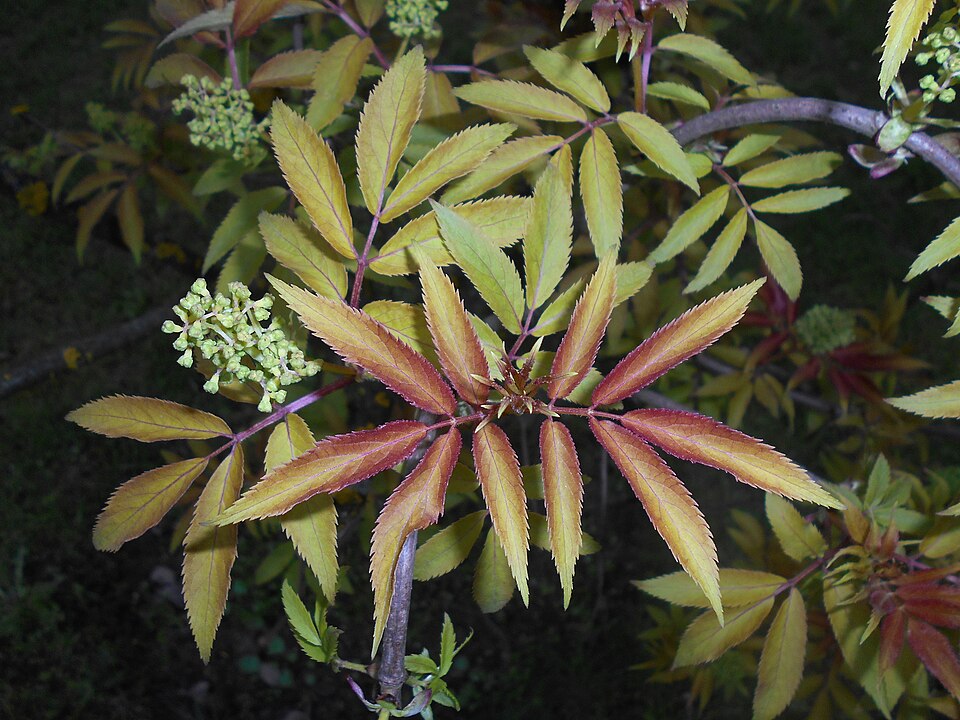
Sambucus, Genus, racemosa, Species, 'Plumosa Aurea', Cultivar,
- Genus & species
- Cultivar
golden elder
Northern Hemisphere (Europe, temperate Asia, and North America); cultivar origin in horticultural selection
Overview
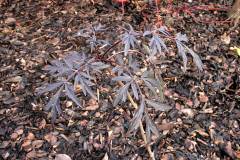
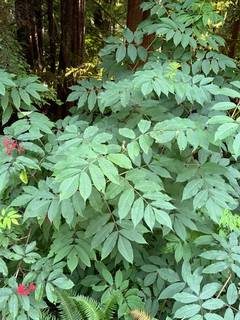
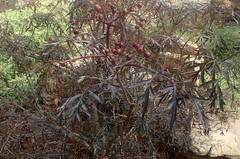
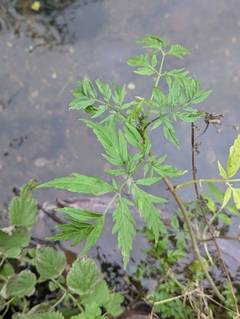
Sambucus racemosa 'Plumosa Aurea' is a deciduous shrub reaching 6-10 feet (1.8-3 m) tall with a spread of 6-8 feet (1.8-2.4 m) in a vigorous, upright to arching habit. A golden-leaved dissected selection of the red elderberry, it produces pinnately compound leaves with deeply cut, flat, plumose leaflets that emerge copper-bronze in spring and turn bright golden-yellow through summer. Conical panicles 2-3 inches (5-8 cm) of creamy-white flowers appear April-May, followed by bright red berries in June-July. Growth rate is moderate to fast, reaching full size in 3-4 years. Hardy to USDA zone 3. The 6-10 foot mature size is intermediate between the compact 'Golden Locks' at 3-4 feet and full-size green elderberries at 10-15 feet, with foliage that reads as lacy from a distance because the leaflets are held flat rather than curled. Leaves, stems, and raw berries contain cyanogenic glycosides; only fully cooked berries are edible. Golden color weakens in heavy shade toward chartreuse-green, and unshielded afternoon sun in zones 7-8 produces marginal leaf scorch.
Native Range
Sambucus racemosa is native throughout the Northern Hemisphere, including Europe, temperate Asia, and North America, in moist montane and boreal forests.Suggested Uses
Planted as a specimen, in mixed shrub borders, and as a golden accent in woodland-edge plantings at 5-6 foot (1.5-1.8 m) spacing. The lacy golden canopy contrasts with purple foliage plants such as Cotinus and dark-leaved Japanese maples. Full afternoon sun in warm zones, dry sites, and compact gardens that need a 3-4 foot footprint fall outside the use range; 'Golden Locks' covers smaller footprints and more shade.How to Identify
Appearance
Size & Dimensions
Height6' - 10'
Width/Spread6' - 8'
Bloom Information
Conical panicles 2-3 inches (5-8 cm) of creamy-white flowers borne April-May. Bloom duration is approximately 3 weeks. Bright red berries ripen June-July and are toxic raw. Flowering is secondary to the foliage display in overall ornamental effect.
Detailed Descriptions
Flower Description
Creamy-white; conical panicles 2-3 inches (5-8 cm); April-May; bright red berries June-July (toxic raw)Foliage Description
Copper-bronze on spring emergence, turning bright golden-yellow through summer; pinnately compound with deeply cut flat plumose leaflets; deciduousGrowing Conditions
Sun Requirements
Requires 3-6 hours of direct sunlight daily
• Full Sun: 6+ hours of direct sunlight
• Partial Shade: 3-6 hours of direct sunlight
• Full Shade: Less than 3 hours of direct sunlight
Care & Maintenance
Care Guide
Grows in partial shade to filtered light in moist, fertile soil at pH 5.5-7.0. Hardy to USDA zone 3. Morning sun with afternoon shade holds the golden color in zones 6-8 and reduces marginal scorch. Even soil moisture supports the moderate-to-fast growth rate. Hard coppicing in late winter produces larger leaves and more saturated gold at the cost of that season's flower panicles. Leaves, stems, and raw berries contain cyanogenic glycosides, and only fully cooked berries are edible.Pruning
Pruning is in late winter before bud break. Removal of one-third of the oldest canes at the base annually maintains form and supports fresh golden growth. Hard coppice to 12-18 inches (30-45 cm) intensifies leaf size and color for that season. Regeneration is vigorous after hard cuts.Pruning Schedule
Prune: February–March
early spring