Salvia, Genus, ×, Hybrid, 'Amistad', Cultivar,
- Genus
- Hybrid
- Cultivar
Amistad sage
Garden hybrid of South American parentage; the cultivar was found and selected in Argentina from likely Salvia guaranitica × Salvia gesneriiflora parents, both species being native to subtropical and tropical South America (Brazil, Paraguay, northern Argentina).
Overview
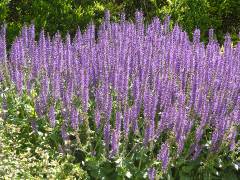
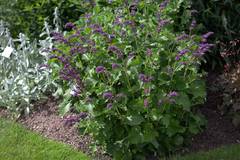
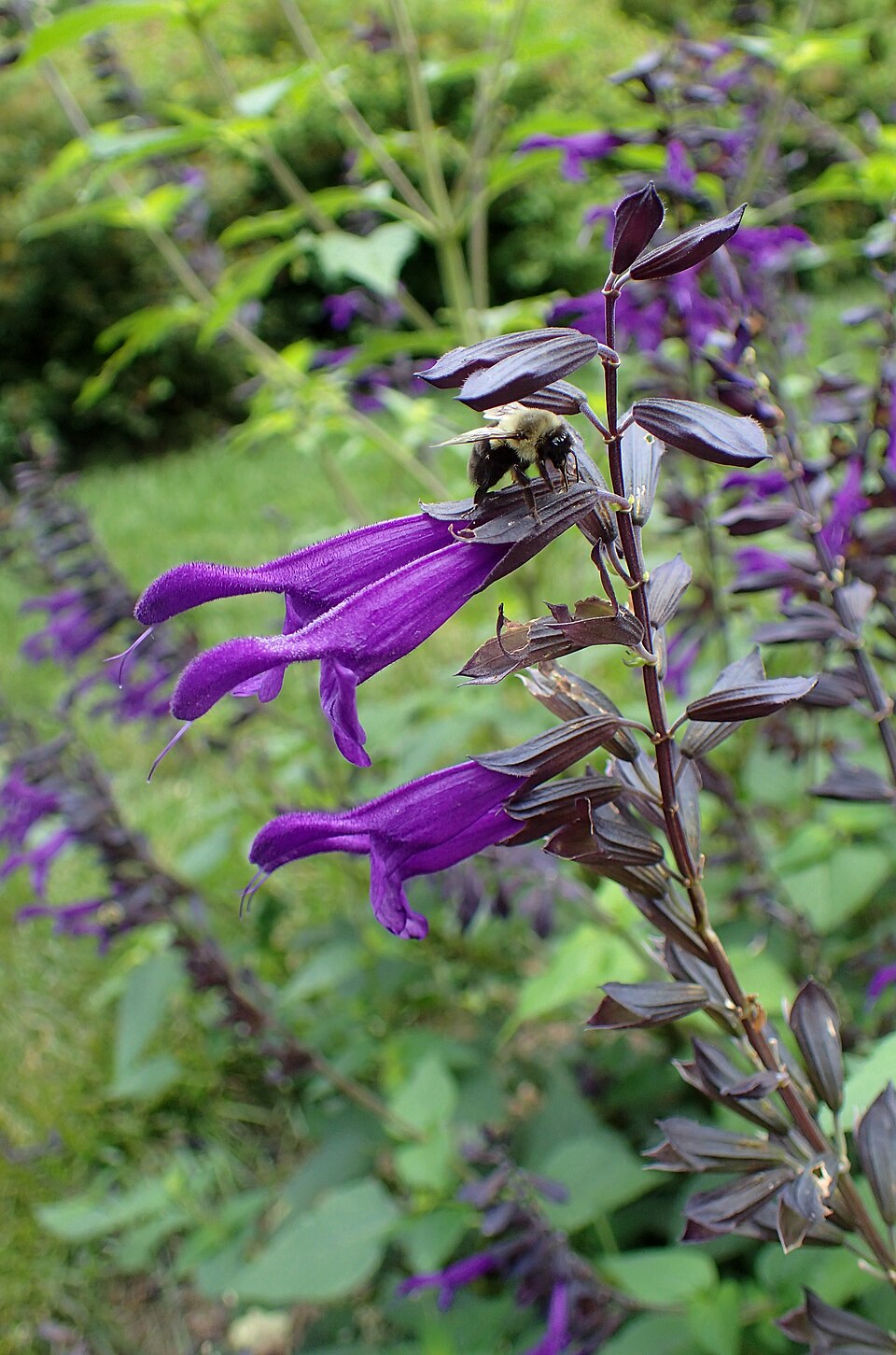
Salvia × Amistad is Amistad sage (friendship sage), a tall upright tender perennial in the mint family (Lamiaceae) growing 36-48 inches (90-120 cm) tall and 30-36 inches (75-90 cm) wide. Deep royal purple tubular two-lipped flowers 1.5-2 inches (4-5 cm) long emerge from near-black inflated calyces in terminal racemes from July through November across a 16-week active flowering window — the 16-week bloom is the cultivar's principal selling point and runs longer than the bloom duration of most herbaceous perennials, including most other Salvia cultivars in commercial cultivation. The bicolor color signature combines deep royal purple corollas with near-black calyces (the inflated cup-shaped structures at the base of each flower from which the corolla emerges); the near-black calyces persist on the plant after the purple corollas drop and continue the dark visual display for several weeks past the active flowering window, producing a two-tone dark color effect across the 16-week bloom and an extended dark-calyx display that runs even longer. The cultivar was found and selected in Argentina, with likely parentage from Salvia guaranitica × Salvia gesneriiflora (both species are native to subtropical and tropical South America in Brazil, Paraguay, and northern Argentina), and the name 'Amistad' is Spanish for 'friendship'. The species' subtropical-to-tropical native parentage produces the cultivar's long flowering window — South American salvias evolved in climates without a hard winter and bloom across a long warm-season window rather than across the brief warm-season window of temperate-climate salvias. The cultivar's tropical heritage is also the principal cultivation watchout: the plant is root-hardy in zones 7-10 (where winter low temperatures stay above approximately 0 to 10 degrees Fahrenheit) but the top growth is killed by the first hard frost across all of the cultivated range, and gardeners in zones 3-6 grow the cultivar as an annual or as a tender perennial with substantial winter mulching to protect the crown. In zones 7-8 the crown requires 3-4 inches (7-10 cm) of winter mulch to survive cold winters reliably; this winter protection is the principal cold-climate cultivation requirement. Dark green ovate aromatic slightly sticky foliage on tall square stems forms the structural plant body, with the foliage carrying the standard mint-family square-stem opposite-leaf characters. The species is in the broader Lamiaceae mint family, sharing the square four-sided stem cross-section, the opposite leaf arrangement, and the strong essential-oil aromatic chemistry that the family carries with Mentha (mint), Nepeta (catmint), Lavandula (lavender), Thymus (thyme), and the temperate-climate Salvia species like Salvia nemorosa and Salvia officinalis. Pollination is by hummingbirds and large bumblebees that work the tubular two-lipped flower architecture and the warm-purple flower color, with ruby-throated hummingbirds working the cultivar across the eastern North American summer range as a recurring late-summer nectar source. Deer avoid the foliage from the strong aromatic mint-family chemistry. The cultivar is non-toxic to humans and pets despite containing the same family-shared aromatic compound class as the toxic Salvia divinorum, which is in a different chemical subgroup within the genus.
Native Range
Salvia × Amistad is a garden hybrid found and selected in Argentina, with likely parentage from Salvia guaranitica (anise-scented sage, a tall blue-flowered species native to Brazil, Paraguay, Uruguay, and northern Argentina) crossed with Salvia gesneriiflora (a Mexican species). Both parent species are native to subtropical and tropical South American and Central American habitats — moist forest edges, stream banks, and disturbed grassland margins — and the cultivar inherits the parents' subtropical-climate physiology rather than the temperate-climate cold-tolerance physiology of European and North American native Salvia species. The cultivar was first introduced to commercial cultivation through Argentinian nurseries in the early 21st century and reached wide international distribution within a decade through European and North American garden-trade introductions.Suggested Uses
Used as a back-of-border tall accent in perennial borders, as a long-blooming component of dedicated hummingbird gardens, in tropical-style borders that combine subtropical perennials, and in container plantings of 10 gallons (38 liters) or larger where the large root volume of the mature plant fits. The 16-week continuous bloom window from mid-summer through hard frost makes the cultivar a principal long-bloom selection for warm-climate gardens (zones 7-10) where the cultivar's tender-perennial habit gives a long-lived multi-year planting. In cold-climate gardens (zones 3-6), the cultivar is grown as a high-impact summer annual or as a winter-mulched tender perennial that requires annual cold-protection management. The cultivar pairs with companion late-blooming perennials including Aster, Solidago, Helianthus, ornamental grasses, and other tender-perennial salvias for a multi-species late-summer-into-fall garden display.How to Identify
Appearance
Size & Dimensions
Height3' - 4'
Width/Spread2'6" - 3'
Colors
Bloom Information
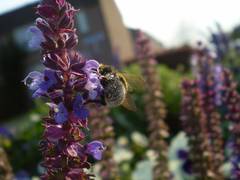
Deep royal purple tubular two-lipped flowers 1.5-2 inches (4-5 cm) long open from near-black inflated calyces in terminal racemes from July through November across a 16-week active flowering window. The cultivar continues blooming through the first hard frost of fall and the bloom is among the longer-running of any garden-cultivated Salvia species. Pollination is by hummingbirds (which work the tubular two-lipped flower architecture and the warm-purple flower color as a late-summer-into-fall nectar source) and by large bumblebees that force entry into the flower throat. The near-black calyces persist on the plant after the purple corollas drop and continue the dark visual display past the active flowering window, producing an extended bicolor display that runs longer than the corolla-bearing window alone.
Detailed Descriptions
Flower Description
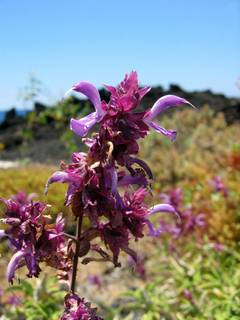
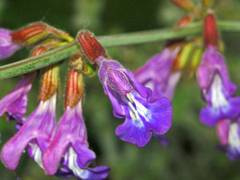
Deep royal purple tubular two-lipped flowers 1.5-2 inches (4-5 cm) long emerging from near-black inflated calyces in terminal racemes; the near-black calyces persist on the plant after the purple corollas drop and continue the dark visual display past the active flowering window — the bicolor near-black-and-royal-purple combination is the cultivar's defining color signatureFoliage Description
Dark green; ovate to lance-shaped aromatic slightly sticky leaves 3-5 inches (7-13 cm) long arranged in opposite pairs along the four-sided square stems characteristic of the mint family (Lamiaceae)Growing Conditions
Sun Requirements
Requires 6-10 hours of direct sunlight daily
• Full Sun: 6+ hours of direct sunlight
• Partial Shade: 3-6 hours of direct sunlight
• Full Shade: Less than 3 hours of direct sunlight
Care & Maintenance
Care Guide
Plant in full sun with at least 6 hours of direct light. Well-drained soil at pH 6.0-7.5 supports the cultivar; the species' subtropical native parentage means moderate moisture and good drainage are needed for the long flowering window — wet-bottom positions cause root rot and shorten the cultivar's already-short cold-climate lifespan. The cultivar is tender perennial in zones 7-10 and grown as an annual or as a tender perennial with winter mulching in zones 3-6: in zones 7-8, mulch the crown with 3-4 inches (7-10 cm) of organic mulch in late fall to protect the root system through the cold winter weeks, and in zones 5-6, the cultivar is grown as a summer annual replanted each spring or overwintered indoors as a potted houseplant in a cool bright location. No deadheading is needed because the plant blooms continuously from July through November without intervention. The large 36-48 inch plant stature requires planting space — 30-36 inch spacing between plants is needed to accommodate the mature plant width, and back-of-border planting positions suit the tall stature better than front-of-border or middle-of-border positions. Pinching the stem tips in late spring (when the plant is 12-18 inches tall) encourages branching and produces a bushier plant with more flowering stems, though the natural unpinched habit is also acceptable.Pruning
No deadheading is needed because the plant blooms continuously from mid-summer through hard frost. After the first hard frost browns the foliage, cut all stems back to 6-12 inches (15-30 cm) above ground, or wait until early spring (March-April) before new growth emerges and cut at that time. Mulch the crown with 3-4 inches (7-10 cm) of organic mulch for winter protection in zones 7-8. Pinching stem tips in late spring (when stems are 12-18 inches tall) encourages branching and produces a bushier form, though pinching is optional rather than required.Pruning Schedule
Prune: March–April
early spring
Container Growing
Suitable for container growing
Minimum container size: 10 gallons