Rubus, Genus, ulmifolius, Species,
- Genus & species
elmleaf blackberry
Western and southern Europe, North Africa, and western Asia
Overview
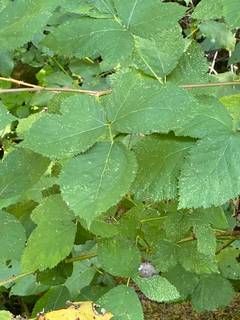
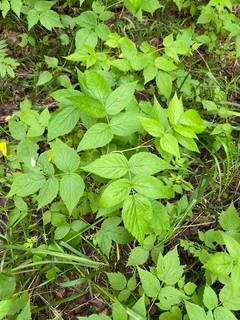
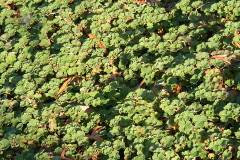
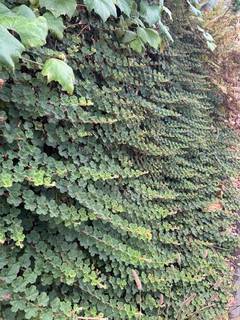
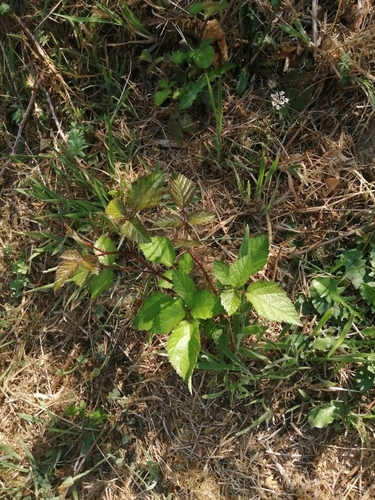
Rubus ulmifolius is a woody, thicket-forming bramble with arching, ridged canes that reach 6-10 feet (1.8-3 m) long and root where their tips touch the ground. The canes are armed with stout, hooked prickles and live for two years, fruiting in the second before dying back. Leaves are palmately compound with three to five toothed leaflets that are dark green above and densely white-felted beneath, the elm-like leaflets giving the species its name. Clusters of five-petalled flowers 0.6-1 inch (15-25 mm) across, pink to deep rose or occasionally white, open in dense panicles from June to August. Each flower is followed by an aggregate fruit of small drupelets that ripens from green through red to glossy black by late summer and autumn. The arching, tip-rooting canes and seed carried by birds spread it widely, forming dense thickets that shade out other plants. It grows on a wide range of soils and is treated as an invasive weed in parts of North America, Australia, and South America.
Native Range
Native to western and southern Europe, North Africa, and parts of western Asia. It grows in hedgerows, woodland edges, scrub, riverbanks, roadsides, and waste ground on a wide range of soils, from sea level to lower mountain slopes.Suggested Uses
Grown in wild and edible hedgerows, boundary screens, and wildlife plantings for fruit and dense cover, spaced 6-10 feet (1.8-3 m) apart. Its prickly, thicket-forming growth suits large informal or boundary areas rather than small gardens, and it is restricted as an invasive weed in several regions. Flowers feed bees, and the fruit feeds birds and mammals.How to Identify
Appearance
Size & Dimensions
Height6' - 10'
Width/Spread6' - 12'
Bloom Information
Flowers from June to August, with peak bloom in July. Panicles open their flowers over several weeks, and a thicket carries flowers and ripening fruit at the same time late in the season. Bloom is heavier on canes in full sun than on shaded growth.
Detailed Descriptions
Flower Description
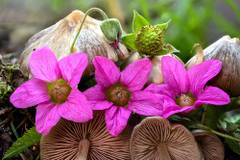
pink to roseFoliage Description
dark green, white beneathGrowing Conditions
Sun Requirements
Requires 4-9 hours of direct sunlight daily
• Full Sun: 6+ hours of direct sunlight
• Partial Shade: 3-6 hours of direct sunlight
• Full Shade: Less than 3 hours of direct sunlight
Care & Maintenance
Care Guide
Grows in full sun to part shade on almost any soil, from sand to clay, provided it is not waterlogged, and tolerates drought once established. It needs no feeding and fruits with little care. Canes are biennial, so old fruited canes are cut out at the base each winter while new canes are tied in or thinned. Tip-rooting and bird-sown seed spread it aggressively, so digging out rooted tips and seedlings controls its reach. Cane and leaf rusts and botrytis on the fruit occur in damp conditions, and dense thickets can overrun neighbouring plantings within a few seasons.Pruning
Cut out second-year canes at ground level after they fruit in autumn or winter, leaving the current season's canes to fruit the next year. Shorten and tie in retained canes on cultivated plants to keep growth within bounds. Cutting back arching tips before they root limits spread.Pruning Schedule
Prune: February & November–December
fallwinter