Image 1 of 25
1 / 25
Plant Reference
Rubus, Genus, armeniacus, Species,
- Genus & species
Himalayan blackberry
Caucasus region of Armenia, Georgia, and northern Iran; introduced globally in the 19th century as a cultivated fruit and now listed as invasive across much of western North America, Australia, New Zealand, the British Isles, and continental Europe
Overview
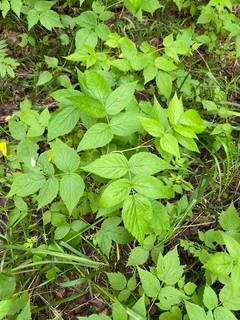
Rubus armeniacus is a vigorous semi-evergreen scrambling shrub in the family Rosaceae reaching 6–15 feet (1.8–4.5 m) tall and 10–15 feet (3–4.5 m) wide with heavily thorned arching canes that grow 15–20 feet (4.5–6 m) in a single season and root at the tips where they touch the ground. Leaves are palmately compound with 3–5 coarsely serrated leaflets each 2–4 inches (5–10 cm) long, dark green on the upper surface and white-tomentose (felted) beneath, and the foliage is semi-evergreen in mild winter climates of the Pacific Northwest, California, and the British Isles, persisting through light frost and dropping only during hard freezes. White to pale pink 5-petaled flowers 1–1.5 inches (2.5–4 cm) across open in terminal panicles in June and July across about 4 weeks and are worked heavily by honeybees and native bumblebees. Edible sweet blackberries 0.5–0.75 inch (1.3–2 cm) across ripen from July through August and are the source of most wild-picked blackberries across the Pacific Northwest despite the invasive status of the species. The biennial cane cycle — primocanes in year 1, fruiting floricanes in year 2, die-off after fruiting — is the same as other Rubus species. Limitation: R. armeniacus is listed as a Class C noxious weed under the Washington State Noxious Weed Control Board, a Category B noxious weed in Oregon, a High invasive species by the California Invasive Plant Council, a provincial noxious weed in British Columbia, and invasive across Australia, New Zealand, and the British Isles, where naturalized populations form impenetrable thorny thickets that displace native vegetation along stream banks, roadsides, clearcuts, and forest margins. Aggressive spread occurs through three mechanisms: tip-layering (cane tips root where they touch the ground), root suckering from extensive perennial root crowns, and bird-dispersed seeds that carry the plant into undisturbed native habitats far from the parent plant. Eradication calls for repeated cane cutting followed by root crown removal because any remaining root fragment produces vigorous regrowth within a single growing season.
Native Range
Native to the Caucasus region of Armenia, Georgia, and northern Iran. Introduced globally as a cultivated fruit through the 19th century — Luther Burbank introduced the species to North America in 1885 as 'Himalaya Giant' under the mistaken belief that it had originated in the Himalayas. The species is now listed as invasive across much of western North America, Australia, New Zealand, the British Isles, and continental Europe.Suggested Uses
R. armeniacus is listed as a noxious weed or invasive species across most of its introduced range and intentional planting is discouraged or prohibited in the Pacific Northwest, California, British Columbia, the British Isles, and continental Europe. Existing stands in established landscapes and wild populations supply edible sweet blackberries through July and August and dense thicket cover for ground-nesting birds and small mammals. Restoration and native-plant design projects are unsuitable sites because the aggressive tip-layering, root suckering, and bird-dispersed seed spread displaces native vegetation along stream banks, roadsides, and forest margins.How to Identify
Appearance
Size & Dimensions
Height6' - 15'
Width/Spread10' - 15'
Bloom Information
White to pale pink 5-petaled flowers 1–1.5 inches (2.5–4 cm) across open in terminal panicles from June through July across about 4 weeks. Honeybees and native bumblebees work the flowers heavily for nectar and pollen. Edible sweet blackberries 0.5–0.75 inch (1.3–2 cm) across develop through July and ripen from July through August across a 6-week harvest window, and the fruit is the source of most wild-picked blackberries in the Pacific Northwest.
Detailed Descriptions
Flower Description
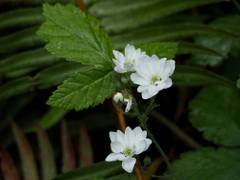
white to pale pink 5-petaled flowers 1-1.5 inches (2.5-4 cm) across in terminal panicles from June through JulyFoliage Description
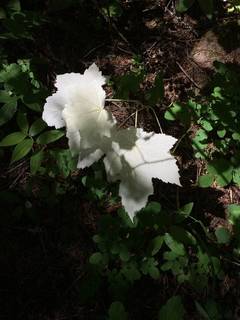
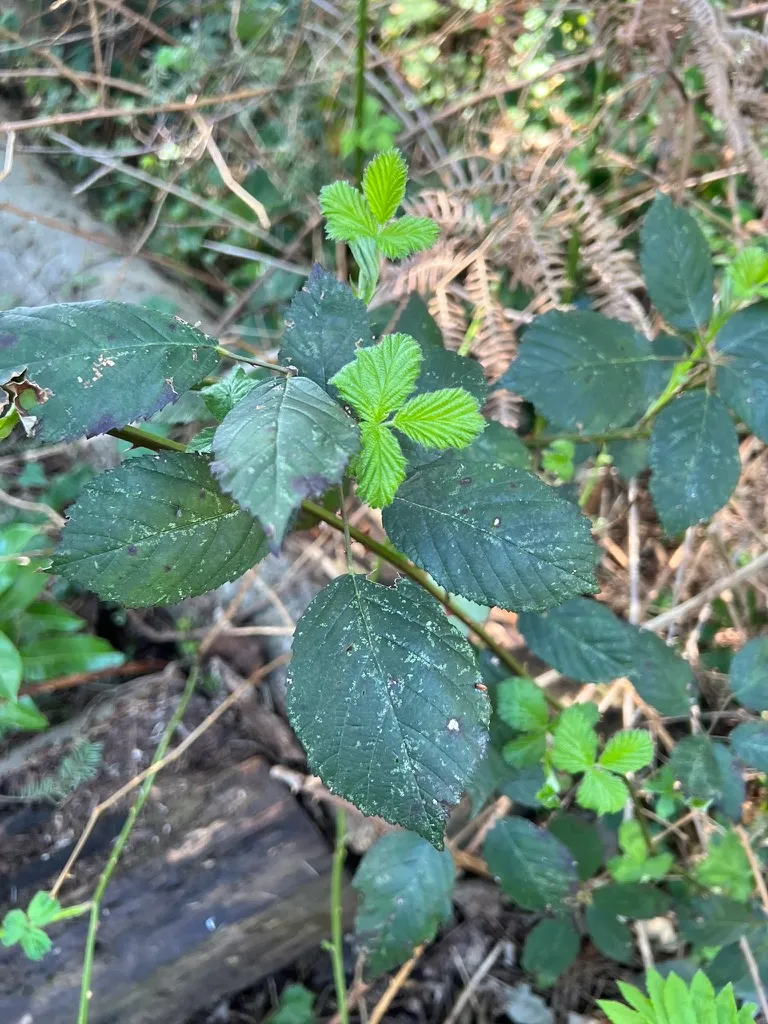
dark green on the upper surface, white-tomentose (felted) beneath; palmately compound with 3-5 coarsely serrated leaflets each 2-4 inches (5-10 cm) long; semi-evergreen, with the foliage persisting through mild winters of the Pacific Northwest, California, and British IslesGrowing Conditions
Sun Requirements
Requires 4-12 hours of direct sunlight daily
• Full Sun: 6+ hours of direct sunlight
• Partial Shade: 3-6 hours of direct sunlight
• Full Shade: Less than 3 hours of direct sunlight
Care & Maintenance
Care Guide
Planting of R. armeniacus is discouraged or prohibited under invasive species regulations across most of its introduced range: the species is listed as a Class C noxious weed in Washington, a Category B noxious weed in Oregon, a High invasive species by the California Invasive Plant Council, and a provincial noxious weed in British Columbia. Existing stands in established landscapes and wild populations supply edible fruit from July through August and wildlife cover, and management of existing plants consists of annual cutting of spent floricanes at ground level after harvest, mowing the colony perimeter to control spread, and excavation or repeated cutting of root crowns where removal is the goal. The species tolerates a wide range of soils with a pH of 5.0–8.0, full sun through partial shade with 4–12 hours of direct sun, and summer drought once established. Hardy in USDA zones 5–9.Pruning
Spent second-year floricanes that have fruited are cut at ground level after harvest in July and August while the first-year primocanes are left to fruit the following year. Where the plant is retained in a cultivated edible hedge, primocanes are trained to a trellis or wire support and tipped at 6–8 feet (1.8–2.4 m) to induce lateral branching. Eradication calls for repeated cane cutting to the ground followed by excavation or repeated cutting of the perennial root crowns because any remaining root fragment produces vigorous regrowth within a single growing season. Leather gloves and long sleeves are warranted during any handling of the heavily thorned canes.Pruning Schedule
Prune: July–August
summer