Image 1 of 16
1 / 16
Plant Reference
Rubus, Genus, parviflorus, Species,
- Genus & species
thimbleberry
Western North America from Alaska south through British Columbia, Washington, Oregon, and California, and east through the Rocky Mountains to the Great Lakes region; moist forest openings, stream banks, avalanche chutes, and disturbed areas
Overview
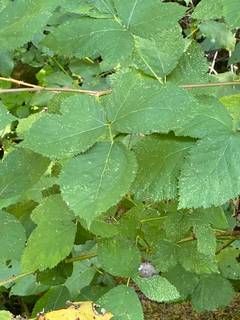
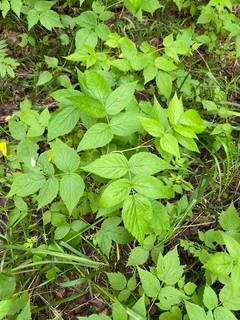
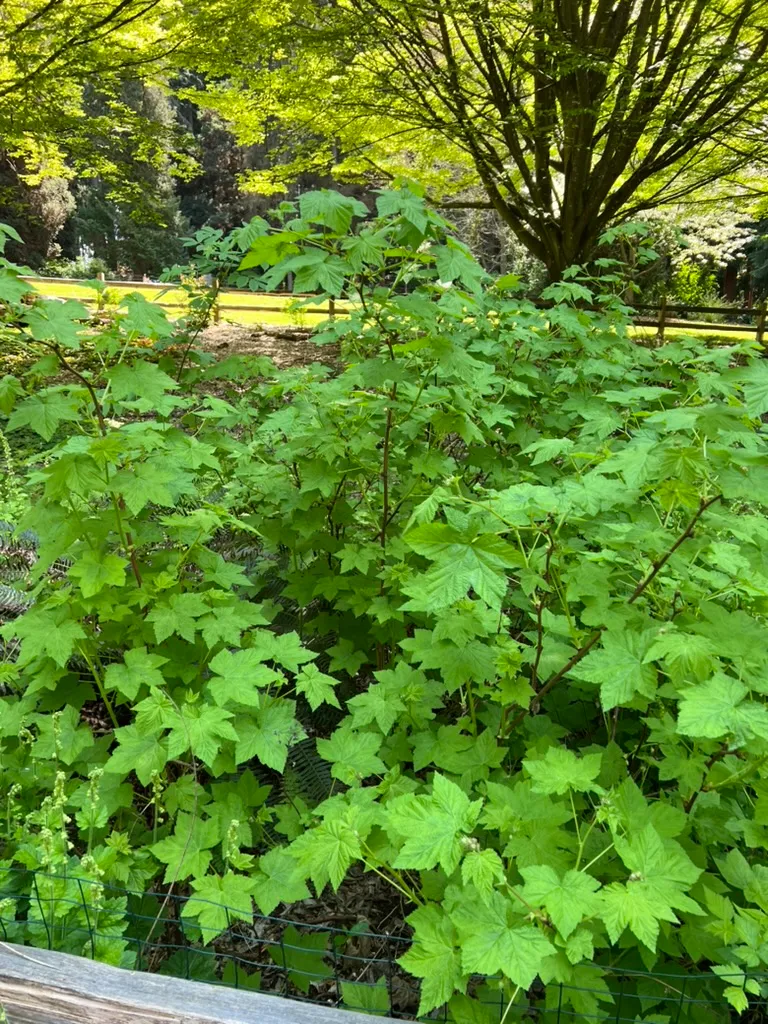
Rubus parviflorus is an upright thornless deciduous shrub in the family Rosaceae reaching 3–6 feet (0.9–1.8 m) tall and 3–6 feet (0.9–1.8 m) wide with a rounded colony-forming habit. The species lacks the prickles that characterize most other Rubus species, and the canes can be handled and pruned without protective gloves. Leaves are simple (rather than compound as in most other Rubus species), large, palmately 3–5 lobed in the shape of a maple leaf, 4–8 inches (10–20 cm) across, and soft velvety on both surfaces; fall color is a clean yellow before leaf drop. White 5-petaled flowers 1–2 inches (2.5–5 cm) across with papery crinkled petals that resemble crumpled tissue paper open in terminal clusters of 3–7 flowers in May and June across about 4 weeks. Red thimble-shaped aggregate fruit 0.5–0.75 inch (1.3–2 cm) long ripens from July through August and separates cleanly from the conical white receptacle at harvest, leaving a hollow thimble-shaped berry — the shape gives the species its common name. The fruit is edible with a mild sweet flavor but is soft and fragile, does not ship or store, and is consumed fresh at the plant or gathered for immediate use in jams and baked goods. Limitation: R. parviflorus spreads by underground rhizomes to form expanding colonies that can extend 2–4 feet (0.6–1.2 m) per year in suitable moist soil, and the colony extends into adjacent plantings unless a root barrier or mowed edge confines the spread; the species is not drought-tolerant and calls for consistent summer soil moisture, which restricts its use to moist woodland and riparian positions in most western landscapes, and deer browse the foliage heavily, particularly the new spring growth.
Native Range
Native to western North America from Alaska south through British Columbia, Washington, Oregon, and California, and east through the Rocky Mountains to the Great Lakes region and into northern Michigan, Wisconsin, and Minnesota. Grows in moist forest openings, stream banks, avalanche chutes, logged areas, and other disturbed sites at elevations from sea level to 8,000 feet (2,400 m), and is a common understory component of Pacific Northwest coniferous forests from the coastal rainforest through the mid-elevation montane zone.Suggested Uses
Used in native plant gardens, woodland understories, shade borders, and streamside restoration plantings at 3–6 foot (0.9–1.8 m) spacing where the rhizomatous spread is an asset for erosion control and habitat building rather than a problem. The thornless canes make the species suitable for paths, childrens gardens, and mixed edible landscapes where the large maple-shaped foliage, the papery white flowers, and the edible fruit all contribute without the handling hazard of thorned Rubus species. Small confined beds, dry sun-baked sites, and formal landscapes are unsuitable because of the rhizomatous spread and the consistent moisture requirement.How to Identify
Appearance
Size & Dimensions
Height3' - 6'
Width/Spread3' - 6'
Bloom Information
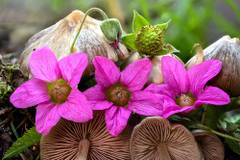
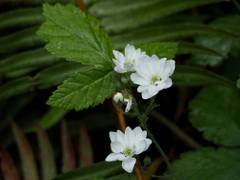
White 5-petaled flowers 1–2 inches (2.5–5 cm) across with papery crinkled petals that resemble crumpled tissue paper open in terminal clusters of 3–7 flowers in May and June across about 4 weeks. The flowers are pollinated by honeybees, native bumblebees, and butterflies. Red thimble-shaped aggregate fruit 0.5–0.75 inch (1.3–2 cm) long develops through early summer and ripens from July through August, separating cleanly from the conical white receptacle at harvest and leaving a hollow thimble-shaped berry.
Detailed Descriptions
Flower Description
white 5-petaled flowers 1-2 inches (2.5-5 cm) across with papery crinkled petals in terminal clusters of 3-7 flowers in May and JuneFoliage Description
medium to bright green through the growing season; simple, large, palmately 3-5 lobed (maple-shaped), 4-8 inches (10-20 cm) across, soft and velvety on both surfaces; turns yellow in fallGrowing Conditions
Sun Requirements
Requires 2-6 hours of direct sunlight daily
• Full Sun: 6+ hours of direct sunlight
• Partial Shade: 3-6 hours of direct sunlight
• Full Shade: Less than 3 hours of direct sunlight
Care & Maintenance
Care Guide
Site in part shade to full shade with 2–6 hours of direct sun per day in moist well-drained acidic to neutral soil with a pH of 5.0–7.0. The species is not drought-tolerant and calls for consistent summer soil moisture, particularly in the Pacific Northwest during the July and August dry period; woodland and riparian positions near streams, ponds, and downspouts hold the soil moisture the species needs without supplemental irrigation. Spread by underground rhizomes forms expanding colonies at 2–4 feet (0.6–1.2 m) per year in suitable soil, and a root barrier or a mowed edge confines the colony where space is limited. Deer browse the new spring growth heavily. The thornless canes do not require protective handling during pruning or harvest. Hardy in USDA zones 3–8.Pruning
Pruning is done in late winter (February and March) while the plants are dormant. Spent second-year canes that have fruited are cut at ground level, and excess rhizome shoots at the colony perimeter are removed to hold the planting at the intended boundary. The thornless canes allow handling without gloves. The biennial cane cycle — primocanes year 1, fruiting floricanes year 2, die-off after fruiting — is the same as other Rubus species and guides the floricane removal timing after the July and August harvest.Pruning Schedule
Prune: February–March
early spring