Image 1 of 15
1 / 15
Plant Reference
Rubus, Genus, idaeus, Species,
- Genus & species
raspberry
Circumboreal across Europe, northern Asia, and North America; forest clearings, margins, and disturbed areas from sea level to 8,000 feet (2,400 m)
Overview
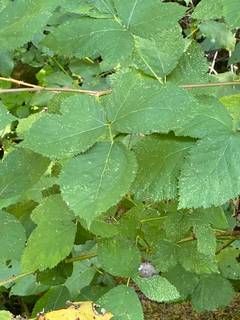
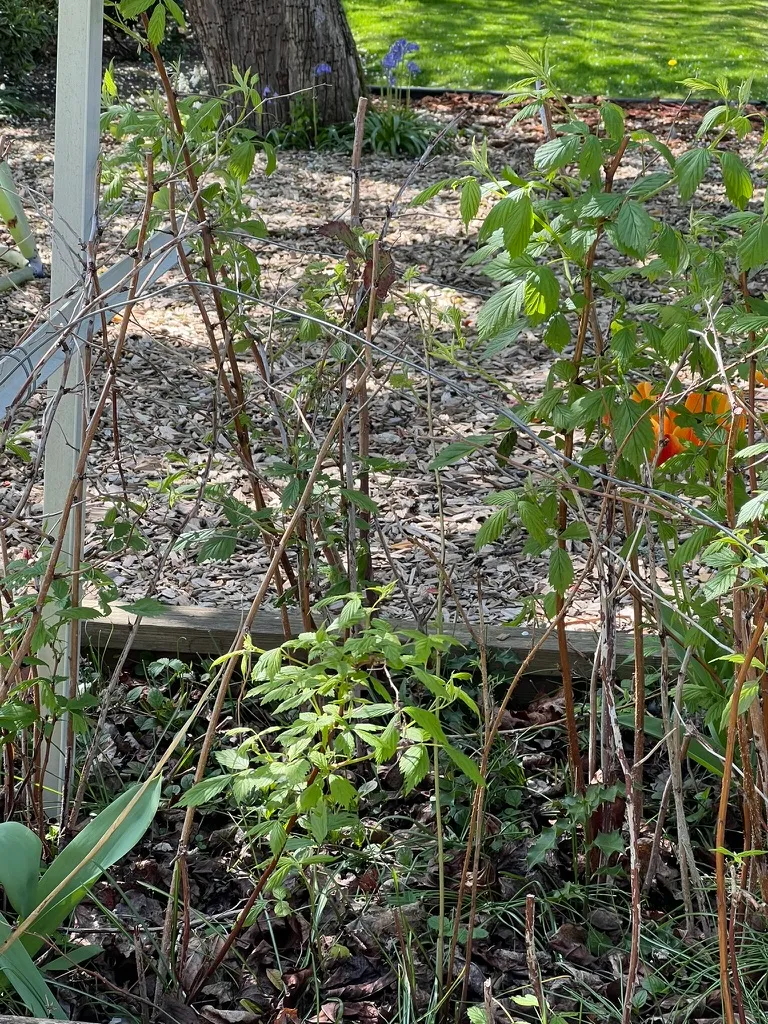
Rubus idaeus is a deciduous suckering shrub in the family Rosaceae reaching 3–6 feet (0.9–1.8 m) tall and 3–6 feet (0.9–1.8 m) wide with biennial canes produced from a perennial root system: first-year primocanes grow from the ground, overwinter, and produce flowers and fruit the following year as second-year floricanes before dying at the end of the second growing season. Canes are erect to arching, round in cross-section, and carry short straight prickles (much smaller than the large recurved thorns of blackberry), and thornless cultivars such as 'Joan J' and 'Canby' are available. Leaves are alternate, pinnately compound, with 3–5 doubly serrate leaflets (typically 3 on floricanes and 5 on primocanes) each 1.5–3 inches (4–8 cm) long, dark green on the upper surface with silvery-white tomentose undersides that flash when wind moves through the canes. White 5-petaled flowers 0.5 inch (13 mm) across open in small terminal clusters on second-year floricanes in May and June on summer-bearing types or on first-year primocanes in late summer through fall on everbearing types. Fruit is an aggregate drupe 0.5–0.75 inch (13–19 mm) long, typically red but also gold, purple, or black depending on cultivar, conical to round, that separates cleanly from the white receptacle at harvest and leaves a hollow core — this hollow fruit structure is the feature that separates raspberries from blackberries, which retain the solid white receptacle with the fruit at harvest. Growth is rapid and the species spreads by root suckers that emerge through the soil surface. The Pacific Northwest, particularly the Willamette Valley of Oregon and Whatcom County of Washington, is among the largest raspberry-producing regions in North America because the mild moist summer growing conditions of the region suit the shallow root system and the long harvest window. Limitation: R. idaeus carries a heavy disease and pest load in humid climates — spotted wing drosophila (Drosophila suzukii), raspberry cane borer (Oberea affinis), spur blight (Didymella applanata), cane blight (Leptosphaeria coniothyrium), and anthracnose (Elsinoë veneta) all require active seasonal management through pruning of infected canes, sanitation of fallen leaves, and in commercial production, scheduled spray programs; disease pressure is the reason most cultivars are replaced every 5–10 years rather than maintained indefinitely.
Native Range
Circumboreal native species with a native range across Europe, northern Asia, and North America. The European subspecies (R. idaeus ssp. idaeus) is native from the British Isles across Europe and northern Asia to Japan, and the North American subspecies (R. idaeus ssp. strigosus) is native across Canada and the northern United States from the Rocky Mountains east to New England. Occurs in forest clearings, margins, and disturbed areas from sea level to 8,000 feet (2,400 m). Cultivated raspberry derives from both subspecies and from complex hybrid backgrounds in modern breeding programs.Suggested Uses
Used in dedicated fruit garden rows, edible landscapes, and mixed kitchen gardens at 2–3 foot (0.6–0.9 m) spacing within rows and 6–8 foot (1.8–2.4 m) spacing between rows on a two-wire trellis. Container culture is possible in pots of at least 10 gallons (38 L) with trellis support and a thornless cultivar such as 'Joan J'. Small confined beds without room for the suckering root system and sites with poor drainage are unsuitable because the shallow fibrous root system develops root rot in wet soils and the suckers spread beyond the planted bed when unconfined.How to Identify
Appearance
Size & Dimensions
Height3' - 6'
Width/Spread3' - 6'
Bloom Information
White 5-petaled flowers 0.5 inch (13 mm) across open in small terminal clusters on second-year floricanes in May and June on summer-bearing cultivars, and on first-year primocanes in late July and August on everbearing cultivars. The flowers are pollinated by honeybees and native bees. Fruit ripens over a 3–5 week period, with summer-bearing cultivars producing a single heavy crop from late June through mid-July in the Pacific Northwest and everbearing cultivars producing a fall crop from late August through October in addition to a possible summer crop on the overwintered floricanes.
Detailed Descriptions
Flower Description
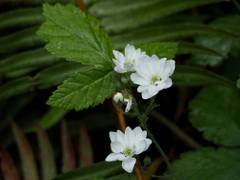
white 5-petaled flowers 0.5 inch (13 mm) across in small terminal clusters on second-year floricanes in May and June (summer-bearing types) or on first-year primocanes in late summer through fall (everbearing types)Foliage Description
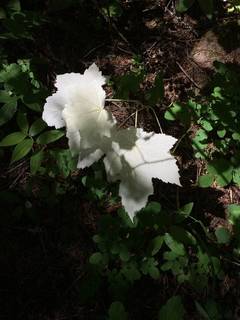
dark green on the upper surface with silvery-white tomentose undersides (the pale undersides flash when wind moves through the canes); alternate, pinnately compound with 3-5 ovate doubly serrate leaflets each 1.5-3 inches (4-8 cm) long; turns yellow in fallGrowing Conditions
Sun Requirements
Requires 6-12 hours of direct sunlight daily
• Full Sun: 6+ hours of direct sunlight
• Partial Shade: 3-6 hours of direct sunlight
• Full Shade: Less than 3 hours of direct sunlight
Care & Maintenance
Care Guide
Site in full sun with 6–12 hours of direct sun per day in well-drained fertile slightly acidic soil with a pH of 5.5–6.5 amended with 2–4 inches (5–10 cm) of compost before planting. Supplemental irrigation of 1–2 inches (2.5–5 cm) per week through the growing season holds fruit quality, with higher water demand during fruit development in June and July. Canes are trained to a two-wire trellis at 3 feet (0.9 m) and 5 feet (1.5 m) for support and to keep the fruiting zone off the ground. Organic mulch 2–4 inches (5–10 cm) deep holds soil moisture and reduces weed pressure around the shallow root system. Disease and pest pressure calls for active seasonal management: cane blight, spur blight, and anthracnose-infected canes are removed and destroyed as they appear, and spotted wing drosophila (Drosophila suzukii) is managed through harvest of ripe fruit every 1–2 days during the ripening window in commercial and home plantings across the Pacific Northwest. Hardy in USDA zones 3–8.Pruning
Summer-bearing cultivars: spent second-year floricanes that have fruited are cut at ground level after harvest in July, and primocanes are thinned to 4–6 canes per linear foot (30 cm) of row and tipped at 4–5 feet (1.2–1.5 m) in late winter to induce lateral branching for the following year's crop. Everbearing cultivars managed for a single heavy fall crop: all canes are cut to the ground in late winter (February and March) before new growth begins, which eliminates the summer crop but produces a larger fall crop from new primocane growth. Everbearing cultivars managed for both crops: only spent floricanes are removed after the summer harvest, and primocanes are retained to fruit in late summer and fall. Pacific Northwest summer-bearing cultivars include 'Meeker' (red, commercial industry standard), 'Willamette' (red), 'Tulameen' (red, large firm fruit), and 'Cascade Delight' (red, disease-resistant); everbearing cultivars include 'Heritage' (red), 'Anne' (gold), and 'Caroline' (red).Pruning Schedule
Prune: February–March & July
wintersummer
Container Growing
Suitable for container growing
Minimum container size: 10 gallons