Rubus, Genus, phoenicolasius, Species,
- Genus & species
wineberry
Overview
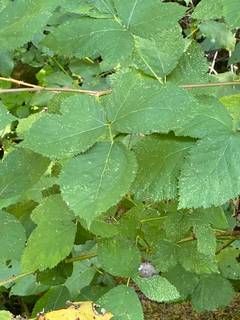
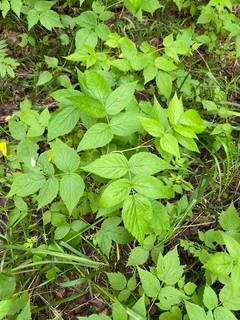
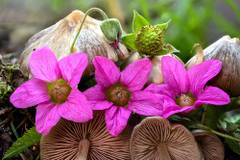
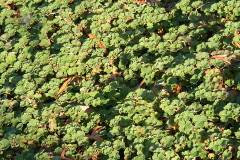
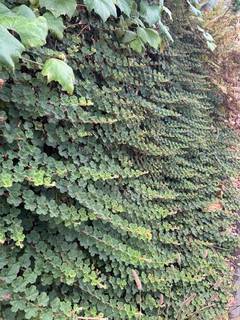
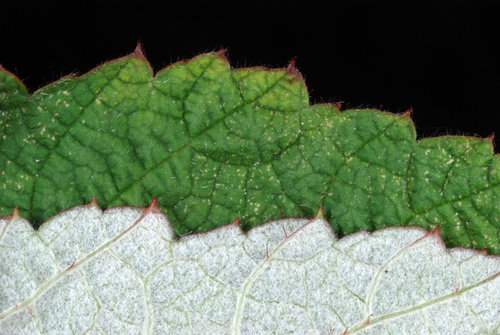
Rubus phoenicolasius is a deciduous bramble forming arching canes 3-9 feet (0.9-2.7 m) long that root at the tips where they touch the ground. The canes are densely covered in red to purplish glandular hairs mixed with slender spines, giving the plant its reddish cast. Leaves are compound with three leaflets, the terminal one broadly egg-shaped and 2-4 inches (5-10 cm) long, green above and white-felted beneath. Small flowers with pink to whitish petals and reddish, glandular-hairy sepals open in late spring; the sepals enclose the developing fruit until it ripens. Bright red, dome-shaped berries 0.4-0.6 inch (1-1.5 cm) wide ripen from June through August and separate cleanly from the core. The canes are biennial, producing leaves the first year and fruit the second before dying. Tip-rooting and bird-dispersed seed let dense thickets form quickly, and the species is listed as invasive across much of the eastern United States, where it crowds out native vegetation.
Native Range
Native to eastern Asia, including China, Japan, and Korea. Introduced to North America and Europe as breeding stock for raspberries and now naturalized in moist woodland edges, stream banks, fields, and roadsides, mainly below 3,000 feet (900 m).Suggested Uses
Occasionally grown for its edible red fruit, eaten fresh or made into jam, at 3-5 foot (0.9-1.5 m) spacing in informal plantings. The aggressive tip-rooting habit and invasive status limit its use in and near natural areas. Planting is restricted or prohibited in several eastern states.How to Identify
Appearance
Size & Dimensions
Height3' - 9'
Width/Spread4' - 8'
Bloom Information
Flowers in late spring, mainly May to June, two to three weeks later than most native Rubus species. The small pink to whitish flowers are insect-pollinated and open over about three weeks. Fruit follows quickly, ripening from June into August.
Detailed Descriptions
Flower Description
pink to whiteFoliage Description
green above, white beneathGrowing Conditions
Sun Requirements
Requires 4-8 hours of direct sunlight daily
• Full Sun: 6+ hours of direct sunlight
• Partial Shade: 3-6 hours of direct sunlight
• Full Shade: Less than 3 hours of direct sunlight
Care & Maintenance
Care Guide
Grows in full sun to partial shade on moist, fertile soils and tolerates conditions from woodland shade to open fields. Canes are biennial: first-year canes bear only leaves, second-year canes flower and fruit then die. New plants form where cane tips touch soil and root, so unmanaged stands thicken rapidly. Removal involves digging out the crowns and rooted tips, since cut canes resprout. Where it is regulated as invasive, sale and movement are restricted under state nursery laws.Pruning
Spent second-year canes are cut to the ground after fruiting, as they die back regardless. Cutting first-year canes removes the following year fruit. Rooted cane tips are severed and dug out to limit spread.Pruning Schedule
Prune: August–September
summerfall