Rubus, Genus, occidentalis, Species,
- Genus & species
black raspberry
Overview
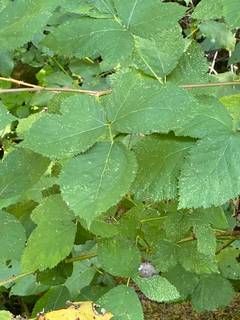
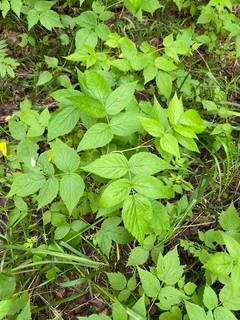
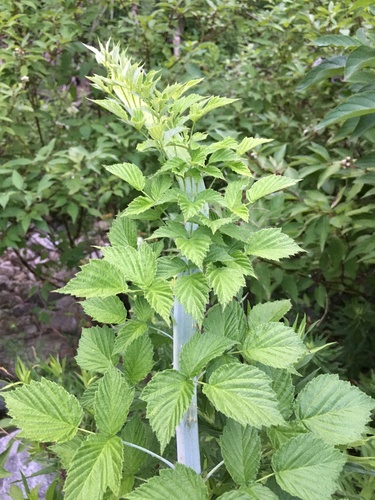
Rubus occidentalis is a deciduous, cane-forming shrub in the rose family, growing 3-6 feet (0.9-1.8 m) tall with long, arching stems that root where their tips touch the ground. The canes are purplish and coated with a blue-white waxy bloom and armed with hooked prickles. Leaves are compound with three to five toothed leaflets that are green above and white-hairy beneath. In late spring clusters of small white five-petaled flowers open at the cane tips and leaf axils. The flowers give way to firm, rounded berries that ripen from red to deep purple-black in early to midsummer, separating cleanly from the core to leave a hollow cap. Each cane lives two years, producing leaves the first year and fruit the second before dying back. The plant spreads both by seed, often dropped by birds, and by tip-rooting canes that form new plants. Rubus occidentalis grows in woodland edges, clearings, and fencerows, and is cultivated for its edible fruit. It can form dense, prickly thickets where left unmanaged.
Native Range
Rubus occidentalis is native to eastern and central North America, from southeastern Canada south to Georgia and west to the Great Plains. It grows in open woods, thickets, and disturbed clearings.Suggested Uses
Grown in home fruit gardens and edible hedges for its summer berries, which are eaten fresh or used in jams, pies, and juice. The flowers feed bees and the fruit draws many birds. Its prickly, thicket-forming habit also creates cover and nesting sites in wildlife and naturalized plantings.How to Identify
Appearance
Size & Dimensions
Height3' - 6'
Width/Spread4' - 8'
Bloom Information
Small white flowers open in late spring, mostly May and June, on the previous year''s canes. The bloom lasts about two weeks and is worked by bees. Fruit follows quickly, ripening in early to midsummer.
Detailed Descriptions
Foliage Description
green above, white beneathGrowing Conditions
Sun Requirements
Requires 6-12 hours of direct sunlight daily
• Full Sun: 6+ hours of direct sunlight
• Partial Shade: 3-6 hours of direct sunlight
• Full Shade: Less than 3 hours of direct sunlight