Rubus, Genus, spectabilis, Species, 'Olympic Double', Cultivar,
- Genus & species
- Cultivar
olympic double salmonberry
Western North America (southern Alaska, British Columbia, Washington, Oregon, northern California); cultivar collected from the Olympic Peninsula in Washington state
Overview
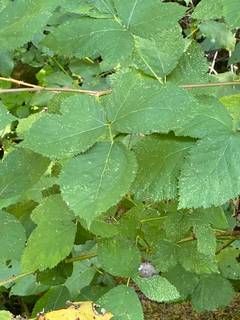
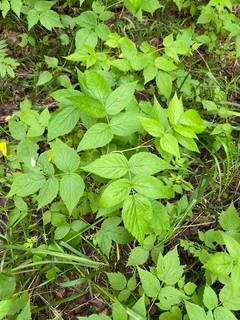
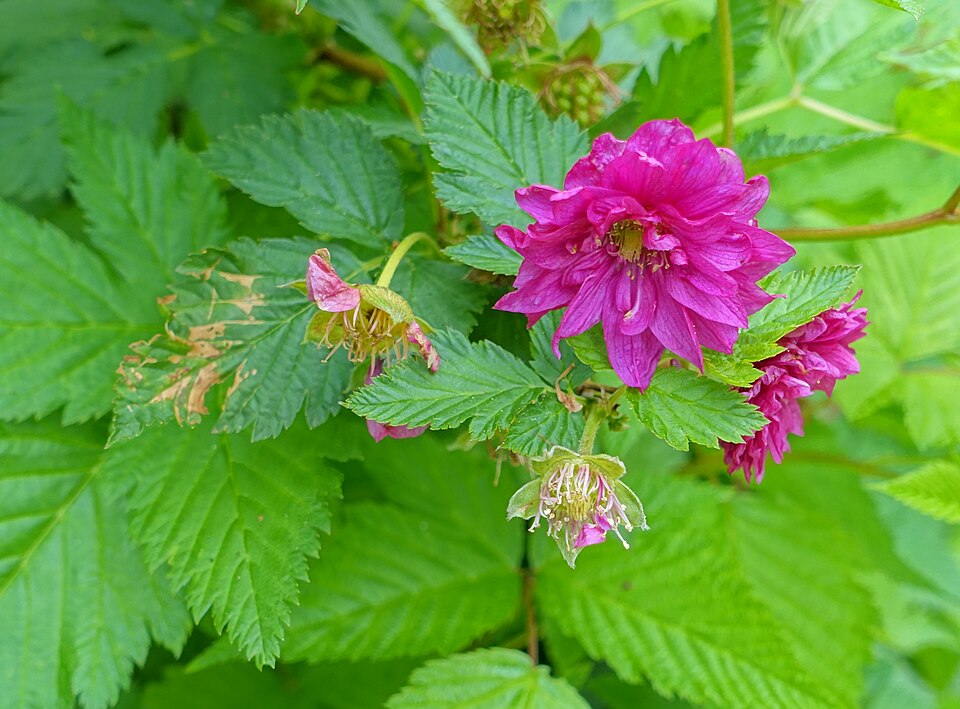
Rubus spectabilis 'Olympic Double' is a deciduous shrub reaching 5–8 feet (1.5–2.4 m) tall and 5–8 feet (1.5–2.4 m) wide, with a suckering upright thicket-forming habit on arching canes that carry few to no prickles — a trait atypical for Rubus, most species in the genus being heavily armed. The cultivar is a double-flowered selection of the Pacific Northwest native salmonberry, collected from the Olympic Peninsula in Washington and named for the range. Flowers are fully double, rose-like, 1.5–2 inches (4–5 cm) wide, in deep magenta-pink, borne individually along the previous year's wood in March–April over a 3–4 week window. The doubled petal form converts the reproductive structures (stamens and pistils) into additional petals, which means pollinated flowers set little to no fruit — gardeners wanting edible salmonberry fruit should plant the species type R. spectabilis rather than this cultivar. Leaves are trifoliate, medium green, 2–4 inches (5–10 cm) long, with serrated margins; autumn color turns yellow in October–November. Growth rate is fast at 2–3 feet (0.6–0.9 m) per year of cane extension after the first season, and the clump spreads outward by underground rhizomes at 12–24 inches (30–60 cm) per year, so plantings colonize a 10–20 foot (3–6 m) radius over 5–8 years without physical root barriers. Hardy to USDA zone 5. Not known to be toxic to pets or humans; the species produces edible fruit (though this cultivar does not).
Native Range
Rubus spectabilis is native to western North America, from southern Alaska through British Columbia and Washington to northern California, occurring in moist forest edges, streambanks, and disturbed sites at low to moderate elevations under 4,000 feet (1,200 m). 'Olympic Double' was collected from wild populations on the Olympic Peninsula in Washington state.Suggested Uses
Used in naturalized woodland plantings, streambank stabilization, moist shade borders, or wet-meadow edges at 5–6 foot (1.5–1.8 m) spacing within a containment strategy. The rose-like double magenta-pink spring flowers on nearly thornless arching canes suit positions where the ornamental flower display is the design goal rather than the edible fruit that the species type would produce. Pacific Northwest native-plant gardens using local Olympic Peninsula seed stock fit the cultivar's provenance. The aggressive rhizomatous spread makes the cultivar incompatible with formal border plantings, mixed perennial beds, small residential gardens, or any position where the 10–20 foot thicket diameter after 5–8 years would exceed the available footprint. The plant does not grow well in dry soils, full afternoon sun in USDA zones 7 and warmer, formal plantings, or positions without containment where the spread cannot be managed.How to Identify
Appearance
Size & Dimensions
Height5' - 8'
Width/Spread5' - 8'
Bloom Information
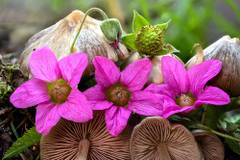
Fully double rose-like deep magenta-pink flowers 1.5–2 inches (4–5 cm) wide appear individually along the previous year's wood in March–April over a 3–4 week window. Pollinated flowers set little to no fruit because the doubled petal form has converted the reproductive structures into additional petals.
Detailed Descriptions
Flower Description
Deep magenta-pink; fully double rose-like 1.5-2 inches wide borne individually along the previous year's wood in March-April; no fruit develops from the doubled flowersFoliage Description
Medium green; trifoliate, 2-4 inches long, serrated margins; yellow autumn color in October-November; deciduousGrowing Conditions
Sun Requirements
Requires 3-6 hours of direct sunlight daily
• Full Sun: 6+ hours of direct sunlight
• Partial Shade: 3-6 hours of direct sunlight
• Full Shade: Less than 3 hours of direct sunlight
Care & Maintenance
Care Guide
Grow in partial shade with 3–6 hours of direct or filtered light in moist humus-rich loam, clay, or peat at pH 5.5–7.0. The cultivar tolerates wet soils and brief seasonal flooding, suiting streambank and wet-meadow positions where most flowering shrubs fail. Shade tolerance is higher than most Rosaceae flowering shrubs — the cultivar flowers and canes develop in positions with as little as 3 hours of direct light where other spring-flowering shrubs would produce sparse bloom. The rhizomatous root system extends outward 12–24 inches (30–60 cm) per year, and garden positions without a root barrier turn into 10–20 foot (3–6 m) thickets over 5–8 years. Physical root barriers to 18 inches (45 cm) depth at installation time contain the spread to the intended planting footprint; unrestrained positions in naturalized or woodland settings are the appropriate contexts for the cultivar without containment. Hardy to USDA zone 5.Pruning
Prune in late winter (February–March) during dormancy. Remove the oldest canes at the base annually — the cultivar flowers most reliably on 1- and 2-year-old wood, and older 3+ year canes produce progressively fewer flowers and should be cut out each year. Cane removal is also the principal method for thinning the thicket and keeping the planting open enough for the flowers to be visible from viewing positions. Rhizomatous suckers emerging outside the intended planting footprint are removed at the soil line or dug out with roots attached to prevent regrowth. Hard coppicing to the ground is tolerated when needed for rejuvenation, with flowering resuming 2 growing seasons after the coppice cut.Pruning Schedule
Prune: February–March
early spring