Image 1 of 14
1 / 14
Plant Reference
Rubus, Genus, laciniatus, Species,
- Genus & species
evergreen blackberry
Europe (possibly a cultivated derivative of Rubus ulmifolius or a hybrid)
Overview
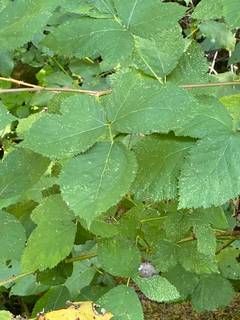
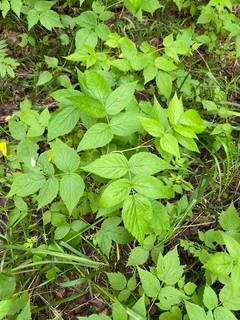
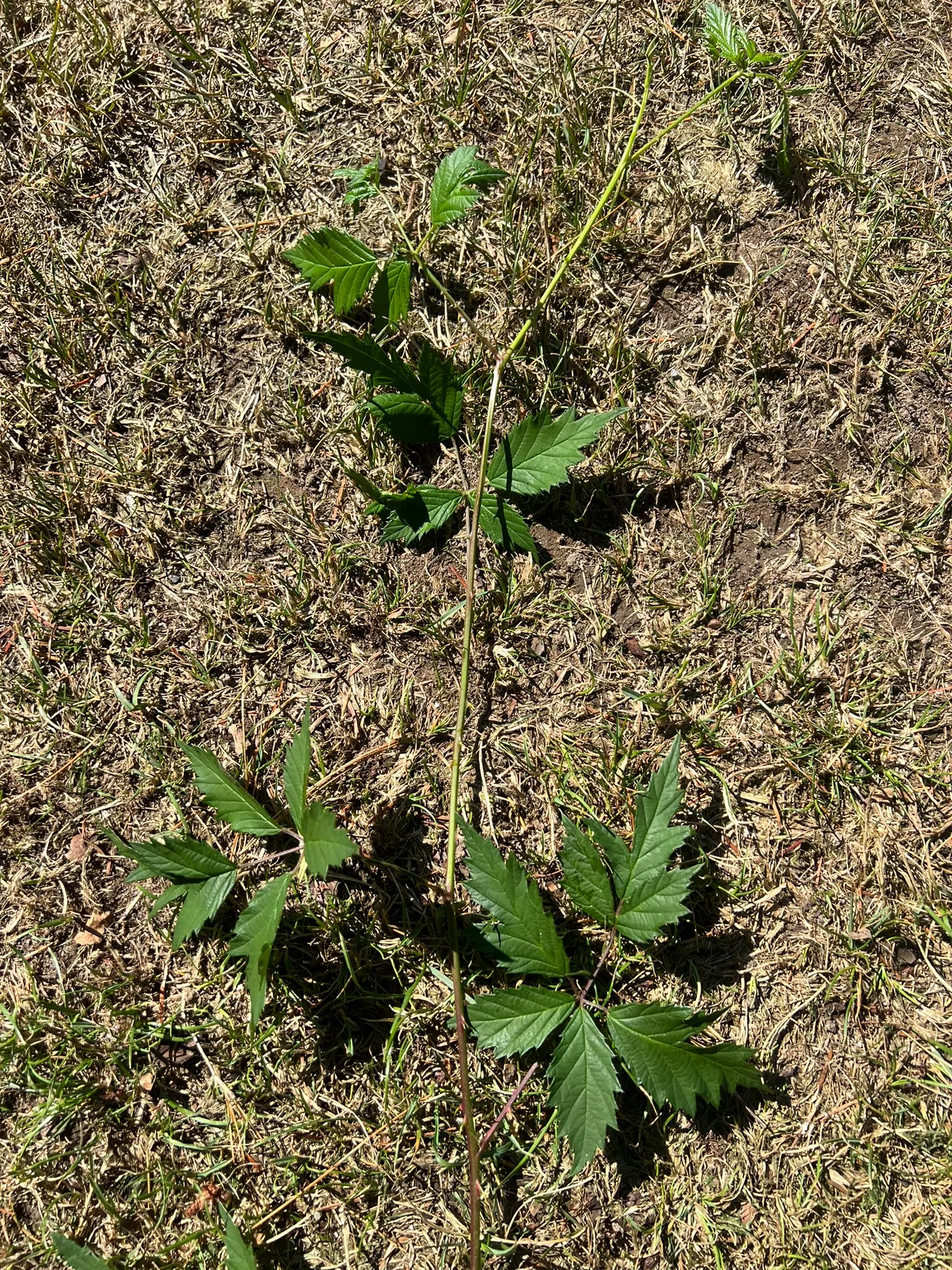
Rubus laciniatus is a vigorous, thorny, semi-evergreen shrub in the rose family (Rosaceae) reaching 3–10 feet (0.9–3 m) tall with a 5–15 foot (1.5–4.5 m) spread, forming dense, impenetrable thickets via arching primocanes that root at the tips. Canes are biennial: first-year primocanes are vegetative, arching, 6–15 feet (1.8–4.5 m) long, rooting at the tips where they contact soil; second-year floricanes produce lateral flowering branches, then die. Canes are angular, with stout, hooked thorns. Leaves are palmately compound with 3–5 leaflets that are deeply and irregularly dissected (laciniate, cut into narrow lobes) — the primary distinction from R. armeniacus (Himalayan blackberry), which has broad, uncut leaflets. Foliage persists through mild winters (semi-evergreen). Flowers are white to pale pink, 0.8–1 inch (20–25 mm) across, five-petaled, in terminal and axillary clusters on floricanes. Fruit is a black aggregate drupe (blackberry), 0.6–0.8 inch (15–20 mm). Spread by tip-rooting canes, bird-dispersed seed, and root crown sprouting. Less aggressive than R. armeniacus but still forms dense thickets on roadsides, forest edges, and waste ground. Listed as a Class C noxious weed in Washington State.
Native Range
Native to Europe; possibly a cultivated derivative or hybrid involving Rubus ulmifolius. Introduced to North America in the mid-1800s for fruit production. Widely naturalized in the Pacific Northwest west of the Cascades, particularly on roadsides, forest edges, fencerows, and disturbed sites.Suggested Uses
Used in Rosaceae identification courses for teaching the biennial cane growth cycle (primocane/floricane), the aggregate drupe fruit type, and the five-petaled flower plan. The laciniate-versus-entire leaflet comparison between R. laciniatus and R. armeniacus is a primary identification exercise. The three-species Rubus comparison (native R. ursinus trailing, invasive R. laciniatus cutleaf, invasive R. armeniacus Himalayan) is a standard teaching unit. Fruit is edible and was the primary commercial blackberry variety in Oregon before modern cultivars.How to Identify
Appearance
Size & Dimensions
Height3' - 10'
Width/Spread5' - 15'
Bloom Information
Flowers from May through July on second-year floricanes. Clusters of white to pink flowers bloom over 3–4 weeks. Pollinated by bees and other insects. Fruit ripens in July through August, approximately 6–8 weeks after pollination. In the Pacific Northwest, peak bloom occurs in June.
Detailed Descriptions
Flower Description
White to pale pinkFoliage Description
Dark green, palmately compound with 3-5 deeply dissected (laciniate) leaflets; semi-evergreen, persisting through mild wintersGrowing Conditions
Sun Requirements
Requires 4-10 hours of direct sunlight daily
• Full Sun: 6+ hours of direct sunlight
• Partial Shade: 3-6 hours of direct sunlight
• Full Shade: Less than 3 hours of direct sunlight
Care & Maintenance
Care Guide
Listed as a Class C noxious weed in Washington State. Cane removal requires heavy protective clothing (leather gloves, long sleeves, eye protection) due to the stout hooked thorns. Cutting canes at ground level removes above-ground growth but the root crown resprouts. Digging the root crown to a depth of 6–8 inches (15–20 cm) is necessary for permanent removal. Tip-rooted primocane ends must also be dug to prevent new colony establishment. Repeated cutting of resprouts over 2–3 growing seasons depletes root crown reserves. Less aggressive than R. armeniacus and more feasible to eradicate from small sites. Revegetation with competitive native shrubs and trees after removal prevents re-establishment.Pruning
No pruning applicable in a weed context. Canes are cut at ground level and root crowns are dug. In managed berry production settings, spent floricanes are removed after fruiting (July–August), and primocanes are trained for the following year.Pruning Schedule
Prune: July–October
summerfall