Image 1 of 18
1 / 18
Plant Reference
Rubus, Genus, spectabilis, Species,
- Genus & species
salmonberry
Western North America from Alaska south through coastal British Columbia, Washington, Oregon, and northwestern California; moist stream banks, wetland edges, wet forest understories, and coastal forests
Overview
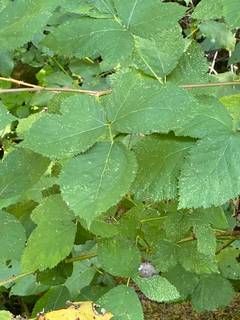
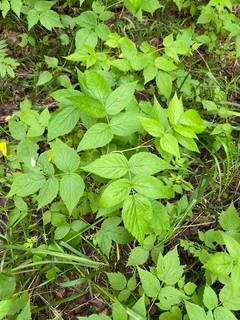
Rubus spectabilis is an upright deciduous shrub in the family Rosaceae reaching 4–12 feet (1.2–3.6 m) tall and 4–8 feet (1.2–2.4 m) wide with sparse hooked prickles scattered on the stems (far fewer than the heavy thorn load of R. armeniacus or other blackberries). Leaves are trifoliate with three ovate doubly serrated leaflets, the terminal leaflet largest at 2–4 inches (5–10 cm) long, and the foliage is medium green through the growing season before turning yellow and dropping in fall. Magenta-pink (occasionally white) 5-petaled flowers 1–1.5 inches (2.5–4 cm) across open singly on the bare or just-leafing branches from February through May across an 8-week bloom period, opening earlier in the coastal Pacific Northwest and later in the interior and at higher elevations, and the early bloom is an important early-season nectar source for Annas hummingbird overwintering in the region and for bumblebee queens emerging from hibernation. Aggregate berries 0.5–0.75 inch (1.3–2 cm) long ripen from June through July and vary from golden amber through orange-red to dark red depending on the individual plant, which is the source of the common name salmonberry — the ripest red-fruited forms carry the color of cooked salmon flesh. The fruit is edible with a mild sweet flavor and a high water content, and is eaten fresh at the plant, gathered for jams, or left for birds and small mammals. Limitation: R. spectabilis spreads aggressively by underground rhizomes to form dense colonies that expand 3–6 feet (0.9–1.8 m) per year in moist to wet soils, and the colony displaces less vigorous understory plantings and extends beyond the planted bed unless a root barrier or regular perimeter cutting confines the spread; the species is not drought-tolerant and calls for consistently moist to wet soil, which restricts cultivation to stream banks, wetland edges, downspout gardens, and irrigated woodland positions, and deer browse the new growth heavily in areas of high deer population.
Native Range
Native to the Pacific coast of western North America from Alaska south through coastal British Columbia, Washington, Oregon, and into northwestern California, with the main range extending inland only in the wettest mountain valleys. Grows along moist stream banks, wetland edges, wet forest understories, coastal forests, and other consistently moist sites from sea level to middle elevations, and is a common understory component of coastal rainforest and riparian forest communities across the Pacific Northwest.Suggested Uses
Used in wetland restoration, stream bank stabilization, native plant gardens, coastal woodland understories, and downspout gardens at 4–8 foot (1.2–2.4 m) spacing where the aggressive rhizomatous spread contributes to erosion control and riparian habitat building rather than displacing desirable plantings. The February through May bloom supplies early-season nectar for Annas hummingbird and native bumblebee queens, the salmon-colored fruit feeds over 20 bird species and small mammals, and the dense colonies supply cover for ground-nesting birds. Small formal gardens, dry sunny sites, and mixed perennial borders with less vigorous plantings are unsuitable because of the rhizomatous spread and the consistent moisture requirement.How to Identify
Appearance
Size & Dimensions
Height4' - 12'
Width/Spread4' - 8'
Bloom Information
Magenta-pink (occasionally white) 5-petaled flowers 1–1.5 inches (2.5–4 cm) across open singly on the bare or just-leafing branches from February through May across an 8-week bloom period, opening earlier in the coastal Pacific Northwest lowlands (February and March) and later in the interior valleys and at higher elevations (April and May). The early bloom is an important early-season nectar source for Annas hummingbird overwintering on the Pacific coast and for native bumblebee queens emerging from hibernation. Aggregate berries 0.5–0.75 inch (1.3–2 cm) long ripen from June through July and vary from golden amber through orange-red to dark red depending on the individual plant.
Detailed Descriptions
Flower Description
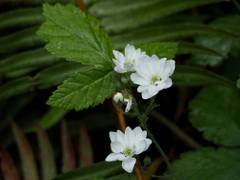
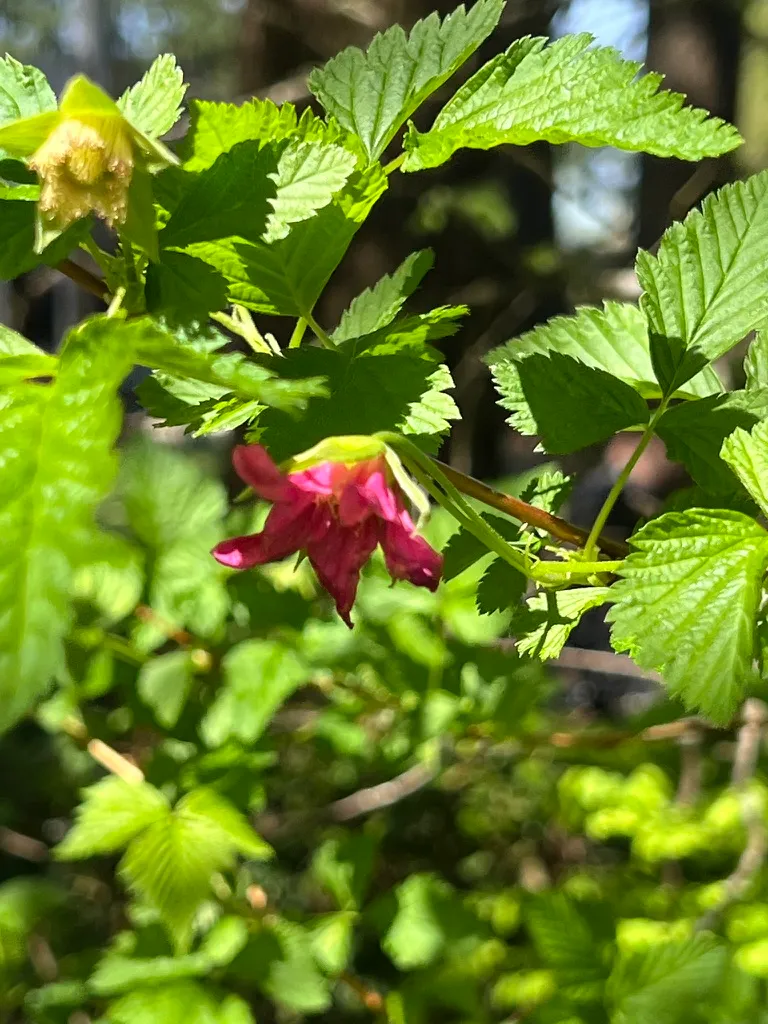
magenta-pink (occasionally white) 5-petaled flowers 1-1.5 inches (2.5-4 cm) across borne singly on bare or just-leafing branches from February through MayFoliage Description
medium green through the growing season; trifoliate with three ovate doubly serrated leaflets, the terminal leaflet largest at 2-4 inches (5-10 cm) long; turns yellow in fallGrowing Conditions
Sun Requirements
Requires 1-10 hours of direct sunlight daily
• Full Sun: 6+ hours of direct sunlight
• Partial Shade: 3-6 hours of direct sunlight
• Full Shade: Less than 3 hours of direct sunlight
Care & Maintenance
Care Guide
Site in part shade to full shade with 1–10 hours of direct sun per day; the species tolerates full sun in consistently moist to wet soil along stream banks and pond edges, and tolerates full shade in coastal rainforest understory positions. Soil should be consistently moist to wet with a pH of 5.0–7.0 and the species tolerates clay, silt, loam, and peat substrates. The species is not drought-tolerant and drops leaves early in summer dry periods if soil moisture falls below field capacity for more than a few weeks. Rhizomatous spread forms expanding colonies at 3–6 feet (0.9–1.8 m) per year in suitable soil, and a root barrier or mowed perimeter cut twice a year confines the spread where the species is sited in a mixed planting rather than a naturalized restoration area. Deer browse the new growth heavily in areas of high deer population. The sparse hooked prickles are much less hazardous than the thorn load of blackberry species. Hardy in USDA zones 4–9.Pruning
Pruning is done in late winter (January and February) while the plants are dormant. Spent second-year floricanes that have fruited are cut at ground level, and excess rhizome shoots at the colony perimeter are removed to confine the spread. The biennial cane cycle — primocanes year 1, fruiting floricanes year 2, die-off after fruiting — is the same as other Rubus species and guides the timing of floricane removal after the June and July harvest. The sparse hooked prickles are less hazardous than blackberry thorns but gardening gloves are still warranted during pruning of dense colonies.Pruning Schedule
Prune: January–February
early spring