Rubus, Genus, caesius, Species,
- Genus & species
European dewberry
Overview
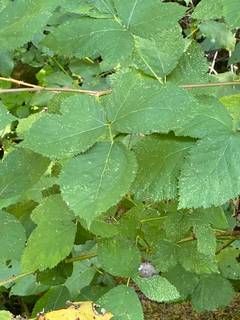
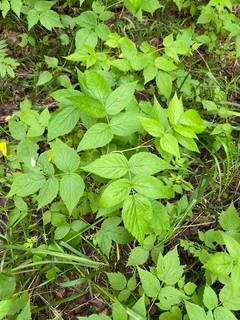
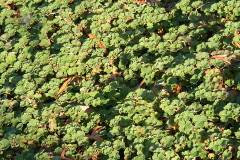
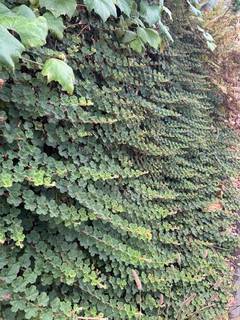
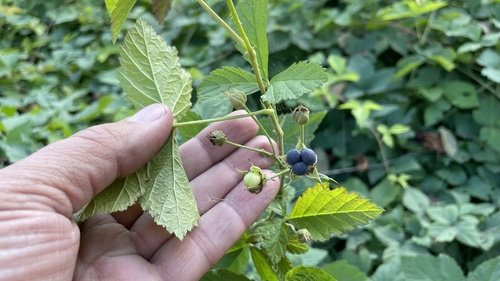
Rubus caesius is a low, scrambling bramble in the rose family, producing slender, trailing stems 3-6 feet (1-2 m) long that are coated with a blue-grey waxy bloom and armed with weak, slender prickles. The stems root where they touch the ground, forming loose, sprawling thickets rather than tall arching canes. Leaves are usually trifoliate, with toothed, mid-green leaflets 1-3 inches (2.5-8 cm) long. White, five-petalled flowers about 0.8-1 inch (2-2.5 cm) across open from late spring into summer. The fruit is a cluster of a few large, rounded drupelets that ripen blue-black under a heavy waxy bloom, giving a dewy grey cast. The plant grows in damp grassland, hedgerows, scrub, dune slacks, and disturbed calcareous ground across Europe and western Asia. It spreads by rooting stems and seed and can form persistent patches that are hard to clear once established. The prickly trailing growth and small fruit clusters make it less manageable than cultivated blackberries.
Native Range
Native to Europe and western Asia, from Britain and Scandinavia south to the Mediterranean and east into central Asia.Suggested Uses
Found in wild hedgerows, scrub, and naturalized banks where its sprawling growth binds soil. The berries are gathered from the wild for eating and preserves. It is seldom grown deliberately in cultivated beds.How to Identify
Appearance
Size & Dimensions
Height3' - 6'
Width/Spread3' - 6'
Bloom Information
Detailed Descriptions
Foliage Description
mid-greenGrowing Conditions
Sun Requirements
Requires 4-8 hours of direct sunlight daily
• Full Sun: 6+ hours of direct sunlight
• Partial Shade: 3-6 hours of direct sunlight
• Full Shade: Less than 3 hours of direct sunlight