Image 1 of 5
1 / 5
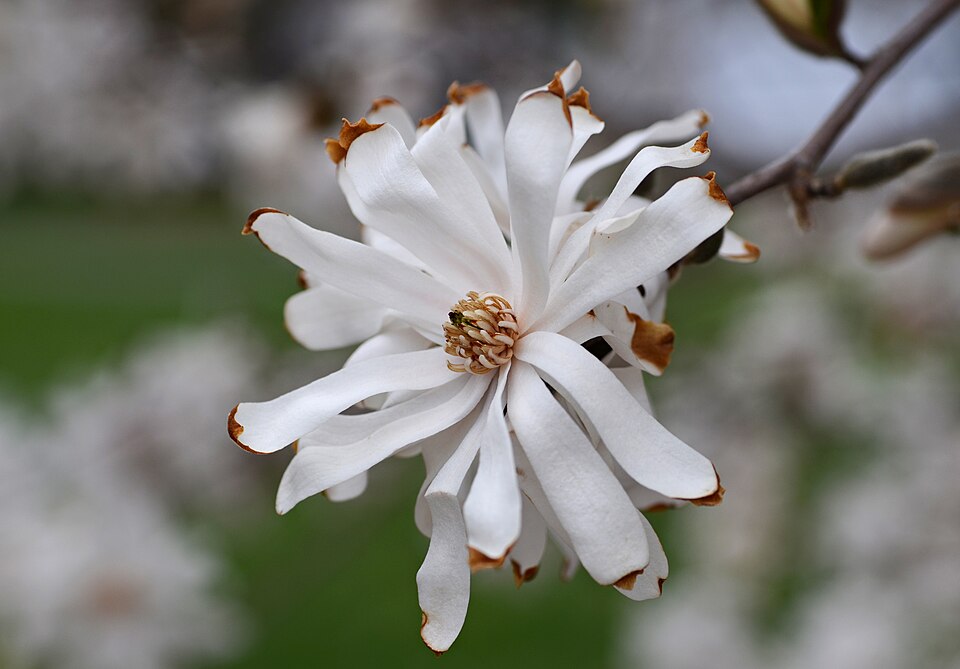
© Photo by and (c)2016 Derek Ramsey (Ram-Man), some rights reserved (CC-BY-SA) · Wikimedia Commons
Magnolia, Genus, stellata, Species, 'Royal Star', Cultivar,
- Genus & species
- Cultivar
royal star magnolia tree
Overview
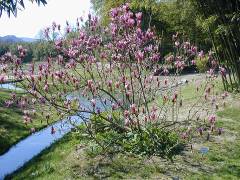
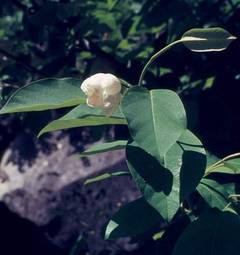
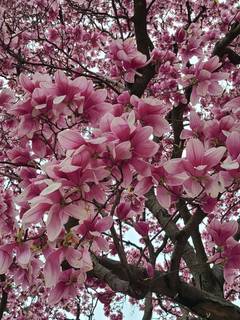
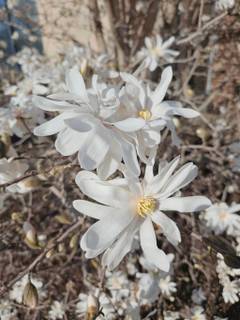
Magnolia stellata 'Royal Star' is a deciduous shrub or small tree in the Magnoliaceae family, a selection of the species made for larger fully double white flowers with 25-30 tepals. Mature size is 10-15 feet (3-4.6 m) tall and 10-15 feet (3-4.6 m) wide, with a rounded multi-stemmed habit and densely twiggy structure. Pure white flowers, 4-5 inches (10-13 cm) across, open from silver-gray fuzzy buds in early spring (March in Zone 7-8, early to mid-April in Zone 4-6) before leaves emerge, with each flower lasting 5-7 days and the full bloom period 10-14 days. Foliage is medium green, with leaves 3-5 inches (7.5-13 cm) long, narrowly elliptic with smooth margins, fading to bronze-yellow in autumn. Smooth gray bark develops with age. Hardy to USDA Zone 4. Late spring frosts can damage open flowers and reduce display in zones with variable spring weather; bloom is delayed on north and east exposures, which reduces frost damage. Magnolia is listed as non-toxic to humans, dogs, and cats by veterinary references; the bark contains low levels of magnolol and honokiol with no clinically significant toxicity at typical exposures.
Native Range
The species Magnolia stellata (star magnolia) is native to coastal Honshu in Japan, where it grows in mountainous moist forest. The 'Royal Star' cultivar was selected at Pennock Nursery in New Jersey in the 1940s for larger flowers with more tepals than the species type.Suggested Uses
Used as a small specimen shrub or accent tree in residential gardens spaced 10-12 feet (3-3.7 m) from structures, planted near patios and entry walks where the early spring bloom is visible. Planted in mixed shrub borders, woodland edges, and Japanese-influenced gardens in USDA Zones 4-8.How to Identify
Appearance
Size & Dimensions
Height10' - 15'
Width/Spread10' - 15'
Bloom Information
Early spring bloom typically opens early to mid-March in USDA Zone 7-8, late March in Zone 6, and early to mid-April in Zone 4-5. Pure white flowers from silver-gray buds persist 10-14 days under cool conditions, with each flower lasting 5-7 days. Late spring frost damages open tepals; bloom is delayed on north and east exposures, which reduces frost loss.
Detailed Descriptions
Foliage Description
medium green fading to bronze-yellow in autumnGrowing Conditions
Sun Requirements
Requires 4-12 hours of direct sunlight daily
• Full Sun: 6+ hours of direct sunlight
• Partial Shade: 3-6 hours of direct sunlight
• Full Shade: Less than 3 hours of direct sunlight
Care & Maintenance
Care Guide
Full sun to part shade (4-8 hours direct light) on moist, well-drained loam or sandy loam with pH 5.0-6.5 supports steady growth and consistent flowering; alkaline soils can cause iron chlorosis. Deep watering once weekly during the first three growing seasons supports establishment; mature shrubs tolerate moderate drought but flower less in extended dry periods. A balanced fertilizer applied at the dripline in early spring, or 2-3 inches (5-7.5 cm) of compost top-dressing, supports steady growth. Mulch 2-3 inches (5-7.5 cm) deep is held 2 inches (5 cm) away from the trunk to maintain root moisture. Magnolias resent root disturbance; transplanting after age 3-5 years often results in poor establishment.Pruning
Pruning takes place after flowering in late spring (May in Zone 6-7) when wound healing is rapid and bud set for the following year has not yet begun. Crossing branches, basal suckers, and dead wood are removed; thinning to maintain a multi-stemmed open habit is used instead of heading cuts. Heavy renewal pruning is restricted; magnolias respond poorly to large wounds and recover slowly.Pruning Schedule
Prune: May
late spring