Rohdea, Genus, japonica, Species,
- Genus & species
Sacred lily
Overview
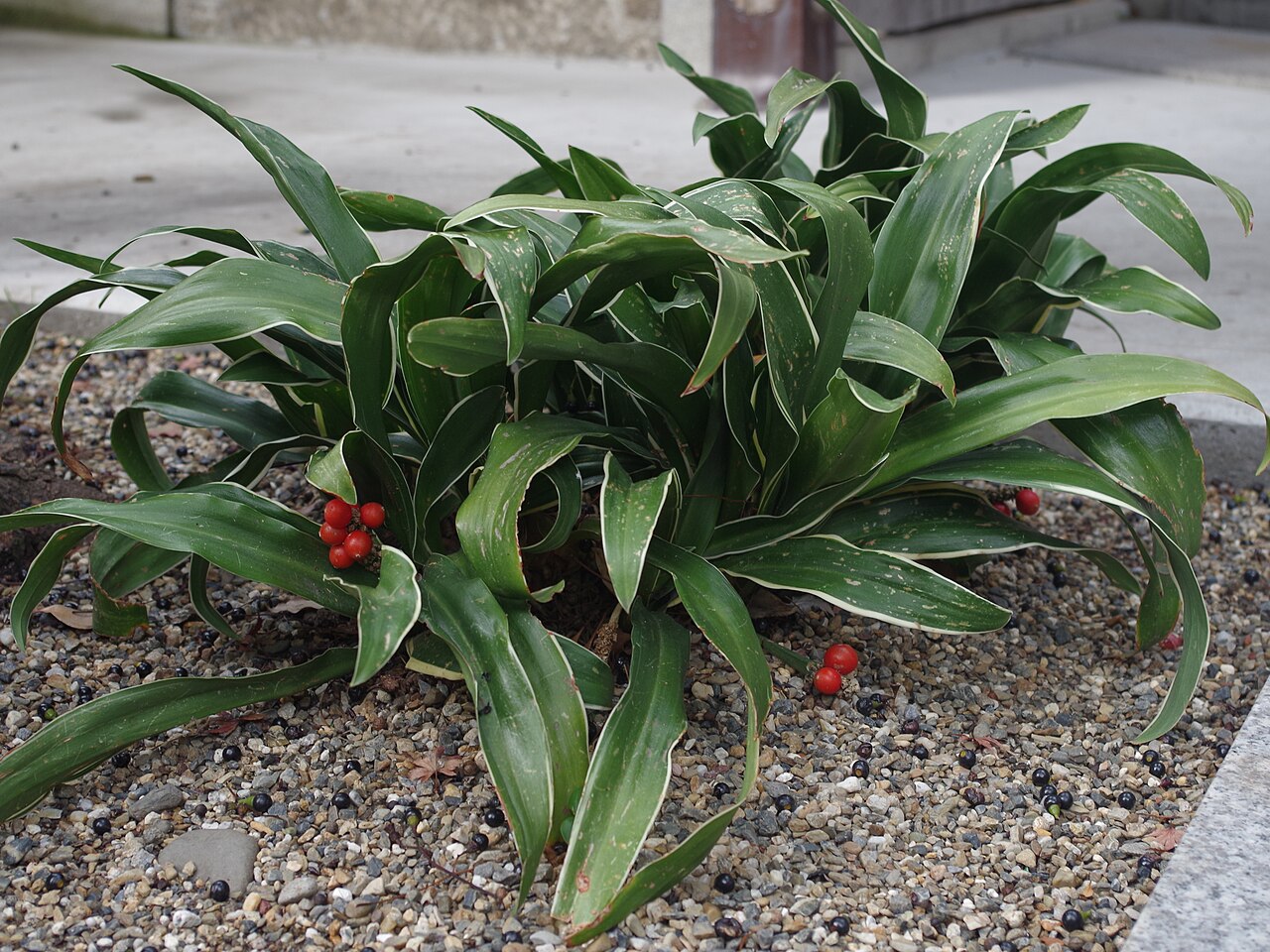
Rohdea japonica is an evergreen rhizomatous perennial in the Asparagaceae, forming a basal rosette 12–18 inches (30–45 cm) tall and 12–24 inches (30–60 cm) across. Leaves are strap-shaped to lanceolate, 8–18 inches (20–45 cm) long and 1.5–3 inches (4–7.5 cm) wide, thick and leathery, dark green with a raised midrib, arching outward from a short thick rhizome that sits at or just below the soil surface. Clumps widen 1–2 inches (2.5–5 cm) a year as offsets form beside the crown. The inflorescence is a dense cylindrical spike 1–2 inches (2.5–5 cm) long carrying 50–100 small pale yellow-white flowers on a stout scape 2–4 inches (5–10 cm) tall, held within the leaves rather than above them. Fruit is a tight cluster of round red berries about 0.4 inch (10 mm) across that ripen in autumn and persist into the following spring. All parts contain rhodexin cardiac glycosides, concentrated in the berries and rhizome, and ingestion causes vomiting and irregular heartbeat. In Japan the species has been collected as omoto since the Edo period, with more than 500 named variegated selections. Growth is slow, and plants in full sun bleach to pale yellow-green within a single season.
Native Range
Rohdea japonica is native to Japan and eastern China, growing on Honshu, Shikoku, and Kyushu and in the mountain forests of Sichuan, Hubei, and neighbouring provinces. It occupies shaded broadleaf forest floors and moist rocky slopes from near sea level to about 5,600 feet (1,700 m). Plants sit in deep leaf litter over limestone or volcanic soils.Suggested Uses
Planted in shaded borders, woodland edges, and beneath evergreen shrubs, spaced 12–18 inches (30–45 cm) apart for closed cover in three to four seasons. Also grown in containers of 2 gallons (7.5 L) or larger, the standard method for the variegated omoto selections displayed in Japan. The toxicity of the red berries limits placement in gardens used by young children.How to Identify
Appearance
Size & Dimensions
Height1' - 1'6"
Width/Spread1' - 2'
Bloom Information
Flowering runs about three weeks between April and June, later in colder zones. The inflorescence is a dense cylindrical spike 1–2 inches (2.5–5 cm) long holding 50–100 flowers, each about 0.2 inch (5 mm) across with six fused pale yellow-white tepals. The scape reaches only 2–4 inches (5–10 cm), so the spike sits at the base of the rosette behind the leaves. Small flies and beetles visit the flowers, and pollinated spikes develop into tight clusters of red berries by October.
Detailed Descriptions
Foliage Description
Dark green with a raised midribGrowing Conditions
Sun Requirements
Tolerates up to 4 hours of direct sunlight daily
• Full Sun: 6+ hours of direct sunlight
• Partial Shade: 3-6 hours of direct sunlight
• Full Shade: Less than 3 hours of direct sunlight
Care & Maintenance
Care Guide
Zero to four hours of direct sun daily suits the foliage, and leaves bleach to pale yellow-green within a season where sun exceeds that. Humus-rich, free-draining soil with a pH of 5.5 to 7.0 supports the rhizome, which rots where mulch is piled over the crown. Watering during dry spells longer than three weeks maintains leaf condition, while established clumps survive extended drought with some leaf-tip browning. The plant is hardy in USDA zones 6–9, with foliage damaged below about -5°F (-20°C) and crowns surviving under snow or mulch to around -10°F (-23°C). Fertiliser is seldom required, and an annual topdressing of leaf mould at 1 inch (2.5 cm) covers nutrient demand. Slugs and snails graze new leaves in spring, and scale insects settle along the midrib on plants grown in still air.Pruning
Damaged and winter-marked leaves are cut at the base in March before new leaves unfurl, as the plant carries no stems that need shortening. Cuts into the rhizome remove the growing point and end leaf production from that crown. Division is carried out in March or April by severing the rhizome between offsets, with each division carrying 3–4 leaves and its own roots. Divisions re-establish over one to two seasons and produce no flowers in the first year.Pruning Schedule
Prune: March
early spring
Container Growing
Suitable for container growing
Minimum container size: 2 gallons