Hyacinthoides, Genus, hispanica, Species,
- Genus & species
Spanish bluebells
Iberian Peninsula (Spain and Portugal) and northwestern Africa; deciduous woodlands, meadows, and shaded hillsides at low to middle elevations
Overview
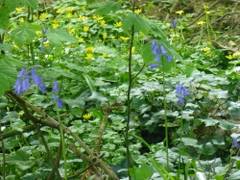
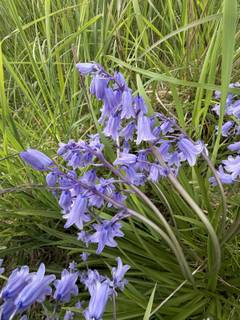
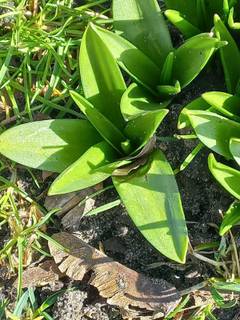
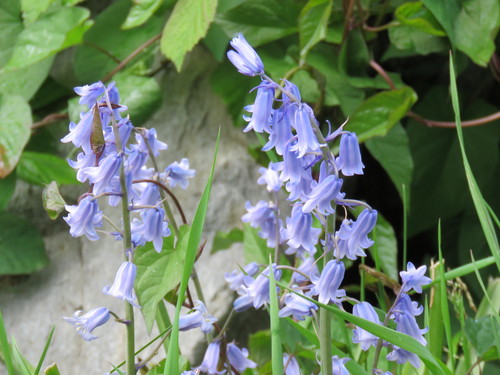
Hyacinthoides hispanica is a bulbous perennial in the family Asparagaceae growing 12–18 inches (30–45 cm) tall in bloom and 4–6 inches (10–15 cm) wide from a small white bulb. Each bulb carries 4–6 broad glossy mid-green strap-shaped leaves 6–12 inches (15–30 cm) long and 0.75–1.5 inches (2–4 cm) wide. Pale blue-violet, pink, or white bell-shaped pendant flowers 0.5–0.75 inch (1.3–2 cm) long open in upright racemes of 10–15 flowers on erect stems in April and May across a 3-week bloom period, and the flowers face outward around all sides of the stem rather than hanging to one side on an arching raceme. The erect flower stem with outward-facing flowers is the main field character that separates H. hispanica from the native English bluebell H. non-scripta, which carries a narrower strongly arching one-sided raceme with nodding flowers along a single side of the stem, and the two species hybridize freely where they grow together in cultivation and in naturalized woodland populations. Limitation: H. hispanica spreads aggressively by bulb offsets and by self-sown seed, and naturalized populations in the United Kingdom have expanded to the point of threatening the genetic purity of the native H. non-scripta populations through hybridization — the hybrid H. × massartiana now outnumbers the pure English bluebell across many southern English woodland sites. H. hispanica is classified as a non-native invasive species in the United Kingdom under the Wildlife and Countryside Act 1981 Schedule 9, and planting is discouraged where native English bluebell populations are present. In North American gardens the species naturalizes freely in deciduous woodland positions without hybridization concerns because H. non-scripta is not established in the native flora, but the aggressive bulb-and-seed spread still calls for bulb removal and seed-head deadheading if the goal is to hold the planting at a fixed size. All parts of the plant contain scillaren glycosides and related cardiac glycosides, and the bulbs, foliage, and seed are toxic to cats, dogs, and humans if ingested.
Native Range
Native to the Iberian Peninsula (Spain and Portugal) and northwestern Africa (northern Morocco and Algeria), growing in deciduous woodlands, meadows, and shaded hillsides at low to middle elevations. Introduced to European gardens in the 17th century and to North America during the 19th century, and now naturalized across much of northern Europe and temperate North America in woodland and shaded garden positions.Suggested Uses
Used for naturalizing under deciduous trees, in woodland gardens, at the base of shrub plantings, and in containers of at least 3 gallons (11 L) at 4–6 inch (10–15 cm) spacing between bulbs. The April-and-May bloom supplies late-spring color during the window after most early bulbs have finished and before summer perennials take over, and the species tolerates dry summer conditions once the foliage has died back because the bulb remains dormant through the summer drought period. Native woodland plantings near established English bluebell (H. non-scripta) populations are unsuitable because of the hybridization risk, which is the main concern in British gardens and in restoration planting sites. Gardens where pet or child access to the bulbs is a concern are unsuitable because of the scillaren glycoside toxicity.How to Identify
Appearance
Size & Dimensions
Height1' - 1'6"
Width/Spread4" - 6"
Bloom Information
Pale blue-violet, pink, or white bell-shaped pendant flowers 0.5–0.75 inch (1.3–2 cm) long open in upright racemes of 10–15 flowers on erect stems in April and May across a 3-week bloom period. The flowers face outward around all sides of the stem on H. hispanica, rather than hanging to one side on the strongly arching raceme of the native English bluebell H. non-scripta. The flowers are worked by early-season honeybees and bumblebees for nectar, and the seed capsules develop through May and June and release small black seeds in June that germinate to establish new plants around the parent clump over several years. Foliage dies back by early summer as the bulb enters summer dormancy.
Detailed Descriptions
Flower Description
pale blue-violet, pink, or white bell-shaped pendant flowers 0.5-0.75 inch (1.3-2 cm) long in upright racemes of 10-15 flowers on erect stems; the flowers face outward around all sides of the stem rather than hanging to one side as on the English bluebellFoliage Description
glossy mid-green; broad strap-shaped basal leaves 6-12 inches (15-30 cm) long and 0.75-1.5 inches (2-4 cm) wide, carried 4-6 per bulb; wider than the leaves of the native English bluebell (H. non-scripta); foliage dies back by early summer as the plant enters summer dormancyGrowing Conditions
Sun Requirements
Requires 2-8 hours of direct sunlight daily
• Full Sun: 6+ hours of direct sunlight
• Partial Shade: 3-6 hours of direct sunlight
• Full Shade: Less than 3 hours of direct sunlight
Care & Maintenance
Care Guide
Site in part sun to full sun with 2–8 hours of direct sun per day, typically under deciduous trees where the canopy is open during the April-and-May bloom period and closed during the summer dormancy period. Well-drained soil with a pH of 6.0–7.5 holds the bulbs through the wet winter growing season without rot, and the species tolerates clay, loam, and sandy substrates. Bulbs are planted 3–4 inches (7–10 cm) deep in fall and establish readily in the first spring. The species spreads aggressively by bulb offsets and by self-sown seed, and the aggressive spread has the highest ecological concern in the United Kingdom, where H. hispanica hybridizes with the native English bluebell H. non-scripta and produces fertile intermediate populations that displace the pure native form — the species is classified as a non-native invasive under the Wildlife and Countryside Act 1981 Schedule 9 in the United Kingdom, and planting is discouraged near native woodland bluebell colonies. In North American gardens the hybridization risk is absent because H. non-scripta is not established in the native flora, but the bulb-and-seed spread still calls for removal of seed heads before they mature to hold the planting at a fixed size. All parts of the plant contain scillaren and related cardiac glycosides and are toxic to cats, dogs, and humans if ingested. Hardy in USDA zones 3–9.Pruning
Spent flower stems are cut at the base before the seed capsules mature to limit self-sowing where colony expansion is not the design goal, and the stems can be left to set seed where naturalized spread under deciduous trees is the intended outcome. Foliage is allowed to yellow and die back naturally in May and June as the plant enters summer dormancy, and dead leaves are left in place rather than cut or braided so that the bulb continues to draw nutrients from the foliage through the die-back period. Unwanted bulbs and bulb offsets can be dug during dormancy in July and August to control spread at the margins of the planting, and the dug bulbs are destroyed rather than composted because the dormant bulbs resprout from fragments in the compost pile.Pruning Schedule
Prune: May–June
late spring
Container Growing
Suitable for container growing
Minimum container size: 3 gallons