Hyacinthoides, Genus, non-scripta, Species,
- Genus & species
bluebell
Overview
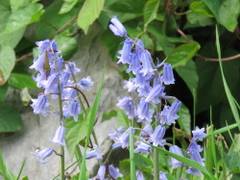
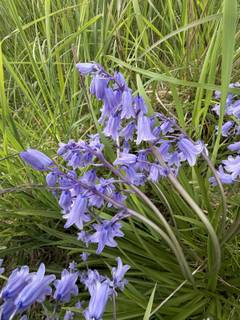
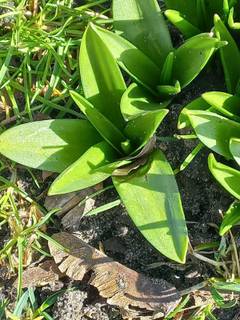
Hyacinthoides non-scripta is a spring-flowering bulb in the asparagus family that grows 12-20 inches (30-50 cm) tall and naturalizes into dense carpets on woodland floors. Each bulb sends up several narrow, strap-shaped basal leaves 0.3-0.6 inch (8-15 mm) wide that arch outward. In mid to late spring a single arching stem bears a one-sided nodding raceme of six to twelve tubular bell-shaped flowers, each 0.6-0.8 inch (15-20 mm) long, violet-blue with strongly recurved tips and creamy-white pollen, and carrying a sweet scent. White and pale pink forms occur occasionally. The flowers are followed by green seed capsules as the foliage yellows and dies back by early summer. All parts of the plant contain toxic glycosides similar to those in foxglove and are poisonous to people, pets, and livestock if eaten. The species carpets ancient woodlands across western Europe and crosses readily with the coarser Spanish bluebell, Hyacinthoides hispanica, where the two grow together.
Native Range
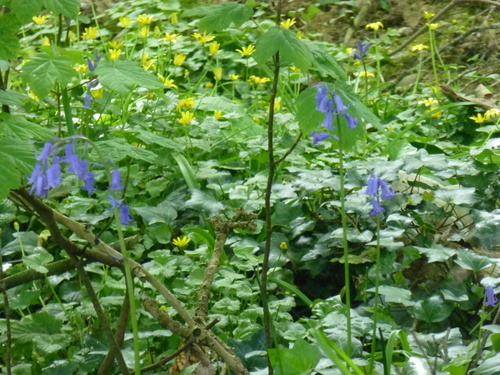
Hyacinthoides non-scripta is native to the Atlantic fringe of western Europe, from the British Isles and the Netherlands south through western France and into the Iberian Peninsula, growing in deciduous woodland, hedgerows, and shaded meadows.Suggested Uses
Naturalized in woodland gardens, beneath deciduous trees and shrubs, and in shaded lawns and meadows where it forms spring carpets. It combines with ferns, primroses, and other woodlanders that share its moist, shaded conditions. All parts are toxic if eaten.How to Identify
Appearance
Size & Dimensions
Height1' - 1'8"
Width/Spread4" - 6"
Bloom Information
Flowering occurs in mid to late spring, generally April to May, lasting about three weeks. The scented flowers draw bees and other early pollinators. After bloom the foliage yellows and dies back by early summer, leaving the bulbs dormant until the following spring.
Detailed Descriptions
Foliage Description
greenGrowing Conditions
Sun Requirements
Tolerates up to 4 hours of direct sunlight daily
• Full Sun: 6+ hours of direct sunlight
• Partial Shade: 3-6 hours of direct sunlight
• Full Shade: Less than 3 hours of direct sunlight
Care & Maintenance
Care Guide
Hyacinthoides non-scripta grows in partial to full shade in moist, humus-rich, slightly acidic to neutral soil, around pH 5.5-7.0, that mimics a woodland floor. Bulbs are planted in fall about 4 inches (10 cm) deep and left undisturbed to multiply into colonies. The plant needs moisture through spring growth but tolerates summer dryness once dormant. An annual mulch of leaf litter feeds the colony, and no other fertilizer is needed. It spreads by bulb offsets and self-sown seed, forming wide drifts over time. Hardy in USDA zones 4-9, it dies back to the bulb each summer.Pruning
No pruning is needed. The faded flower stems can be removed to limit self-seeding, though seed is often left to extend the colony. The leaves are left to yellow and die down naturally, which recharges the bulb for the next year.Container Growing
Suitable for container growing
Minimum container size: 1 gallons