Image 1 of 17
1 / 17
Plant Reference
Convallaria, Genus, majalis, Species,
- Genus & species
lily of the valley
Europe and temperate Asia across a range covering most of continental Europe from the British Isles east through Russia to Japan; also reported (with debated native status) from the Appalachian Mountains of eastern North America where it may be a very early European introduction
Overview
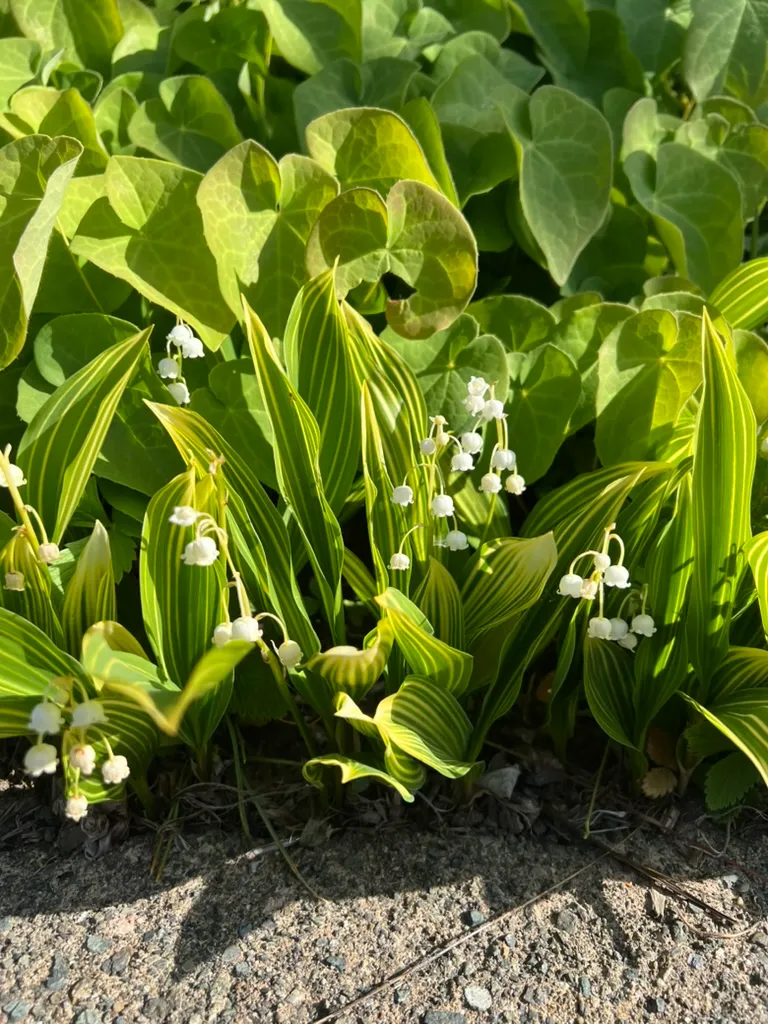
Convallaria majalis is a low spreading deciduous perennial in the family Asparagaceae (the genus was formerly placed in Liliaceae and some older references still use that family placement), reaching 6-8 inches (15-20 cm) tall and spreading indefinitely by underground rhizomes to form dense ground-cover colonies that can reach hundreds of square feet in moist shaded positions over several years. Leaves are medium to dark green, simple, broadly elliptic, parallel-veined, and 4-8 inches (10-20 cm) long, with 2-3 leaves per pip (the term for the growth point at the tip of each underground rhizome). Small white bell-shaped nodding flowers 0.3 inch (8 mm) across open in one-sided arching racemes of 5-13 flowers on slender leafless stalks between the pair of basal leaves during April and May for approximately 3 weeks, and the flowers are strongly fragrant with a sweet green floral scent that serves as the reference lily-of-the-valley perfumery note — the fragrance is the main reason the species is grown and is a widely recognized floral scent in European garden and perfume tradition. The species spreads aggressively underground by creeping rhizomes, and a single starter pip can colonize a large area within 2-3 growing seasons and then continue expanding at several inches per year indefinitely; this aggressive vegetative spread is both the practical asset of the species (it covers dense shade where few other plants grow as ground cover) and its central cultivation limitation (containing the colony to its intended area is difficult once the rhizomes have spread into lawn edges, mixed borders, or adjacent beds). All parts of the plant contain cardiac glycosides — principally convallatoxin and convallarin — that act directly on heart muscle in the same class of compounds as digoxin from Digitalis, and ingestion of any part of the plant causes cardiac arrhythmia, vomiting, weakness, and cardiac arrest at sufficient dose in humans, dogs, cats, and livestock. The water from a vase of cut lily-of-the-valley stems carries toxic glycoside residues and has been the cause of household pet poisoning, and the small orange-red berries that develop after bloom are particularly hazardous because they are the size and color range that children and wildlife will sample. Deer avoid the foliage because of the glycoside content. The species is native to Europe and temperate Asia and has been in European garden and medicinal cultivation since at least the medieval period — the fragrance has been the basis for lily-of-the-valley perfume across European perfumery tradition, and the cardiac glycosides have been used in traditional herbal medicine as a heart stimulant (though modern medicine uses purified digoxin from Digitalis instead because of the dose-control challenges with whole-plant preparations). The species is not drought-tolerant and prefers moist shaded positions.
Native Range
Convallaria majalis is native to Europe and temperate Asia, with a range covering most of continental Europe from the British Isles east through central Europe, the Balkans, Russia, and Siberia to northeastern China, Korea, and Japan. The species grows in deciduous woodland, mountain meadows, and shaded forest edges at lowland to montane elevations. Populations are also reported from the southern Appalachian Mountains of eastern North America, where the native status is debated by botanists — some treat the Appalachian populations as a disjunct native subspecies (var. montana) and others consider them a very early European introduction that has since naturalized. The species has been in European garden and medicinal cultivation since at least the medieval period, both for the fragrance (the basis for lily-of-the-valley perfume) and for the cardiac-glycoside content of the leaves and roots (used historically as a heart stimulant in European herbal medicine).Suggested Uses
Planted as a dense ground cover in moist shaded positions — under deciduous trees, along north-facing foundations, in shaded mixed borders where aggressive spread is acceptable, and in naturalized woodland plantings — at 12-24 inch (30-60 cm) spacing in zones 3-8. The fragrance carries the main ornamental value of the species, and plantings near paths, seating areas, and windows where the scent can reach people during the April-May bloom period make the most of the bloom display. Combined with Hosta, ferns, and other shade perennials in moist woodland plantings where the aggressive rhizomatous habit of the lily-of-the-valley colony coexists with larger clump-forming companions rather than competing with equally-aggressive spreaders. Not suited to mixed beds with small delicate perennials that the rhizomatous spread would overrun, households with young children or pets that investigate garden plants because of the cardiac-glycoside toxicity of all parts of the plant including the small orange-red berries, drought-prone sunny positions where the species fails to establish, or landscapes adjacent to vegetable gardens where rhizome spread into food-growing areas carries a food-safety concern.How to Identify
Appearance
Size & Dimensions
Height6" - 8"
Width/Spread1' - 2'
Colors
Bloom Information
Small white bell-shaped nodding flowers 0.3 inch (8 mm) across open in one-sided arching racemes of 5-13 flowers on slender leafless stalks between the paired basal leaves during April and May in zones 3-8, lasting approximately 3 weeks. Flowers are strongly fragrant with a sweet green floral scent that is the reference lily-of-the-valley note in European perfumery. Flowers are bee-visited. Small orange-red berries 0.3 inch (8 mm) across develop after bloom and ripen through late summer — the berries are highly toxic through cardiac glycoside content and are a hazard to children, pets, and wildlife that may sample them because of their color and size.
Detailed Descriptions
Foliage Description
medium to dark greenGrowing Conditions
Sun Requirements
Requires 1-4 hours of direct sunlight daily
• Full Sun: 6+ hours of direct sunlight
• Partial Shade: 3-6 hours of direct sunlight
• Full Shade: Less than 3 hours of direct sunlight
Care & Maintenance
Care Guide
Plant in moist humus-rich soil with a pH of 5.5-7.0 in part shade to full shade (1-4 hours of direct sun); tolerated soil types include loam, clay, and peat. The species is not drought-tolerant and needs consistent soil moisture through the growing season, though established colonies can survive drier periods by going dormant. Water weekly in rainfall-deficit periods during the first growing season; established colonies typically need no supplemental irrigation in shaded positions where natural rainfall retains moisture in the leaf-litter layer. Spread by underground rhizomes is aggressive and indefinite — colonies expand at several inches per year in all directions and a single pip can colonize hundreds of square feet over a decade, and containing the colony to a bounded area requires either physical root barriers (metal or plastic edging sunk 12 inches / 30 cm into the soil) or annual spade edging along the colony margin to cut back advancing rhizomes. All parts of the plant contain cardiac glycosides (principally convallatoxin and convallarin) that cause cardiac arrhythmia, vomiting, and at sufficient dose cardiac arrest in humans, dogs, cats, and livestock. The toxicity is the central household-safety concern for the species: the glycosides extend into the vase water of cut stems (dogs have been poisoned by drinking the water from flower arrangements), the small orange-red berries that develop after bloom are in the size-and-color range that children and wildlife will sample, and the whole plant retains toxicity through the dried state. Households with young children or pets that investigate garden plants should consider the species carefully before planting. Deer avoid the foliage because of the glycoside content. Dead foliage is removed in fall (October) after the leaves have withered back.Pruning
Dead foliage is removed in fall (October) after the leaves have turned yellow and withered back to the ground. No other above-ground pruning is needed through the growing season because the spreading rhizomatous habit develops naturally. Unwanted rhizome spread is managed by digging out advancing pips along the colony margin in early spring or late fall, and persistent containment requires annual spade-edging or physical root barriers because the species regenerates from any rhizome fragment left in the soil. Gloves are usually worn during rhizome removal work because the sap carries cardiac glycosides that can absorb through cuts or abraded skin, though transdermal absorption is limited compared to ingestion.Pruning Schedule
Prune: October
fall