Ribes, Genus, spp., Multiple species,
- Genus
- Multiple species
currants and gooseberries
Temperate Northern Hemisphere and Andean South America
Overview
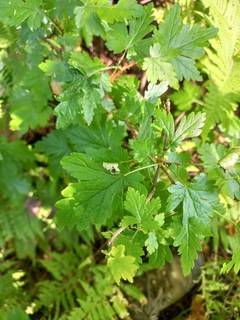
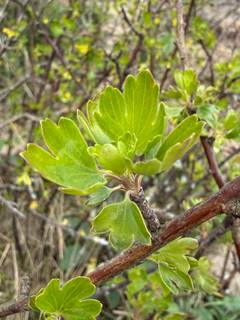
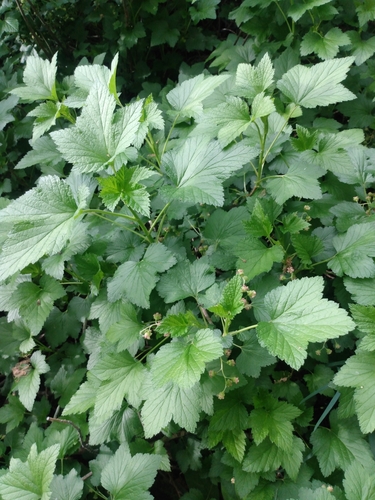
Ribes is a genus of roughly 150 to 200 deciduous and semi-evergreen shrubs in the family Grossulariaceae, encompassing the currants and gooseberries. Plants reach 1.5 to 10 feet (0.5 to 3 m) tall with a similar spread, forming clumps of arching to upright woody stems. Gooseberry species such as R. uva-crispa bear nodal spines, while most currants including R. nigrum and R. rubrum are unarmed. Leaves are alternate, palmately three- to five-lobed, 1 to 4 inches (2.5 to 10 cm) across, and aromatic when crushed in several species. Flowers are small, five-parted, and carried in pendent or erect racemes during spring, ranging from greenish-white and yellow to pink and deep red depending on species. The fruit is a many-seeded berry 0.2 to 0.6 inch (5 to 15 mm) wide, ripening green, red, pink, white, or blue-black, and edible in many species. Native across the temperate Northern Hemisphere and the South American Andes, Ribes occupies woodland margins, streambanks, and rocky slopes. Several species serve as the alternate host for white pine blister rust (Cronartium ribicola), and cultivation of Ribes is restricted in some United States jurisdictions for this reason. Cold hardiness spans USDA zones 3 to 8, though individual species vary.
Native Range
Ribes is distributed across the temperate and boreal Northern Hemisphere, including North America, Europe, and Asia, with a secondary center of diversity in the Andes of South America. Species occupy woodland edges, streambanks, moist ravines, and subalpine rocky slopes.Suggested Uses
Ribes is grown in home gardens and orchards for edible currants and gooseberries, and ornamental species such as R. sanguineum are planted in shrub borders and informal hedges. Plants are spaced 4 to 6 feet (1.2 to 1.8 m) apart in rows. Woodland-edge species suit naturalized and wildlife plantings where birds feed on the fruit.How to Identify
Appearance
Size & Dimensions
Height1'6" - 10'
Width/Spread1'6" - 8'
Bloom Information
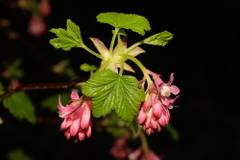
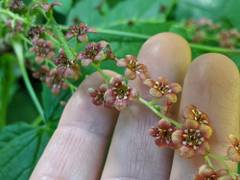
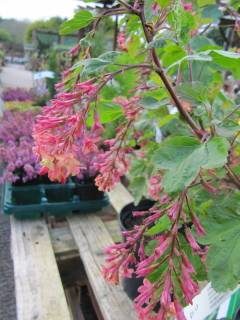
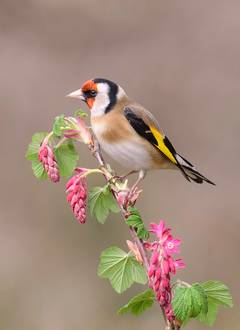
Most Ribes bloom in spring, between March and May depending on latitude and elevation. Flowers hang in racemes or sit singly in leaf axils, measuring 0.2 to 0.5 inch (5 to 12 mm) long, in shades of greenish-yellow, white, pink, or red. R. sanguineum produces deep-pink to red racemes, while fruiting currants carry less conspicuous greenish flowers. Bloom is followed by berries that ripen from early to late summer.
Detailed Descriptions
Flower Description
greenish-yellow, white, pink, or redFoliage Description
green, turning yellow to red in autumn in deciduous speciesGrowing Conditions
Sun Requirements
Requires 4-8 hours of direct sunlight daily
• Full Sun: 6+ hours of direct sunlight
• Partial Shade: 3-6 hours of direct sunlight
• Full Shade: Less than 3 hours of direct sunlight
Care & Maintenance
Care Guide
Ribes grows in full sun to partial shade, with fruit yield greatest in sun and foliage retained longer where afternoon shade tempers summer heat. Plants grow in moist, well-drained loam at a pH of 5.5 to 7.0 and respond to a 2 to 3 inch (5 to 8 cm) mulch that keeps roots cool. Water needs are moderate, and soils should not dry out fully during fruit development. Most species are cold hardy to USDA zone 3, tolerating winter lows near -40 F (-40 C). Aphids, powdery mildew, and currant sawfly are common pests, and white pine blister rust affects several species. Plants fruit on one- to three-year-old wood, so a portion of older stems is cut out each year.Pruning
Pruning is done in late winter while plants are dormant, taking stems older than three to four years to the base to renew the clump. Black currants fruit on one-year-old wood, so up to one-third of the oldest stems are removed annually, while red and white currants and gooseberries fruit on spurs of two- to three-year-old wood and are spur-pruned. Thinning the center improves air movement and lowers mildew pressure.Pruning Schedule
Prune: February–March
winterearly spring
Container Growing
Suitable for container growing
Minimum container size: 5 gallons