Ribes, Genus, nigrum, Species,
- Genus & species
Blackcurrant
Central and northern Europe to northern Asia
Overview
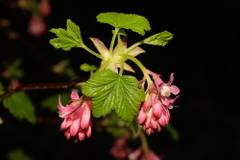
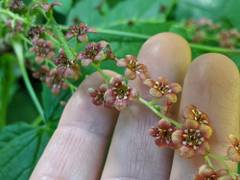
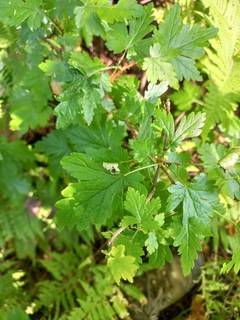
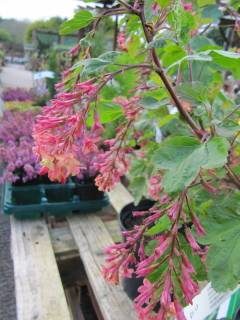
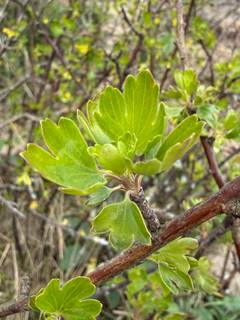
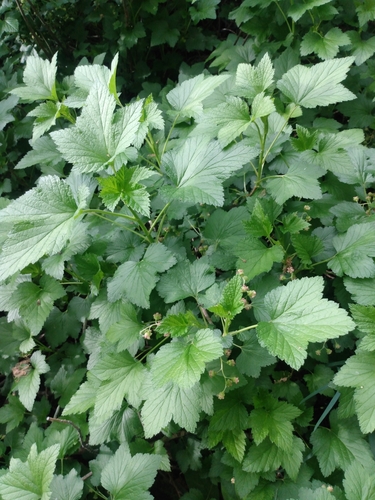
Ribes nigrum is a deciduous shrub reaching 3.3-6.6 feet (1-2 m) tall and wide, with an upright to spreading habit and multiple stems arising from the base. The palmately lobed leaves measure 1.2-4 inches (3-10 cm) across, with three to five toothed lobes, and release a pungent aroma when crushed from resin glands on the undersides. In mid to late spring the shrub bears pendulous racemes of small greenish-white to pale reddish flowers, each 0.2-0.3 inch (5-8 mm) wide. These are followed by clusters of round black berries 0.3-0.5 inch (8-12 mm) in diameter, ripening from midsummer. Each berry holds several small seeds and a deep purple juice high in anthocyanins and vitamin C. The species spreads slowly by basal suckering and forms a dense framework of woody shoots within three to four years. Foliage turns yellow before dropping in autumn. The strong scent that makes the plant recognizable persists on hands and clothing after contact, a limitation in confined plantings. Cultivated across temperate regions for its fruit, R. nigrum requires winter chilling to crop reliably and sets little fruit where winters are mild.
Native Range
Native to temperate central and northern Europe and across northern Asia, Ribes nigrum grows wild in damp woodland, hedgerows, and beside streams. It has naturalized in parts of North America after escaping cultivation.Suggested Uses
Grown in fruit gardens and allotments for berries used in jams, cordials, juices, and liqueurs. The dense twiggy habit also serves as informal low hedging. Container culture is workable in pots of 5 gallons (19 L) or larger.How to Identify
Appearance
Size & Dimensions
Height3'4" - 6'7"
Width/Spread3'4" - 5'
Bloom Information
Flowers open in mid to late spring, typically April to May, in hanging racemes of five to ten greenish-white flowers tinged reddish. Pollination is by bees and other insects, and most cultivars set fruit with their own pollen. Berries ripen from July to August.
Detailed Descriptions
Flower Description
Greenish-white tinged reddishFoliage Description
Medium green, turning yellow in autumnGrowing Conditions
Sun Requirements
Requires 4-8 hours of direct sunlight daily
• Full Sun: 6+ hours of direct sunlight
• Partial Shade: 3-6 hours of direct sunlight
• Full Shade: Less than 3 hours of direct sunlight
Care & Maintenance
Care Guide
Grows in full sun to partial shade in moist, fertile, well-drained soil with a pH of 6.0-6.8. Annual mulching with organic matter supports the shallow root system and steady cropping. The species needs a period of winter cold below 45 F (7 C) to break dormancy and flower, so it crops poorly in mild-winter climates. Consistent moisture during fruit development reduces berry drop. Plants are hardy to USDA zone 3 and tolerate winter lows near -40 F (-40 C). Big bud mite and white pine blister rust are the main pest and disease pressures in many regions.Pruning
Fruit forms mainly on one-year-old wood, so a quarter to a third of the oldest stems are cut to the base each winter to renew young shoots. Established bushes carry a mix of one-, two-, and three-year-old wood. Pruning falls between late autumn and late winter while the plant is dormant.Pruning Schedule
Prune: November–February
fallwinter
Container Growing
Suitable for container growing
Minimum container size: 5 gallons